Electrical Wire Load Capacity Chart: Ampacity, Sizing & Safety
A practical guide to electrical wire load capacity charts, explaining ampacity, derating, and safe wire sizing to meet code requirements for residential, commercial, and industrial installations.


An electrical wire load capacity chart translates conductor size (AWG), insulation type, and ambient temperature into ampacity limits for circuits. It guides safe wire sizing by showing how derating affects current capacity when multiple conductors share a path or when temperatures rise. Used correctly, it reduces overheating risk and helps ensure code-compliant, reliable electrical installations.
Understanding the purpose of a wire load capacity chart
In electrical design, a wire load capacity chart serves as a practical reference that translates a few core inputs—conductor size (AWG), insulation type, and the expected environment—into an allowable current (ampacity). According to Load Capacity, the chart helps engineers, electricians, and students quickly evaluate whether a given conductor can safely carry the planned load without overheating. This central tool reduces guesswork in circuit design and supports consistent decisions across projects from small workshops to industrial facilities. While the exact ampacity values vary by code edition and rating, the chart's function remains constant: map physical properties to safe electrical performance, and use that mapping to prevent insulation damage, fire hazards, and nuisance trips. For beginners, start with a standardized table and then layer in derating factors for temperature and grouping to reach a final sizing recommendation that aligns with local codes.
Ampacity basics: AWG, insulation, and temperature rating
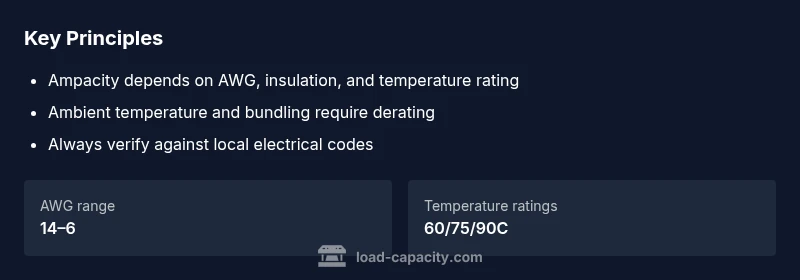
Ampacity is the maximum current a conductor can safely carry. The chart’s core inputs are the conductor size (AWG), the insulation material rating, and the temperature rating of the insulation. Copper conductors are typically sized by AWG, with insulation such as THHN/THERM or XHHW affecting how much current they can carry under specific conditions. The Load Capacity team emphasizes that higher temperature ratings generally allow higher ampacity, but derating rules apply when multiple conductors are bundled or when ambient temperatures are elevated. Always cross-check the insulation class and the rated temperature against your circuit’s expected load and environment. This ensures a safe margin between operating current and physical heating limits.
How temperature and ambient conditions affect ampacity
Ambient temperature directly influences conductor performance. Higher temperatures reduce the available ampacity because insulation resistance and conductor resistance change with heat. Additionally, ambient conditions like poor ventilation or heavy bundling reduce heat dissipation, necessitating derating. The chart reflects these realities by presenting alternative ampacity values for different temperature ratings (e.g., 60C, 75C, 90C) and by indicating when more conservative sizing is required. In practice, a wiring plan should always include a derating factor for any installation with elevated ambient temperature or crowded conduit runs.
Derating: when and why it matters
Derating is a systematic adjustment to the published ampacity to account for real-world conditions. It matters most when multiple conductors occupy a single raceway or sheath, when circuits run in hot environments, or when long lengths of wiring create additional resistance. Failing to derate can overstate how much current a wire can carry and lead to overheating, insulation damage, or circuit trips. A typical approach is to apply a derating factor derived from the number of conductors, their insulation temperature rating, and the ambient temperature. The result is a safer, code-compliant sizing decision rather than a simple reading of the maximum ampacity chart.
Practical sizing examples and workflows
When sizing wire using the chart, follow a repeatable workflow:
- Determine the full load (in amperes) of the circuit, including all connected devices. 2) Select a conductor size (AWG) that can carry that load under standard conditions. 3) Identify the insulation rating and temperature rating of the conductor. 4) Apply derating for ambient temperature and conductor bundling. 5) Cross-check with local codes (NEC/IEC) to confirm compatibility and required protective devices. 6) Validate the final choice with a short calculation showing the margin between operating current and ampacity. This workflow keeps projects consistent and auditable.
Reading and applying the chart in code-compliant design
In practice, a chart is most valuable when integrated into a formal design process. Start with NEC references or your local electrical code to identify minimum requirements for branch circuits. Use the chart to map the required amperage to a suitable AWG and insulation rating, then confirm derating factors for ambient temperature and bundling. Documentation should clearly show the inputs, the chosen conductor size, and the final protective-device rating. Regular reviews of the chart against code updates ensure ongoing compliance. The Load Capacity approach emphasizes traceability: every sizing decision should be backed by a calculation row in the project files.
Common mistakes and maintenance notes
Common mistakes include ignoring temperature derating, selecting an AWG solely based on insulation rating, or assuming a single ampacity value applies to all environments. It’s crucial to verify the chart’s assumptions against actual operating conditions, including ambient temperature, conduit fill, and whether conductors are grouped in bundles. Maintenance practices should include periodic reviews of wiring as loads change, re-checking derating when renovations occur, and updating documentation to reflect any new environmental factors. Following a disciplined approach reduces risk and improves reliability.
Documentation and audit trails for compliance
A robust wire sizing process includes clear documentation: load calculations, chosen AWG and insulation rating, derating factors, and protective-device sizing. Store calculations in project files or a centralized database so team members can review decisions quickly. Regular audits should verify that the current wiring still meets the chart’s guidance under updated codes or new equipment loads. This level of rigor supports safety, reduces rework, and demonstrates compliance during inspections. The Load Capacity methodology encourages transparent, repeatable analyses that stakeholders can trust. The conclusion here: apply chart-based sizing with documented derating for safe, code-compliant installations.
Conductor ampacity ranges by AWG (illustrative)
| Conductor (AWG) | Ampacity Range (A) | Notes |
|---|---|---|
| 14 | 15-20 | Depends on insulation and ambient |
| 12 | 20-25 | Common for lighting circuits |
| 10 | 25-35 | Suitable for 30 A circuits |
| 8 | 40-60 | Higher current with appropriate rating |
Quick Answers
What is a wire load capacity chart and what does it show?
A wire load capacity chart shows how much current a conductor can safely carry based on its AWG size, insulation type, and temperature rating. It helps engineers size circuits to prevent overheating and ensure compliance with codes. Always use the chart alongside local requirements.
A wire load capacity chart tells you how much current a wire can safely carry, based on its size and insulation. Use it with local codes to size circuits safely.
How do I read ampacity values for different AWG sizes?
Ampacity values vary with insulation and temperature ratings. Start with the AWG size, then check the insulation class and the temperature rating to see the applicable ampacity. Remember that derating may reduce available current in bundled or high-temperature environments.
Look up the AWG size first, then check the insulation temperature rating to see the ampacity and apply any necessary derating.
What factors influence derating besides ambient temperature?
Derating factors include the number of conductors in a raceway, conduit length, conductor grouping, ambient conditions, and insulation temperature rating. All these factors reduce the allowable current, so always apply the derating rule consistent with your code.
Derating considers how many wires are together, heat, and insulation ratings to decide the safe current.
Are there industry standards I should reference when sizing wire?
Yes. Refer to nationwide electrical codes (such as NEC in the United States) and any local amendments. The chart will guide you to the appropriate AWG and insulation ratings, but code-specific requirements must be followed for circuits, overcurrent protection, and installation methods.
Always check NEC or local codes; the chart helps you size, but the code rules must be followed.
What happens if I size a wire incorrectly based on the chart?
Incorrect sizing can lead to overheating, insulation damage, nuisance trips, or fire hazards. If a circuit consistently runs near or beyond the ampacity, re-evaluate with a larger conductor or adjusted load, and re-check derating assumptions.
Mis-sizing can cause overheating or trips; reassess with a larger wire or adjusted load.
“A wire load capacity chart is a primary design tool; it translates conductor size, insulation, and environment into safe current ratings, reducing overheating risk and electrical fires.”
Top Takeaways
- Read the chart for correct conductor sizing
- Account for insulation and ambient temperature
- Apply derating when multiple conductors run together
- Cross-check with NEC/IEC codes