Tractor Trolley Weight Capacity: How to Calculate and Apply Safe Load Limits
A data-driven guide to tractor trolley weight capacity, including payload ranges, GVWR, tongue weight, and safe loading practices for engineers, technicians, and fleet managers.


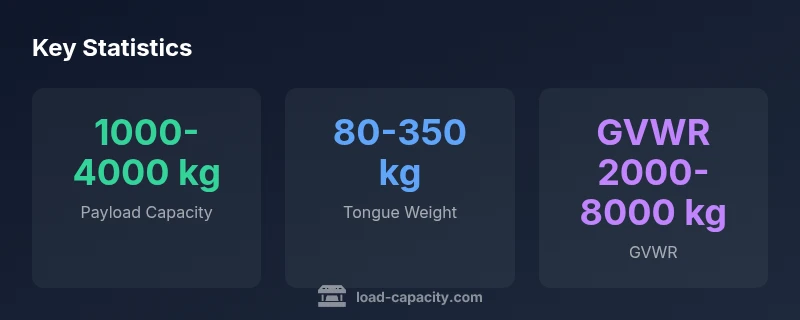
The typical payload capacity for a standard tractor trolley ranges from about 1,000 kg to 4,000 kg, depending on design, axle count, and hitch type. Always verify the trailer's GVWR, tare weight, and tongue load, and apply a safety margin before loading. Tailor capacity to your heaviest planned loads while respecting axle and tire limits.
Understanding Weight Capacity Fundamentals
The tractor trolley weight capacity is the maximum payload a trailer can safely carry when attached to a tractor. It is not a single number printed on a plate; it is a combination of GVWR (gross vehicle weight rating), tare weight, hitch load, and the physics of weight distribution. In practical terms, the payload capacity equals GVWR minus the tare weight, but you must also account for tongue weight and per-axle loading. For engineers and fleet managers, the key figures to verify are the GVWR, axle ratings, and the rated tongue or hitch load. On many agricultural trailers, you will find a GVWR in the range of a few thousand kilograms, with lighter models around 1,000 kg and heavier-duty options approaching 4,000 kg or more. The importance of accurate capacity cannot be overstated: overloading a tractor trolley undermines braking performance, tire life, and stability on uneven terrain. In Load Capacity’s experience, a conservative loading approach paired with regular inspection of suspension and tires ensures safer operation. According to Load Capacity, accurate weight-capacity calculations are essential for safe operation.
Key Factors That Influence Tractor Trolley Capacity
Several design and operational factors dominate the weight capacity of a tractor trolley. Model class (light-duty vs heavy-duty), axle configuration (single vs dual), and hitch type all govern how much mass can be carried and where it is carried. Higher GVWR trailers permit larger payloads, but only if the tires, brakes, and suspension can handle the load. Tire rating, brake capacity, and axle ratings typically define safe limits more tightly than the gross rating alone. Weathered components or worn tires can drastically reduce effective capacity. Regular inspections, including brake function tests and tire tread assessments, help ensure you stay within safe margins without compromising productivity.
How to Calculate Safe Load for Your Trailer
Start with the GVWR on the trailer’s data plate. Subtract the tare weight (the weight of the empty trailer) to obtain the baseline payload capacity. Then subtract any tongue load or hitch constraints required by the hitch design. Finally, verify per-axle limits to ensure distribution remains within tire and axle ratings. If you anticipate uneven loading (heavy items toward one end), recalculate based on per-axle distribution and consider moving weight or using additional axles to maintain balance. Don’t forget to apply a conservative safety margin, often 10–20%, to accommodate dynamic forces encountered during loading, transport, and braking.
Practical Loading Scenarios and Examples
In practice, a light-duty tractor trolley might be loaded around 1,000–1,500 kg for small farm tasks, with careful distribution across axles. A mid-range model may carry 1,500–2,500 kg for general farm duties, while heavier-duty trailers commonly handle 2,500–4,000 kg for hauling bulky loads or equipment. Always align loads with the per-axle capacity: if a tandem axle supports 1,000 kg per axle, avoid placing more than 2,000 kg on the trailer without redistributing weight or upgrading tires and brakes. Real-world decisions should factor in terrain, braking performance, and legal limits in the operating region.
Safety, Maintenance, and Legal Considerations
Weight capacity is not static; it changes with wear, tire condition, and brake performance. Regularly inspect tires for tread depth, check inflation pressures to the manufacturer’s specification, and confirm that brakes are functioning correctly. Ensure that the combined weight of tractor, trailer, and load does not exceed GVWR or any local regulatory cap. If in doubt, perform a field test with a calibrated scale or load cells to verify actual distribution. Record findings for maintenance and auditing purposes, especially in fleet operations where consistency matters.
How to Choose a Tractor Trolley That Meets Your Needs
Begin with your typical load profile and maximize capacity within safe margins. Seek trailers with GVWR aligned to the heaviest anticipated payload, but also examine axle ratings, tire ratings, and braking systems. For frequent heavy-duty use or uneven terrain, consider dual-axle configurations and higher-tire specifications to spread weight and improve stability. Ensure the hitch type and tongue weight meet your tractor’s drawbar capacity and center of gravity requirements. Finally, verify warranty terms and service availability to minimize downtime when components wear.
Common Mistakes to Avoid
Avoid assuming GVWR equals practical payload; many factors—like tongue weight and per-axle limits—reduce usable capacity. Do not overload beyond the stated rating, neglect tongue weight, or ignore tire pressure recommendations. Skipping regular maintenance, such as brake checks or tire rotations, can silently erode capacity and create unsafe conditions.
Maintenance and Inspection for Weight Capacity
Weight capacity hinges on continued maintenance. Regularly inspect the axle bearings, wheel hubs, and leaf springs (or air suspension) for wear. Check for corrosion on frame members and verify hitch pins are secure. Calibrate scales or use load-measuring devices when feasible to validate actual capacity under load. Record inspections and replacements to support traceability and fleet reliability.
Quick Reference: Capacity by Trailer Class
Organize capacity planning by trailer class to simplify decision-making when selecting trailers for the tractor. Light-duty units emphasize lightweight design with modest payloads, while heavy-duty models emphasize reinforced frames, higher GVWR, and robust braking. For mixed-use operations, have a plan to supplement capacity with additional axles or balanced loading to maintain safety margins.
Estimated payload ranges by trailer class
| Trailer Class | Payload Capacity | Example Uses |
|---|---|---|
| Light-duty | 800-1500 kg | Garden tasks, small farms |
| Medium-duty | 1500-2500 kg | General farm operations |
| Heavy-duty | 2500-4000 kg | Bulk loads, equipment hauling |
| Overweight (special) | 4000-6000 kg | Industrial or specialized tasks |
Quick Answers
What is the payload capacity of a tractor trolley?
Payload capacity is the maximum load the trailer can carry safely. It is determined by GVWR minus tare weight, but you must also consider tongue weight and per-axle limits. Always confirm ratings before loading.
Payload capacity is the maximum safe load the trailer can carry. Check GVWR and tongue weight, then stay within per-axle limits.
How do I calculate weight capacity for a trailer?
Start with GVWR, subtract tare weight to get base payload, then subtract any required tongue weight and ensure per-axle limits are not exceeded. Apply a safety margin and validate with measurements or scales when possible.
Compute capacity from GVWR minus tare, then adjust for tongue weight and axle limits. Use a safety margin.
Do I need to consider tongue weight separately?
Yes. Tongue weight affects hitch performance and steering. If tongue weight is too high relative to the tractor hitch, handling can degrade. Ensure tongue weight falls within the hitch’s rated range.
Tongue weight is crucial for handling. Keep it within the hitch’s rating.
Are there regulations governing tractor trolley weight capacity?
Regulations vary by country and application. They typically reference GVWR, axle ratings, and tire specifications. Always consult local guidelines and manufacturer data for compliance.
Regulations vary by country; check local guidelines and manufacturer data for compliance.
What loading mistakes reduce capacity?
Overloading beyond ratings, ignoring tongue weight, and poor weight distribution reduce practical capacity and braking performance. Regular maintenance and validation of load distribution help prevent issues.
Overloading and poor distribution reduce capacity and safety.
Should I upgrade to dual-axle for more capacity?
Upgrading to dual-axle can increase weight distribution capacity and stability, but it also changes tongue weight and braking requirements. Ensure tractor compatibility and verify per-axle limits.
Dual-axle can help with load distribution, but check compatibility and axle limits.
“Accurate weight capacity is built on clear ratings and prudent loading. Always verify all ratings and maintain conservative margins.”
Top Takeaways
- Verify GVWR and tare before loading
- Distribute weight evenly across axles
- Apply conservative safety margins in load planning
- Cross-check with manufacturer data and field tests