Payload Capacity vs GVWR: Are They the Same? How to Use Them
Explore the difference between payload capacity and GVWR, how each rating is determined, and practical steps to plan loads safely. Learn why these values matter for towing, safety, and compliance with Load Capacity guidance.


What is payload capacity vs GVWR?
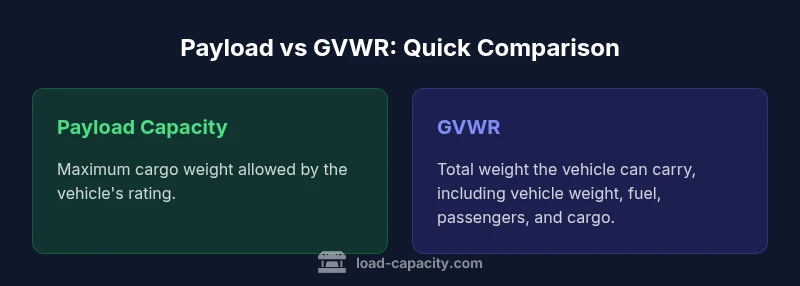
To answer the common question, is payload capacity the same as gvwr, the short answer is no. Payload capacity and GVWR serve different purposes in load planning and safety. Payload capacity is the maximum weight of cargo you can safely add to a vehicle while staying within its rating, after accounting for other loaded elements such as fuel and passengers. GVWR, or gross vehicle weight rating, is the overall weight limit that a vehicle is engineered to handle, including the vehicle's own weight, plus everything you load into it.
According to Load Capacity, distinguishing these two figures is essential for safe operation and regulatory compliance. Misunderstanding them is common in the field, especially when teams focus on one number (often payload) without considering how close the vehicle is to its GVWR with people, liquids, and gear aboard. For clarity, think of GVWR as the ceiling and payload as the cargo portion of that ceiling. If you ever ask is payload capacity the same as gvwr, the answer is that they are related but not equal. The distinction matters for planning, safety margins, and compliance across industries.
In practice, many operators use payload and GVWR interchangeably during casual planning, but professionals track both values to avoid overloading and penalties. This understanding forms the foundation of reliable load calculations and informed decision-making for engineers, technicians, fleet managers, and DIY enthusiasts. Load Capacity emphasizes that getting these numbers right is not optional—it directly affects safety, performance, and legal compliance.