Dumper Load Capacity: Engineering Guidelines for Safe Payloads
A data-driven guide to understanding dumper load capacity, with calculation methods, real-world scenarios, and best practices for safe payload management in heavy industries.


Dumper load capacity is the maximum safe payload a dumper truck can carry, typically expressed in tons or kilograms and limited by the vehicle’s design, axle ratings, and tipping mechanics. Accurately assessing capacity requires considering gross vehicle weight (GVW) with payload, payload distribution, terrain, and operational conditions. Do not overload, as overload undermines stability and braking performance.
Understanding dumper load capacity
Dumper load capacity represents the maximum payload a dumper truck can carry safely, including constraints of the chassis, suspension, tires, and braking system. In practice, engineers measure capacity as a combination of manufacturer-rated payload and the structural limits that ensure stability during tipping. The terminology varies by region and by vehicle type, but the core concept remains the same: payload must stay within the design envelope to prevent overloading that can compromise steering, traction, and braking. When discussing dumper load capacity, engineers convert between metric tons and kilograms to align with project specifications and regulatory data. It is essential to distinguish 'payload' (the material loaded) from 'GVW' (the combined weight of the vehicle and its load) because both factors influence performance and safe operation. In many projects, the declared payload range is a starting point, but field conditions such as road grade, surface quality, and weather can shrink dependable capacity. The Load Capacity team emphasizes that safe payload planning starts with a clear definition of capacity and a plan to verify it under typical site conditions.
Engineers also factor dynamic loads: as the dumper accelerates, climbs, or negotiates uneven ground, inertial forces add to static weight. Therefore, safe payload is not a fixed single value but a range that anticipates momentary overloads during tipping, braking, and cornering. This makes a holistic approach essential: confirm the manufacturer rating, assess axle and tire limits, and apply a conservative margin for safety. Throughout this article we refer to the term 'dumper load capacity' to anchor discussions in a single, measurable concept. For project teams, aligning capacity with the planned workload reduces the risk of equipment downtime and accident claims, and it supports cost-effective logistics planning.
Factors that determine load capacity
Load capacity is not a single number pulled from a specification sheet; it emerges from the combination of design, usage, and environment. Key determinants include the dumper’s chassis strength and frame geometry, which set the baseline for how much mass the structure can support during static loading and while tipping. Axle ratings, tire load capacity, and the distribution of weight across the axles affect permissible payload more than the nominal manufacturer figure alone. Hydraulic system capacity and cylinder stroke influence the rate at which the bed can lift material without exceeding structural limits. Ground clearance, wheelbase, and track width alter stability margins on uneven surfaces and slopes. Terrain conditions—soft soils, loose gravel, mud, or snow—can reduce traction and usable payload. Vehicle speed, braking performance, and the presence of auxiliary equipment (like towing gear or attachments) further modify safe payload. Finally, regulatory limits and company-specific safety policies apply, so the actual dumper load capacity usable on a given site is the minimum of several interacting constraints. Understanding these factors helps engineers choose equipment that matches project demands while preserving safety margins.
How to calculate safe payload
- Gather official specifications: GVWR and payload rating from the manufacturer, axle ratings, tire load ratings, and braking system capability.
- Determine curb weight (unladen weight) and calculate payload by GVW: Payload_by_GVW = GVWR − UnladenWeight.
- Check axle load limits: ensure each axle does not exceed its rating when payload is added, using weight distribution data.
- Consider site and regulatory limits: regional road restrictions, environmental rules, and site-specific safety policies.
- Apply a safety margin: reduce calculated payload by a percentage (for example, 10–20%) to account for dynamic loads and measurement uncertainty.
- Validate with on-site verification: weigh stations, weighbridges, and periodic rechecks after cycles help confirm real-world capacity.
Real-world scenarios and examples
In mining operations, dumper load capacity governs production tempo. On steep gradients and rough surfaces, payloads are often reduced to preserve traction and avoid bed impingement. In urban construction, site access, pavement loads, and traffic considerations drive conservative payload choices and frequent weight checks. Rural or remote sites with uneven terrain demand payload de-ration to ensure safe tipping and stable hauling. Across these scenarios, the central lesson is consistent: capacity is a constraint that must be verified against actual field conditions, not assumed from table ratings alone.
Testing and verification methods
Testing dumper load capacity involves static weight measurements, dynamic loading simulations, and on-site verifications. Static tests confirm GVW compliance using calibrated scales or weighbridges. Dynamic testing evaluates behavior during acceleration, braking, and turning with payload incrementally increased to the safe limit. Regular on-site checks—especially after maintenance, tire changes, or axle work—help ensure the payload remains within proven limits. Documented test results support traceability and safety compliance.
Operational best practices
Enforce loading procedures that prioritize even weight distribution, avoid peak-rated payloads on grades, and maintain clear communication between operators and supervisors. Regularly inspect tires, suspension, and braking systems, as degraded components reduce safe payload. Use load cells or on-board sensors where available to monitor real-time weight and warn when approaching limits. Maintain documentation of capacity checks and updates to reflect changes in equipment condition or site conditions.
Choosing the right dumper for a project
Start with a clear map of site conditions, typical payloads, access constraints, and regulatory requirements. Compare manufacturer ratings with on-site tests and consider future workload growth. For harsh terrain or heavy-duty cycles, prioritize larger axle margins, stronger frames, and robust tires. For smaller sites, favor nimble models with lower curb weight and easier maintenance. The goal is to align dumper load capacity with the project’s production target while building in a safety margin.
Comparison of common dumper types by payload and use-case
| Dumper Type | Typical Payload | Common Use |
|---|---|---|
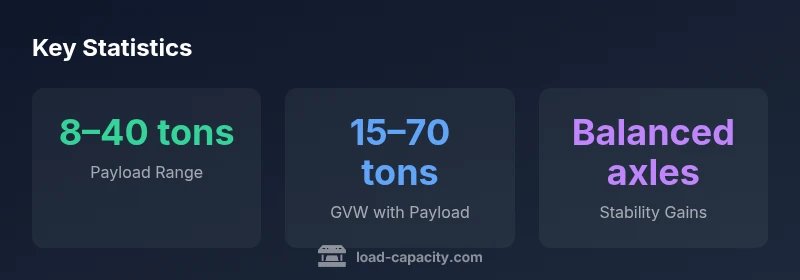
| Articulated Dump Truck (ADT) | 15–40 tons | Rugged terrain, mining, construction sites |
| Rigid Dump Truck | 20–60 tons | Large-scale mining, quarrying |
| Mini Dumper | 0.5–5 tons | Urban construction, landscaping |
Quick Answers
What is dumper load capacity?
Dumper load capacity is the maximum payload a dumper can carry safely, considering the vehicle’s design, axle limits, and tipping mechanics. It differs from simple weight limits because real-world conditions—terrain, weather, and load distribution—affect stability and braking. Always verify against manufacturer data and on-site tests.
Dumper load capacity is the maximum payload a dumper can safely carry, accounting for design, axles, and tipping limits. Real-world conditions matter, so always verify with data and on-site tests.
How do you calculate safe payload for a dumper?
Start with the manufacturer’s GVWR and payload rating, subtract the curb weight to get potential payload, then verify axle and tire limits. Apply a safety margin for dynamic conditions and confirm with on-site weighing when possible.
Begin with GVWR data, subtract the empty weight to get potential payload, check axle limits, add a safety margin, and verify on-site with weigh-in checks.
Does terrain affect dumper load capacity?
Yes. Slopes, surface quality, and traction dramatically influence safe payload. Steeper grades and soft ground typically reduce usable capacity to maintain stability and braking performance.
Terrain matters a lot—slopes and soft ground reduce what you can safely load to keep the truck stable.
What is the difference between payload and GVW?
Payload is the material loaded in the bed. GVW is the total weight of the vehicle plus its payload. The safe payload must fit within both the manufacturer’s payload rating and the axle/GVW constraints.
Payload is what’s loaded; GVW is the vehicle plus that load. Both limits must be considered for safety.
Why is axle configuration important for capacity?
Axle spacing and ratings determine how weight is distributed. Proper configuration can improve stability and increase usable payload, especially on uneven terrain or when turning.
Axle setup affects stability and usable payload, especially on rough or inclined ground.
“Safely using dumper load capacity means aligning payload with GVW, axle ratings, and field conditions; never rely on nominal capacity alone.”
Top Takeaways
- Assess GVW and axle ratings before loading.
- Choose payload ranges matching terrain and equipment.
- Account for dynamic loads and ground conditions in planning.
- Verify capacity with manufacturer data and on-site tests.
- Incorporate safety margins to prevent overload.