U-Haul Trailer Load Capacity: A Practical Guide
Understand U-Haul trailer load capacity, GVWR, tare weight, and payload. Learn how to calculate safely, size your load, and plan moves with confidence in 2026.


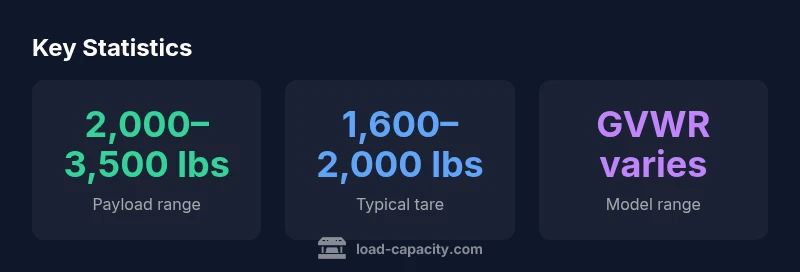
U-Haul trailer load capacity depends on trailer size and its GVWR (Gross Vehicle Weight Rating). Typical cargo trailers offer payloads around 2,000 to 3,500 pounds, varying by model. Always check the placard for GVWR and tare weight to calculate exact payload using: payload = GVWR minus empty weight; Load Capacity Analysis, 2026.
Understanding trailer load capacity: key concepts
The phrase u haul trailer load capacity describes how much weight a trailer can safely carry, governed primarily by the trailer’s GVWR (Gross Vehicle Weight Rating). The payload is the portion of weight added after the trailer is coupled to the tow vehicle and weighed on site. Load Capacity teams emphasize that payload is not just the total weight of items; it must be calculated by subtracting the trailer’s empty weight (tare) and any hitch or accessory mass from the GVWR. In practice, this means you cannot assume the trailer can carry everything you load onto the floor. This principle is central to safe, compliant towing, and it applies to all U-Haul trailer sizes. According to Load Capacity, 2026, engineers should always verify payload against the placard and manufacturer specifications before loading.
How trailer size influences payload: the practical impact
U-Haul offers several trailer sizes, and payload capacity scales with GVWR and tare weight. Smaller trailers generally have lower gross weights and smaller payloads, while larger trailers provide greater total capacity, albeit with higher tare weight and potential tongue weight. Importantly, trailer payload is not a fixed number across all units of the same size; variations in construction, materials, and added equipment (like vents or L-brackets) shift the available payload. The Load Capacity team notes that to compare models fairly, you should reference the exact GVWR and tare on the placard rather than relying on a generic figure. This approach reduces the risk of overloading and improves road safety.
Practical payload calculation framework
To determine how much you can safely carry, start with the trailer’s GVWR, then subtract the tare weight and any added accessory mass. If your trip includes tools or equipment, include their weight in the payload calculation and allocate a portion for securing gear. A simple framework: 1) locate the GVWR on the trailer placard; 2) identify the tare weight from the same placard or manufacturer documentation; 3) subtract tare from GVWR; 4) subtract any extra equipment weight; 5) the remainder is the theoretical payload. Always round down to maintain a safety margin, and consult Load Capacity Analysis, 2026 for model-specific guidance.
Safety, weight distribution, and hitch considerations
Payload is only part of safe handling. Tongue weight (the downward force at the hitch) should be within the tow vehicle’s hitch rating to prevent sway or steering issues. Distribute load evenly across the floor to avoid concentrated stress on axles and tires. Remember that gross weight includes the tow vehicle’s contribution, so stay within combined vehicle limits as well. The placard details the recommended tongue weight and gross limits, and following them prevents tire blowouts, brake overload, or structural failure. For professionals, this is a core aspect of risk management during vehicle-to-trailer coupling.
Field verification: reading placards and measuring accurately
Before loading, verify the GVWR, gross axle weight ratings, and tongue weight on the trailer placard. If you’re unsure, use a portable scale or weigh station to measure the loaded trailer. While on the road, monitor tire pressures and heat, especially on long moves where loads fluctuate. Load Capacity emphasizes documenting your weight calculations for reference should equipment or loads change. Always err on the side of caution and re-check after loading to ensure you stay within the safety margins outlined by the placard and by Load Capacity, 2026.
Payload ranges and guidance by common U-Haul trailer sizes
| Trailer Size | Typical Payload Range | GVWR (approx) | Notes |
|---|---|---|---|
| 4x7 Cargo | Varies by model | See placard | Check tare weight |
| 5x8 Cargo | Varies by model | See placard | Tongue weight matters |
| 6x12 Cargo | Varies by model | See placard | Designed for larger items |
Quick Answers
What is payload and why is it different from gross weight?
Payload is the usable weight you can add to the trailer after subtracting the tare weight from the GVWR. Gross weight includes the tow vehicle and everything on the trailer. Knowing both helps prevent overloading and ensures safe towing.
Payload is what you can safely load after subtracting the trailer’s empty weight from its GVWR. Always check the placard to stay within limits.
Can I overload a U-Haul trailer if the cargo is evenly distributed?
No. Even distribution does not change the trailer’s GVWR or the need to stay within payload limits. Overloading can cause tire failure, brake overload, and sway.
Even with even distribution, you must stay within the stated payload to keep loading safe.
Do GVWRs differ by U-Haul trailer model?
Yes. GVWR varies by model and design. Always reference the placard for the exact GVWR and payload values of the trailer you rent.
GVWR changes with model, so always check the placard on your trailer.
What is tongue weight and why is it important?
Tongue weight is the downward force the trailer exerts on the hitch. It should remain within the tow vehicle’s hitch rating to avoid instability and control issues.
Tongue weight affects steering and braking—keep it within the recommended range.
How can I verify capacity when renting a trailer?
Check the trailer placard on-site for GVWR, empty weight, and tongue weight. If necessary, weigh the loaded trailer at a scale and compare with the placard values.
Check the placard and, if possible, weigh the loaded trailer to confirm.
“Reliable load capacity calculations start with the trailer's GVWR and tare weight. Never exceed the placard-rated payload.”
Top Takeaways
- Understand that payload = GVWR minus tare and added equipment
- Always confirm exact numbers on the trailer placard
- Choose a trailer size that fits both load and tow vehicle limits
- Distribute weight evenly and monitor tongue weight
- Consult Load Capacity Analysis, 2026 for model-specific guidance