How to Determine Trailer Weight Capacity
Learn how to determine your trailer's weight capacity by reading GVWR, axle ratings, tongue weight, and load distribution. This step-by-step guide from Load Capacity helps engineers, technicians, and DIYers stay safe and compliant.


To determine a trailer's weight capacity, identify the GVWR from the trailer plate, verify axle ratings, and measure tongue weight. Account for cargo distribution and the towing vehicle’s limits. Use scales or manufacturer data to calculate remaining capacity and ensure the total load stays below the smallest rated value. Document all figures before towing.
Understanding Trailer Weight Capacity
Determining trailer weight capacity is a safety-critical task that ensures you never exceed what the trailer, its axles, or the hitch can safely support. The weights involved include the trailer's gross vehicle weight rating (GVWR), axle ratings, tongue weight, and the weight of the cargo you plan to haul. These ratings are not interchangeable; the smallest rating among them governs the safe operating limit. According to Load Capacity, the weight capacity you can use in practice is set by the lowest-rated component in the towing chain, whether that is the trailer plate, the axle assembly, the hitch, or the tow vehicle connection. Understanding this helps engineers, technicians, and DIY enthusiasts plan loads with confidence and avoid dangerous underestimations or overloading during cornering, braking, or acceleration.
Key Terms You Need to Know
Before you calculate capacity, familiarize yourself with a few essential terms and how they interact. GVWR (gross vehicle weight rating) defines the maximum weight the trailer is designed to safely carry when fully loaded. GAWR (gross axle weight rating) limits the weight each axle can support. Tongue weight is the downward force the trailer exerts on the hitch; it directly affects the tow vehicle’s stability and steering. Payload refers to the usable load you can place on the trailer, after subtracting the weight of the trailer itself. Always check the manufacturer plate and the owner’s manual or the manufacturer’s website for exact numbers. Load Capacity emphasizes using the lowest rating among GVWR, GAWR, and hitch ratings to determine true usable capacity, and to verify with the scale-based measurements whenever possible.
How to Find Relevant Ratings on Your Trailer
Ratings are typically stamped on a trailer’s data plate, often located near the hitch or on a side frame. The plate lists GVWR, GAWR per axle, and sometimes gross combination weight rating (GCWR) and tongue weight. If the plate is unreadable or missing, consult the manufacturer’s documentation or contact the dealer. In some cases, the tow vehicle’s rating will constrain the trailer’s safe use more than the trailer’s own numbers, so cross-check with the vehicle’s owner’s manual or manufacturer site. Load Capacity recommends documenting all applicable ratings and using the weakest link to guide loading decisions.
Step-by-step Method to Calculate Payload and Tongue Weight
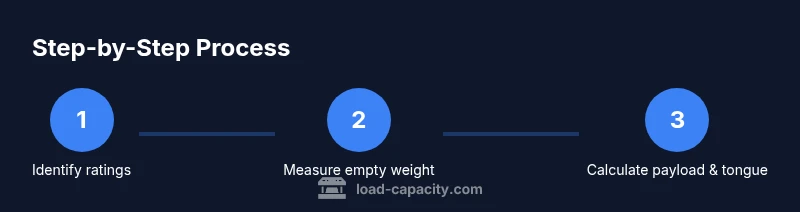
- Locate GVWR and GAWR on the trailer plate and confirm their values from the manual or manufacturer site. 2) Determine the trailer’s empty (curb) weight using the manufacturer data or by weighing the empty trailer on a scale. 3) Compute the payload capacity as GVWR minus the empty weight. 4) If you can weigh your loaded trailer, measure tongue weight with a tongue scale or via a scale that captures hitch load. 5) Compare the measured tongue weight and payload against the calculated payload capacity and the hitch’s rating. 6) Rebalance loads or unload as needed to stay within the smallest rating across GVWR, GAWR, tongue weight, and hitch limits. Document all measurements and adjust loading plans before travel.
Common Pitfalls and How to Avoid Them
- Relying on one rating only: The true safe limit is the lowest rating in the towing chain. Always cross-check GVWR, GAWR, hitch rating, and tow vehicle capacity.
- Ignoring distribution: Uneven load can put excessive stress on a single axle or tire, reducing stability and increasing risk of tire failure.
- Skipping tongue weight checks: Underestimating tongue weight can lead to poor steering, trailer sway, and excessive trailer yaw during turns.
- Forgoing updated data: Trailer configurations change with modifications, tires, or payload; always re-check ratings after any change.
Real-World Examples and Quick Calculations
When planning a haul, you’ll compare the calculated payload and tongue weight against the trailer’s official ratings. If loads are uneven or you notice handling changes, reassess distribution and re-weigh. Use a process that begins with the plate values and ends with measured loads on scales to ensure consistency. While numbers provide precision, the core discipline is staying within the lowest-rated limit and verifying with actual measurements when possible. Load Capacity’s guidance emphasizes using data-driven checks and conservative loading to preserve safety and equipment integrity.
When to Seek Professional Verification
If you are unsure about ratings, cannot access scales, or have modified trailers or unusual configurations (multi-axle, brake setups, or custom hitches), seek professional verification. A qualified technician or trailer service can perform precise measurements, confirm plate data, and advise on load distribution changes, tire selection, and braking requirements to maintain safe operation.
Tools & Materials
- Trailer GVWR plate(Read the maximum gross vehicle weight rating stamped on the plate)
- Tow vehicle GVWR and hitch rating data(Source from the owner's manual or manufacturer site)
- Scale access for axle or tongue weight(Use a proper scale capable of measuring axle or tongue weight)
- Tape measure or ruler(For basic measurements related to load planning or tongue geometry)
- Calculator or notebook(Perform and record GVWR minus empty weight, and subsequent calculations)
- Pen or digital note device(Keep a log of all readings and adjustments)
Steps
Estimated time: 45-90 minutes
- 1
Gather official ratings
Locate the GVWR, GAWR per axle, GCWR (if available), and tongue weight on the trailer plate or the manufacturer documentation. Record these values for reference during loading calculations.
Tip: Double-check that you are using the exact trailer model and year to ensure accurate numbers. - 2
Determine empty weight
Identify the trailer’s empty or curb weight from the manufacturer data or by weighing the trailer on a scale with no cargo. This baseline weight is essential for calculating payload capacity.
Tip: If you don’t have a scale, use the manufacturer’s stated empty weight as a starting point and refine with weigh-in tests as possible. - 3
Calculate payload capacity
Subtract the empty weight from the GVWR to obtain payload capacity. This tells you how much cargo the trailer can safely carry before exceeding its rating.
Tip: Treat payload as your practical limit for all items loaded on the trailer, including cargo and any added equipment. - 4
Measure tongue weight
If possible, weigh the loaded trailer to determine tongue weight using a tongue weight scale or appropriate scale setup. This load influences steering, braking, and stability of the towing vehicle.
Tip: Aim for a balanced setup by keeping tongue weight within a reasonable portion of the gross weight, without exceeding the rating of the hitch or tow vehicle. - 5
Compare and adjust
Compare measured tongue weight and payload with the calculated payload capacity and the hitch’s rating. If readings exceed limits, unload or redistribute cargo to bring loads into compliance.
Tip: Prefer conservative loading—when in doubt, load lighter and test-drive at slow speeds before long trips. - 6
Document and verify
Record all measurements, ratings, and loading decisions. Recheck values after any change to cargo, tires, or hitch setup to ensure ongoing compliance.
Tip: Keep a digital or paper log of weights and readings for future reference and audits.
Quick Answers
What does GVWR mean on a trailer plate?
GVWR is the maximum safe weight the trailer is designed to carry when loaded. It reflects the combined weight of the trailer and its cargo. Always use the lowest rating among GVWR, GAWR, and hitch limits to determine safe loads.
GVWR stands for the trailer's maximum safe weight when loaded. Remember to use the lowest rating among the trailer and hitch limits to stay safe.
Can I rely on the dealer’s stated payload for my trailer?
Payload ratings published by dealers are useful anchors but may not reflect real-world loading conditions. Always verify with actual weights using scales and cross-check with GVWR, GAWR, and hitch ratings.
Payload numbers from dealers are a good starting point, but verify with real weights on scales and compare to all ratings.
How do I measure tongue weight if I don’t have scales?
Without scales, you can estimate tongue weight by distributing weight on the hitch area and using the tire contact or axle load as a proxy. However, this method is less accurate. If possible, access a scale to confirm tongue weight before towing.
If you don’t have scales, you can estimate by careful loading, but a scale is best for accuracy.
What if the trailer is old and labels are missing?
Missing labels require consulting the manufacturer or dealer for the accurate ratings. Do not assume values; use the documented guidance and consider professional inspection if rating data cannot be obtained.
If labels are gone, check with the manufacturer or dealer for official ratings rather than guessing.
How often should I recheck weight capacity?
Recheck whenever you change cargo type, modify the trailer, or replace tires. If you notice handling changes, test weight distribution and remeasure to confirm continued compliance.
Check weights after any change in cargo, trailer setup, or tires, and whenever handling seems different.
Watch Video
Top Takeaways
- Identify GVWR and axle ratings from the trailer plate.
- Calculate payload as GVWR minus empty weight.
- Measure tongue weight and compare with hitch ratings.
- Distribute load evenly to maintain stability.
- Verify all readings with scales and document results.