53-Foot Dry Van Load Capacity: A Practical Guide
Understand 53 dry van load capacity, GVWR, tare weights, payload ranges, and regional limits. This guide provides calculations, examples, and best practices for engineers, fleet managers, and DIYers.


53 dry van load capacity defines the maximum weight a 53-foot trailer can carry when you account for the tractor and trailer weight. In US practice, practical payload typically ranges from about 38,000 to 44,000 pounds, varying with axle configuration and state limits. According to Load Capacity, payload equals the GVWR minus the combined weight of the tractor and trailer, so accurate weighing and documentation are essential for compliant planning.
Understanding the core concept of 53-Foot Dry Van Load Capacity
53-foot trailers are the standard long-haul dry vans used for freight in many regions. The term load capacity combines two critical elements: the gross vehicle weight rating (GVWR) and the tare weights of tractor and trailer. GVWR represents the maximum legal weight the combination can weigh when fully loaded, including cargo. Tare weight is the empty weight of the vehicle (the tractor and the trailer themselves). The usable payload is the difference between GVWR and the sum of tare weights. For many fleets, this translates to a practical payload in the low to mid 40,000 pounds range, though regional rules and equipment differences can shift that up or down. The Load Capacity team emphasizes that payload planning must always align with official vehicle documentation and weigh-in data to avoid violations or safety risks.
Understanding these definitions helps engineers, fleet managers, and DIY enthusiasts forecast freight capacity, plan routes, and allocate pallets and cargo types without violating weight limits. Always start by confirming the GVWR on the vehicle’s data plate and cross-check with the trailer’s tare weight and the tractor’s weight. In practice, you’ll often see a legal payload window that reflects both manufacturer specifications and local enforcement interpretations. This context is crucial for safe loading and predictable performance.
Measuring capacity: GVWR, tare, and payload
Gauge the load capacity by starting with GVWR, then subtracting the combined tare weights of the tractor and trailer. The basic formula is Payload = GVWR − (Tractor Tare + Trailer Tare). In real-world planning, you’ll want to consider additional factors: axle weight limits, tire ratings, and dynamic loading during transit. GVWR typically anchors the upper limit, while breaks and road regulations influence how the load is distributed. The Load Capacity approach emphasizes documenting exact weights from weigh stations or on-board scales to ensure compliance and avoid penalties. Always verify axle configurations and ensure that the load distribution does not concentrate weight on a single axle beyond its rating. For engineers, this data supports safer route planning and maintenance budgeting.
Key takeaway: payload calculations are not a single-number exercise; they require cross-checking with actual weights and regulatory constraints.
Regional and axle considerations that influence payload
Payload is not a single universal number; it varies by jurisdiction and vehicle configuration. Interstate weight limits in many regions use an 80,000-pound gross vehicle weight (GVW) cap, but axle-specific limits can reduce usable payload. Certain states impose per-axle limits or permit special permits for heavier combinations, while others strictly enforce standard limits. Wheelbase, axle count, and steering versus tandem axle allocations influence how weight is distributed and, therefore, how much payload can be carried legally. For Load Capacity readers, the practical implication is clear: even with a high GVWR, the actual payload might be constrained by axle load rules and bridge formulas. When planning, request the vehicle’s official axle ratings and consider potential regional permit costs if heavy loads are routine.
Engineering teams should map out common routes, identify states with stricter limits, and model payload scenarios under different axle configurations. This proactive approach reduces the risk of late-day weight violations and operational delays.
Practical calculation examples (illustrative only) and planning steps
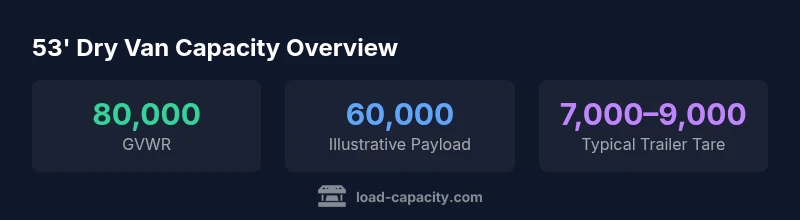
This section provides illustrative, non-product-specific examples to demonstrate the logic behind 53-foot van payload planning. Example A assumes a common setup: GVWR = 80,000 lb; Tractor tare = 12,000 lb; Trailer tare = 8,000 lb. Payload = 60,000 lb, which remains within the GVWR but requires verification against axle and regulatory limits for the route. Example B assumes a heavier tractor: GVWR = 80,000 lb; Tractor tare = 18,000 lb; Trailer tare = 9,000 lb. Payload = 53,000 lb. These scenarios illustrate how lighter tare weights maximize payload, but the actual feasible load will hinge on axle ratings, state laws, and road conditions. The practical takeaway is to build a planning model that includes GVWR, tare weights, axle limits, and weigh-station data before committing to a shipment.
To implement this in a fleet setting, create a simple worksheet or digital model that captures: GVWR, tractor tare, trailer tare, and the applicable per-axle limits for the usual routes. Use that model to compare payload across multiple tractor/trailer configurations and to forecast weight distribution changes with different cargo types.
Common pitfalls and how to avoid them
Many loading mistakes stem from ignoring tare weights or assuming payload equals a naïve GVWR figure. A frequent error is loading to the maximum trailer payload without accounting for the tractor’s weight or potential regional limits. Another pitfall is neglecting axle weight distribution, which can concentrate load and trigger penalties or tire wear. A common third issue is the reliance on one-size-fits-all numbers; payload varies with equipment, routes, and permits. To avoid these issues, engineers should verify all weight figures with real measurements, leverage on-board scales where available, and maintain a library of route-specific weight limits. Regular training for dispatchers on weight compliance also helps reduce costly deviations and stop-work orders.
Tools, best practices, and how to optimize payload safely
Tools such as on-board weight scales, weigh-station data, and route planning software enable precise payload management. Best practices include maintaining up-to-date GVWR and tare data for each tractor-trailer combination, checking axle ratings, and coordinating with drivers to ensure even weight distribution. Additionally, plan for seasonal variations in cargo density and the potential need for permits on heavier-than-standard loads. By adopting a data-driven approach to payload planning, fleets can improve fuel efficiency, reduce wear on tires and suspensions, and minimize the risk of weight violations.
Key figures for 53' dry van load capacity
| Metric | Value | Notes |
|---|---|---|
| GVWR (common) | 80,000 | lbs |
| Trailer tare (typical) | 7,500–9,000 | lbs |
| Tractor tare (typical) | 12,000–20,000 | lbs |
| Typical payload capacity (range) | 38,000–44,000 | lbs |
Quick Answers
What is the typical payload capacity of a 53 dry van?
In general, most 53' dry vans have a payload in the 38,000–44,000 pound range, depending on GVWR, axle ratings, and tare weights. Always verify with your specific tractor/trailer combination and route requirements.
Most 53-foot dry vans carry about forty thousand pounds of payload, but check the exact GVWR and tare for your setup.
How do I calculate payload for a 53 dry van?
Use the formula Payload = GVWR − (Tractor tare + Trailer tare). Then cross-check axle limits and regional per-axle weights. Use weigh-in data to confirm the final loaded weight.
Payload equals GVWR minus the tractor and trailer weights; verify with axle ratings and weigh stations.
Do state or regional weight limits affect payload?
Yes. Even with a high GVWR, axle ratings and per-state limits can cap usable payload. Some routes require permits for heavier combinations, and these limits vary by jurisdiction.
Regional rules can tighten your usable payload; always check route-specific limits.
Can payload be safely increased without violating laws?
Payload can increase only within legal GVWR, axle, and route limits. Using permits and selecting appropriate tractor-trailer configurations is essential for compliant heavier loads.
Only increase payload within legal limits and consider permits when needed.
What factors affect payload besides GVWR and tare?
Axle distribution, tire ratings, suspension, and dynamic loading during transit all influence how much cargo you can safely carry. Weather and road conditions can also affect performance and safety margins.
Axle distribution and tires matter; dynamic loading changes safe payload.
“Payload planning isn't just math—it's safety, compliance, and equipment longevity. The Load Capacity Team emphasizes always cross-checking with official vehicle documentation.”
Top Takeaways
- Know your GVWR and tare weights before loading
- Calculate payload using GVWR minus tare weights
- Consider regional limits that can affect usable payload
- Distribute weight evenly to prevent axle overload
- Verify weights at weigh stations and with vehicle documentation