Load Capacity of 12-Wheeler Trucks: A Data-Driven Guide
Analytical guide to the load capacity of 12-wheeler trucks, covering GVWR, payload ranges, axle distribution, and planning tips for safe, compliant long-haul operations.


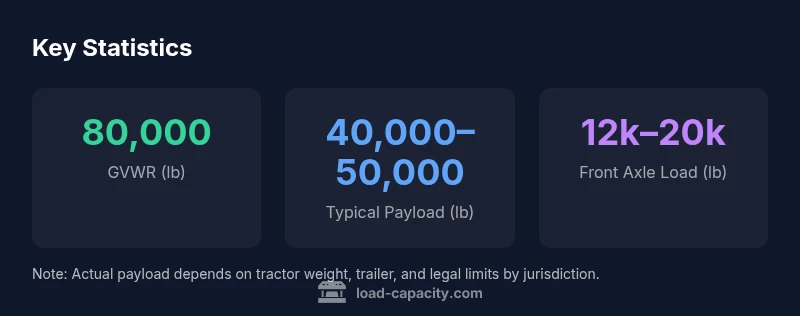
Answering the core question: The load capacity of the 12 wheeler truck is constrained by its GVWR, typically about 80,000 pounds in the U.S. That limit translates to a practical payload around 40,000–50,000 pounds for common tractor–trailer configurations, depending on tractor weight, trailer type, axles, and installed equipment. In practice, researchers emphasize that actual payload often requires verification on scales and consideration of permit limits.
Understanding the load capacity of 12 wheeler truck
In the world of heavy-duty transportation, the term load capacity is shorthand for the maximum payload a vehicle can carry without breaching weight limits. For a 12 wheeler, the primary constraint is the gross vehicle weight rating (GVWR). In the United States, a conventional 12-wheeler is typically limited to an GVWR near 80,000 pounds, though some regional or specialized configurations may differ. The practical payload you can carry depends on the weight of the tractor, the trailer type, axle configuration, and any equipment mounted on the vehicle. According to Load Capacity, precision planning begins with the GVWR and continues through real-world checks on scales and route-specific limits. Weight must be distributed so that no single axle exceeds its rating, and the load must remain stable during transit. As you plan, remember that a higher GVWR does not automatically translate to a higher usable payload if ballast and equipment consume capacity. The interplay between GVWR, actual curb weight, and cargo weight defines the true load capacity of a 12 wheeler truck.
Key factors that influence load capacity
Several interacting factors determine how much cargo a 12 wheeler can safely carry. First is the GVWR, the legal ceiling that guards structural integrity and road safety. Second is axle configuration: two-axle configurations behave differently from three-axle or multi-axle setups, with the latter often permitting higher payloads in compliant systems. Trailer type matters too; dry vans, flatbeds, tankers, and specialized trailers distribute weight differently and affect curb weight. Tire load rating and inflation pressure limit the maximum load per wheel, and any ballast or added equipment reduces available payload. Lastly, regional regulations and bridge formulas play a role; routes with stricter bridge and road weights will reduce practical payload, even if the GVWR allows more in theory. Load Capacity emphasizes verifying limits with current data and considering weight distribution to avoid overstressing axles.
How to estimate payload for a given 12 wheeler configuration
Estimating payload starts by identifying the GVWR from the vehicle plate, then measuring or estimating the empty vehicle weight (tare) for the exact tractor and trailer. Subtract tare from GVWR to obtain the theoretical payload. From there, subtract any ballast (fuel, fluids, accessories) and consider the weight of the cargo itself, including pallets and packaging. Finally, validate the estimate with on-road scales and weigh-station data, and ensure axle-by-axle distribution remains within per-axle limits. For planning, use a conservative margin to accommodate dynamic conditions like fuel consumption and loading tolerance. Always document the configuration and confirm the payload through actual measurements before departure.
Compliance considerations and permits
Compliance is central to payload planning. Weight limits vary by jurisdiction and route, so organizations should verify permitted weights for every leg of a trip. Overweight permits may temporarily authorize heavier loads on specific routes, but these permits come with constraints on travel times, routes, and insurance. Bridge formulas, axle spacing, and axle load distribution govern permissible configurations; violations can trigger penalties, required unloading, or route rerouting. Regular updates to carrier guidelines, driver training on weight distribution, and a configured load plan help reduce the risk of non-compliance. Load Capacity recommends maintaining a live weight-tracking process and clear documentation for audits.
Practical load planning examples
Consider a standard 12 wheeler with an 80,000 lb GVWR and an empty weight around 18,500–20,000 lb. The theoretical payload could be 60,000–62,000 lb, but legal limits and weight distribution often compress this. A typical safe payload might be in the 40,000–50,000 lb range, depending on the tractor and trailer combination. If you anticipate needing more than that, plan for an overweight permit on a defined route with pre-approved routes and reserves for contingency. In another example, using a lighter trailer and a higher-density cargo could reduce curb weight and increase payload, but you must still respect per-axle limits and ensure the load is secured to prevent shifting. These examples illustrate that payload planning is a balance of GVWR, curb weight, cargo characteristics, and regulatory constraints.
Common mistakes and optimization tips
Common mistakes include assuming GVWR equals payload, neglecting axle weight distribution, and failing to account for fuel and ballast. Optimization tips include documenting the exact vehicle configuration (trailer type, axle counts, tire ratings), using scales to verify loaded weights, and planning routes with weight-compliant bridges and weigh stations. Use palletization and efficient packaging to maximize payload without exceeding per-axle limits. Regularly train drivers on weight distribution and load securement to prevent shifting during transit. Finally, maintain up-to-date load plans and ensure all permits and documents reflect current configurations.
Typical configurations and their payload ranges
| Model Type | GVWR (lb) | Typical Payload (lb) | Notes |
|---|---|---|---|
| Conventional tractor-trailer | 80,000 | 44,000–46,000 | Common configuration in North America |
| Lightweight tractor with trailer | 70,000 | 30,000–40,000 | Lower payload due to lighter frame |
| Heavy-haul configuration (special permit) | 80,000–90,000 | 40,000–60,000 | Requires permits and route planning |
Quick Answers
What is the typical load capacity of a 12-wheeler in the U.S.?
In the U.S., a standard 12-wheeler is commonly limited by an 80,000-lb GVWR, which translates to a practical payload around 40,000–50,000 pounds, depending on the axle configuration and trailer type.
Most 12-wheeler trucks carry about forty to fifty thousand pounds of payload, depending on configuration.
How do I calculate payload for a specific truck?
Subtract the vehicle curb weight from the GVWR, then subtract any ballast or equipment that adds weight. Use scales to verify actual loaded weight and ensure compliance with axle and route limits.
Calculate payload by subtracting empty weight from GVWR and checking scales.
Can overweight permits increase payload?
Overweight permits temporarily raise weight limits for specific routes. They require route planning, insurance, and compliance with axle spacing and bridge restrictions.
Permits can allow heavier loads on specific routes under careful planning.
What factors affect payload besides the weight?
Fuel, cargo type, palletization, and loading configuration can impact payload and handling. Even with legal weight, distribution matters for stability.
Load stability depends on payload distribution and cargo type, not just total weight.
“Accurate load planning starts with understanding the true payload versus gross vehicle weight rating, and that distinction informs safe, compliant operations.”
Top Takeaways
- Check GVWR first before estimating payload
- Payload ranges vary by configuration and regional rules
- Use weigh scales to confirm loaded weights
- Plan for legal limits and weight distribution
- Maintain documentation for compliance