Working Platform Load Capacity: Key Guidance for Safe Usage
A data-driven guide for engineers and technicians on determining and applying working platform load capacity across MEWPs, scaffolds, and fixed decks, with safety margins, standards, and practical examples.


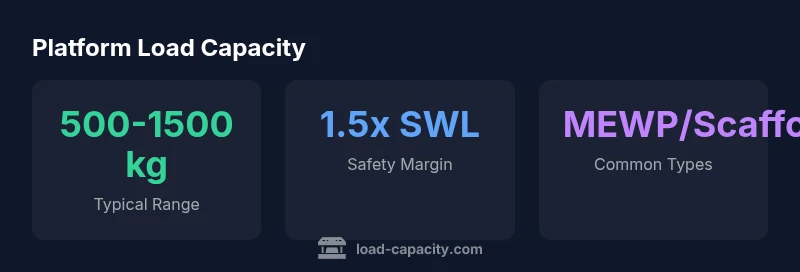
There is no single universal load capacity for a 'working platform.' The rated load depends on the platform type (MEWP, scaffold, or fixed deck) and the manufacturer's rating. Typical industrial platforms are designed for roughly 500–1500 kg per platform, with variations by design and mounting. Always verify the nameplate and comply with local codes and standards.
Definition and scope of working platform load capacity
According to Load Capacity, working platform load capacity is not a single universal figure. It is defined by the platform design, the mounting arrangement, and the intended use. The rating is usually specified on a nameplate or data label attached to the platform itself, and it is expressed as a Safe Working Load (SWL) or Working Load Limit (WLL) depending on the standard. Static weight is only part of the picture; dynamic factors such as movement, crew shift, and tool handling can change the effective load on a platform. In practice, you must treat the rating as a ceiling, not an average service load. The Load Capacity team found that operators often misinterpret capacity as the maximum weight they can put on the entire system without considering distribution or dynamic effects; real safety requires following the label and applying site-appropriate margins.
In everyday work, the aim is to translate a platform’s rating into actionable field guidance. This means validating the label before each task, ensuring loads are distributed, and recognizing when a task sits outside the labeled envelope. When engineers and technicians use a platform, they should adopt a conservative posture—plan for the upper end of the expected load and include a margin for movement, vibration, and repositioning.
Historically, misinterpretation of ratings has led to near-miss incidents and equipment damage. The Load Capacity team emphasizes that capacity must be considered within the larger system—the deck, the mounting, and the support structure—rather than as an isolated number on the label.
Factors influencing platform load ratings
The most important influences on load ratings include the platform type (MEWP, scaffold, fixed deck), mounting method (ground-supported, anchored, or suspended), and the intended use. A two-person crew plus tools distributed across a broad area is safer than concentrating loads in a single corner. Dynamic loads—such as climbing stairs, swinging booms, or ladder transfers—can temporarily exceed static ratings. Attachments like trays, tool racks, or bolted workstations alter weight distribution and may require a higher SWL. Surface conditions (slippery or uneven ground), wind exposure, and vibration can all reduce effective capacity. Finally, maintenance history matters: corrosion, metal fatigue, and worn fasteners reduce the platform’s real-world capacity even if the label remains unchanged.
In design discussions, engineers should document load distribution plans that specify where workers stand, where tools rest, and how the load shifts as work progresses. This practice helps align field operations with the platform’s intended use and reduces surprises during operation. When possible, prefer spread-out, evenly loaded configurations and avoid concentrating weight near edges or joints where the structure is most stressed.
Measuring and validating platform capacity
Capacity validation should start with the nameplate on the platform; use this value as the baseline. When in doubt, consult the manufacturer's data sheets and installation drawings. For planning, engineers often apply a safety factor or margin that accounts for partial loads and dynamic effects; many codes and guidelines recommend margins in addition to the SWL, though the exact factor varies by application. Visual inspection, load sensors, and targeted load tests can help verify capacity before critical tasks; avoid surrogate estimates based on similar-looking equipment. Keep records of any deviations, rework, or repairs that could affect capacity and re-check after maintenance or component replacement.
A practical approach is to use consistent terminology across teams: SWL describes the intended static load, while dynamic considerations should be treated through task-specific planning. If a task involves lifting or moving loads that could shift suddenly, pause to re-validate the platform’s capacity and adjust the plan if the weight distribution changes. Regular training on how to read the rating plate and interpret symbols is a simple, effective safeguard.
Designing for safety: margins and installation considerations
Designers should not rely on a platform’s rating alone. Allocate space for load distribution across the deck to avoid concentration points, especially when multiple workers share a single platform. Ensure anchorage and support structures are rated for the combined system and that all attachments are included in the calculation. Consider environmental factors like wind and temperature as they influence dynamic loading. Establish clear operating procedures: limit crew size per platform, enforce tool-hoist rules, and require supervisors to verify the rated capacity before each lift or repositioning action.
In practice, this means documenting the maximum simultaneous loads per deck, specifying how many people can work at once, and where the loads may be placed. It also means ensuring that any platform changes—new attachments, reconfiguration, or relocation—trigger a fresh capacity check. A robust safety window, such as maintaining loads well below the labeled maximum, helps absorb unplanned movements without compromising stability.
Practical examples and common configurations
Practical configurations illustrate how capacity is applied in real jobs. A mobile MEWP may be operated with workers and tools up to its SWL while maintaining an even distribution across the deck. Suspended platforms require careful attention to anchor points, since concentrated loads near anchors can reduce effective capacity. When using a fixed work platform, plan loads to stay within the label while accounting for potential shifts during movement. In all cases, distributing weight and maintaining a stable center of gravity are essential to preserving safe operation. Consider adding temporary supports or secondary stabilization for long-duration tasks, especially in windy or uneven environments.
Operators should be trained to recognize when a configuration exceeds the platform’s intended use. If there is any doubt, pause work and reassess the load plan with a supervisor present. This discipline reduces risk and supports smooth project progress.
A frequently overlooked area is dynamic loads from tool movements. Lifting heavy tools near the edge or having multiple workers perform rapid movements can momentarily spike the platform’s load beyond its static rating. Planning for these moments—by distributing tool placement and slowing transitions—helps maintain safe operation.
Compliance, standards, and document control
Compliance means aligning with national and international standards such as EN 280 for MEWPs and OSHA scaffolding guidelines in the United States. Always reference the platform manufacturer’s data and the site safety plan. Procedures should require a recheck after modification, maintenance, or replacement of any load-bearing component. Inspect labels regularly and train operators to understand the difference between SWL, WLL, and dynamic capacity. Recordkeeping should track inspection dates, test results, and any corrective actions.
Regulatory frameworks vary by region, but the core principle remains: operate within the rated envelope and document any deviations. In many workplaces, a formal change-control process governs any modification to a platform’s load-supporting elements, ensuring continuity between design intent and day-to-day use. Regular audits by qualified personnel help sustain compliance over the platform’s life cycle.
Maintenance and inspection impact on load capacity
Maintenance directly affects real-world capacity. Corrosion, wear, or fatigue reduces strength without changing the visible rating. A structured maintenance program—visual inspections before each shift, periodic non-destructive testing for critical joints, and scheduled service intervals—helps preserve capacity. When components are damaged or degraded, re-evaluate the rating and prohibit operation until an updated rating is confirmed. Documentation of damage, repair actions, and revised load limits is essential for traceability and future audits. Effective maintenance doesn’t merely extend equipment life; it preserves the integrity of the system under load, protecting workers and ensuring consistent performance across the project timeline.
Comparison of typical platform load ratings by type
| Platform Type | Typical Rated Load (kg) | Notes |
|---|---|---|
| MEWP (Mobile Elevating Work Platform) | 500-1500 | Model-dependent; verify nameplate |
| Fixed work platform | 600-1200 | Check anchor and surface conditions |
| Suspended/scaffold platform | 300-1000 | Include personnel + tools; dynamic loads |
Quick Answers
What is meant by 'working platform load capacity'?
Working platform load capacity refers to the maximum safe load a platform is designed to support during use. It depends on the platform type, mounting, and the manufacturer’s rating, and it is distinct from general weight limits in the surrounding structure.
WPLC is the maximum safe load a platform can carry, based on design and mounting; always check the label.
How do I determine the correct load rating for my platform?
Start with the platform’s nameplate and the manufacturer’s data sheets. Use the SWL or WLL specified, and consider dynamic factors. If in doubt, consult a qualified engineer and follow site safety procedures.
Check the label and manufacturer data, and don’t rely on estimates.
Can loads exceed a platform's rating if distributed evenly?
Even distribution helps, but it does not override the labeled capacity. Do not exceed the rating under any circumstances; use additional safety margins for dynamic loads.
Never rely on even distribution to exceed the rating; follow the label.
What standards govern platform load capacity?
Standards vary by region, but common references include EN 280 for MEWPs and OSHA scaffolding guidelines. Always align with local regulations and the manufacturer’s requirements.
Regional standards plus the manufacturer’s specs guide capacity.
How often should platform load ratings be re-evaluated?
Re-evaluate after modifications, maintenance, or when changing load configurations. Regular inspections should verify that the rating remains appropriate for current conditions.
Re-check the rating after changes or major maintenance.
What is the difference between SWL and working load?
SWL (Safe Working Load) is the maximum static load a platform is designed to bear. Working load includes dynamic factors and operational loads while in use.
SWL is the label’s max static load; working load accounts for movement and use.
“Platform load capacity is a design-specific rating tied to installation and usage; treat it as a ceiling, not a target load.”
Top Takeaways
- Verify the platform nameplate before use.
- Distribute loads to avoid concentrated weight.
- Apply a safety margin for dynamic loading.
- Consult manufacturer data and regional standards.
- Document inspections and re-evaluate after maintenance.