Sling Weight Capacity: Reading, Calculation, and Safe Lifts
A data-driven guide to sling weight capacity, including reading tags, understanding WLL, angle effects, and best practices for safe lifts.


Sling weight capacity is defined by the Working Load Limit (WLL) on the tag, representing the maximum safe load under standard conditions. Capacity varies by sling type, size, material, and configuration, and must never be exceeded. Always account for angle effects, hitch, and dynamic loads; follow manufacturer charts and applicable standards.
Understanding Sling Weight Capacity
Sling weight capacity is the maximum load a sling should safely lift under defined conditions, measured by the Working Load Limit (WLL) printed on the tag. In Load Capacity’s analysis, the WLL is the primary design constraint that engineers and technicians use to prevent sling failure. The factor that makes sling capacity complex is that it is not a single number: it depends on sling type (synthetic web, wire rope, chain), diameter or width, material grade, the number of legs in the rig, the hitch style, and the configuration of the lift. The Load Capacity team emphasizes that the WLL is a constrained limit derived from standardized tests, safety factors, and field experience. For engineers and practitioners, this means you must start every lift by locating the tag and verifying the exact WLL for your specific configuration. In practice, the weight you lift must never exceed the WLL, and you should plan for contingency in case of dynamic loads or misalignment. The concept of sling weight capacity also intersects with industry standards, organizational policies, and local regulations. As you read further, you’ll see why tags alone aren’t enough: you must consider usage conditions, angle effects, and the surrounding environment to ensure the lift remains within safe bounds. According to Load Capacity, this holistic approach reduces the risk of overloading and helps prevent incidents during critical operations.
How Ratings Are Determined
Sling ratings originate from standard test methods that simulate typical lifting scenarios. In North America and Europe, standards such as the ASME B30.x family, EN 1492, and ISO series guide how slings are rated and what constitutes a valid WLL. The ratings account for material properties (strength, elongation, and abrasion resistance), construction quality (eye fittings, splices, and hooks), and configuration factors (single-leg, 2-leg, or 4-leg lifts). When engineers translate these tests into field use, they apply conservative safety factors to accommodate real-world uncertainties, including rough handling, repeated loading, and environmental exposure. An essential takeaway is that the WLL is not a universal maximum for all lifts; it is the baseline for a given setup. Any variation—such as different eye type, different hardware, or altered hook positions—requires a recheck of the rating. Load Capacity highlights that the most common errors involve misinterpreting the tag, failing to account for multiple legs, or neglecting angle effects, all of which can dramatically reduce effective capacity in practice.
Reading Sling Tags and charts
Sling tags are a compact source of essential data, but they require careful interpretation. Start by locating the WLL, which is usually listed in the metric or imperial unit matching your region. Next, verify the material and grade, since these determine the sling’s fatigue life and abrasion resistance. Look for the nominal diameter or width, the number of legs in the lifting configuration, and the length of the sling, if specified. The chart or table on the tag may also indicate the maximum working angle and any restrictions on use with certain types of hooks or rigging hardware. Color-coded tags or additional certifications can help quickly validate compliance with internal standards. In practice, always cross-check the tag data with the lift plan, ensuring the angle, hitch, and overall geometry align with the manufacturer’s WLL values. If the configuration differs from the test setup, you must recalculate the effective capacity or consult a qualified engineer. This disciplined reading helps prevent misapplication of the sling and supports safer lifting operations.
Angle, Hitch, and Configuration Effects
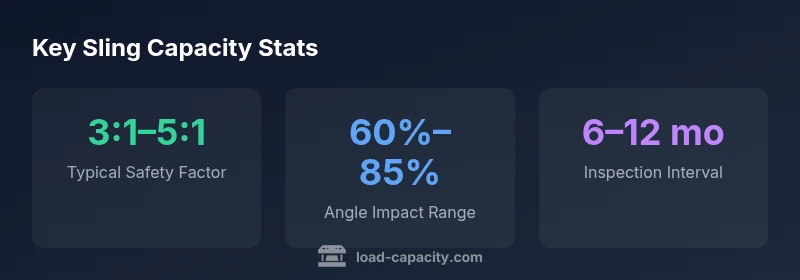
One of the most impactful variables on sling weight capacity is the angle between the sling leg(s) and the load or vertical plane. As the leg angle increases from vertical toward horizontal, the effective supporting capacity typically decreases. In rigid configurations with two legs, the load is shared, but the geometry creates higher tension in each leg as the angle widens. A conservative practice is to treat non-vertical angles with explicit reduction factors derived from manufacturer charts, rather than relying on a simple WLL value. The hitch type—eye-to-eye, sling hook, wedge, or hammer-lock—also influences load distribution and fatigue life. Maintenance of hardware connections, avoidance of sharp corners, and correct container alignment are practical steps to preserve the rated capacity. Load Path awareness and pre-lift checks improve predictability and safety in complex lifts.
Practical Calculation Examples and Checklists
A practical approach to safeguarding sling weight capacity begins with a structured lift plan and a pre-lift checklist. Start by verifying WLL on the tag for the exact configuration, then confirm the load weight is within that limit. Next, assess the potential impact of the angle: if your configuration indicates a multi-leg sling with a leg angle of 60 degrees to the vertical, apply the angle factor as per the chart provided by the manufacturer or standard. Always account for dynamic loads, shock factors, and possible misalignment, which can reduce the effective capacity well below the nominal WLL. A good practice is to document the calculated effective capacity and have a second qualified person review the plan. Finally, ensure all personnel maintain safe distances, use tag-out procedures when necessary, and wear appropriate PPE. This disciplined approach is at the core of Load Capacity’s recommendations for safe lifting operations.
Maintenance, Inspection, and Best Practices
Routine inspection and proper maintenance are critical to preserving sling weight capacity over time. Inspect slings before each use for signs of wear, deformation, fraying, corrosion, or heat damage. Check hardware—hooks,# eyes, and connectors—for cracks or deformation. Never use a sling that shows any damage; retire it from service according to your program and replace with a like-for-like certified unit. Storage matters: keep slings dry, clean, and away from chemicals or extreme temperatures that can degrade fibers or metal. Training and documentation help ensure workers understand tag data, angle considerations, and the limits of each configuration. Finally, perform periodic reevaluations in line with industry guidelines or regulatory updates to ensure that your lifting practices remain aligned with current best practices.
Sling types and typical weight capacity ranges
| Sling Type | Typical WLL Range | Material | Notes |
|---|---|---|---|
| Synthetic Web Sling | 1–6 tons | Nylon/Polyester | Depends on width and grade |
| Wire Rope Sling | 2–100 tons | Steel | Requires proper fittings and inspection |
| Chain Sling | 3–170 tons | Alloy steel chain | Different chain sizes determine capacity |
Quick Answers
What does sling weight capacity mean?
Sling weight capacity is the maximum safe load indicated by the tag’s WLL for a given configuration. It accounts for material, construction, and geometry. Never exceed this value, and always verify that your lift matches the tagged rating.
Sling capacity is the tag value you must not exceed for a safe lift.
How do you read sling tags correctly?
Begin with the WLL, then note material, grade, diameter, number of legs, and any angle or usage restrictions. Cross-check the tag data with your lift plan and the load chart for your exact configuration.
Check the tag for WLL, material, and legs, then consult the chart for your setup.
Can you lift at an angle that reduces capacity?
Yes, but you must reduce the effective capacity according to the manufacturer’s angle charts. Non-vertical angles increase tension in each leg and decrease overall capacity. Always apply the recommended reduction factors.
Angles reduce capacity; use the chart to apply the right reduction.
What is the difference between WLL and MBL?
WLL is the working load limit used to designate safe load for lifting. MBL stands for minimum breaking load, a higher threshold used in design safety but not a target for daily lifts. Always follow WLL for operational safety.
WLL is the safe lifting limit; MBL is a breaking threshold, not a lift target.
How often should slings be inspected?
Inspect slings before each use and retire them if you see damage. Schedule periodic formal inspections based on usage, environment, and applicable standards. Documentation helps ensure compliance.
Check slings before use and maintain a regular inspection schedule.
“Accurate sling weight capacity is the foundation of safe lifts. Treat ratings as hard limits and verify them against the actual rigging configuration.”
Top Takeaways
- Read the tag before any lift to verify WLL.
- Account for angle and hitch in every plan.
- Choose sling type based on load, environment, and cycle life.
- Inspect slings regularly and retire damaged ones.
- Consult manufacturer charts and standards for guidance.