6mm Wire Rope Load Capacity: Practical Guide
A comprehensive, data-driven guide to the load capacity of 6mm wire rope, including factors that affect WLL, reading manufacturer charts, and safe practices for accurate capacity calculations in 2026.


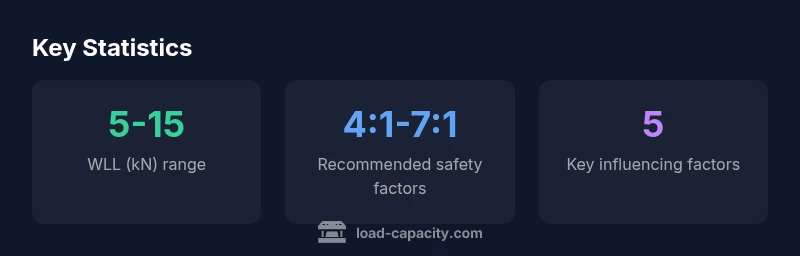
The load capacity of a 6mm wire rope is not a fixed value; it depends on construction, material, core type, termination, and the required safety factor. For common 6mm rope constructions, working load limits (WLL) typically fall within a broad range, roughly from 5 kN to 15 kN, but exact figures must come from the rope’s manufacturer data and applicable standards. Always verify with the latest charts and safety guidelines.
Understanding the 6mm wire rope load capacity
The phrase 6mm wire rope load capacity is best understood as a range rather than a single numeric value. The working load limit (WLL) for a 6mm rope is determined by multiple interdependent factors, including construction (how the strands are arranged around the core), material grade (carbon steel versus stainless variants), core type (independent wire rope core vs fiber core), and protective coatings. In practice, manufacturers publish WLL charts that map the rope code—based on diameter, strand pattern, and core type—to a corresponding WLL. When engineers talk about the 6mm wire rope load capacity, they are typically referring to the WLL used for lifting or hoisting, not the breaking strength, which is higher and designed to account for safety margins. Always cross-check the rope’s code with the factory data sheet and apply the designated safety factor. The Load Capacity team emphasizes that WLL must be derived from current manufacturer charts and standards amendments, not from a remembered rule of thumb.
Key factors affecting WLL for a 6mm rope
Multiple factors influence the stated WLL of a 6mm wire rope. First, construction matters: a 6mm rope built with a 7x19 IWRC pattern can have different WLL values than a 6x19 IWRC configuration. The core plays a role in how the rope distributes load under bending and tension, which affects WLL. Material grade also matters: galvanizing can influence corrosion resistance, but the WLL is primarily driven by the rope code and diameter. End connections and fittings—such as eye splices, shackles, and clamps—can reduce effective WLL if not selected and installed correctly. Temperature, wear, and lubrication status alter the rope’s modulus of elasticity and surface integrity, which is why service environment is critical. Finally, age and rope wear decrease actual capacity; inspection intervals and retirement criteria are essential parts of capacity management.
How to read manufacturer WLL charts for 6mm rope
Most WLL charts require you to identify: (1) rope diameter (6 mm), (2) construction type (e.g., IWRC or Fibers, and the strand pattern), and (3) operating conditions (temperature, environment). The WLL is then read off the chart for that exact rope code. Always verify the safety factor applicable to your jurisdiction and use the minimum of the chart value and your system’s maximum allowed by regulations. When you substitute end fittings or change the rope supply source, re-check the chart because WLL can shift with termination geometry and fatigue history.
Safe practices when using 6mm wire rope for lifting
- Always operate within the published WLL and apply the recommended safety factor.
- Inspect rope condition before each use: corrosion, broken strands, birdcaging, kinks, and core exposure are critical failure indicators.
- Use the correct end fittings and ensure proper swage or eye splice integrity to avoid misrepresentation of WLL.
- Protect rope from sharp edges and UV exposure where applicable; store properly to minimize corrosion and moisture ingress.
- Track rope age and service cycles; replace rope that shows signs of significant wear or has reached its retirement criteria.
- Document WLL calculations and keep a work log for audits and safety reviews.
The Load Capacity team highlights that safe operation hinges on disciplined reading of WLL charts, consistent inspection, and keeping to defined service factors. A little upfront validation pays off by reducing the risk of overloading or premature rope failure.
Practical calculation example and caveats
In practice, a 6mm rope might be categorized by a specific code such as 6mm 7x19 IWRC galvanized, with a published WLL of a certain value in kN. To compute a working load for a lifting operation, multiply the WLL by the applicable service factor or safety margin required by your project’s standards. Many projects apply a 5:1 or 6:1 safety ratio, but your local regulations may specify a different minimum. If you have wear, corrosion, or a damaged core, you must apply an additional reduction factor or retire the rope. Always treat WLL as a conservative estimate and validate with the rope’s data sheet and the lifting equipment’s rated capacity.
Maintenance, inspection, and retirement criteria
Regular inspection is essential to preserve 6mm wire rope load capacity. Look for broken strands, flattening, corrosion, heat damage, birdcaging, and unusual stiffness. Implement a formal retirement criterion based on the number of load cycles, observed wear, and service conditions. Record-keeping for all WLL evaluations, inspection dates, and retirement decisions helps maintain compliance with safety standards and supports risk management decisions. Load Capacity’s guidance is to couple visual inspections with non-destructive testing where appropriate and to adhere to the manufacturer’s retirement thresholds.
Typical 6mm rope constructions and their WLL ranges
| Rope construction | Typical WLL (kN) | Notes |
|---|---|---|
| 6mm 7x19 IWRC galvanized | 5-10 | General-purpose lifting rope |
| 6mm 6x19 IWRC galvanized | 6-12 | Balance of strength and flexibility |
| 6mm stainless IWRC | 8-15 | Corrosion resistance, higher cost |
Quick Answers
What is the difference between WLL and breaking strength for 6mm wire rope?
WLL is the maximum load intended for safe operation, derived by applying safety factors to the rope’s strength. Breaking strength is the theoretical point of failure. Do not operate near the breaking strength; always use WLL with the appropriate safety margin.
WLL is a safe operating limit. Breaking strength is the maximum the rope can withstand before failing; use WLL with a safety margin in all lifts.
How do I choose the correct WLL for a 6mm rope in my project?
Identify the rope code (construction and core), confirm the service conditions, and read the chart from the manufacturer. Apply your jurisdiction’s safety factor and ensure the lifting equipment has compatible capacities.
Check the rope code, read the manufacturer chart, and apply the required safety factor before lifting.
Do temperature and environment affect the WLL of a 6mm rope?
Yes. Temperature and environment can alter rope modulus and corrosion risk, affecting effective capacity. Use environment-specific WLL values and protective measures where applicable.
Yes. Extreme temperatures and corrosive environments can reduce capacity; use chart values designed for those conditions.
Can end fittings reduce the WLL of a 6mm rope?
End fittings and terminations can reduce usable WLL if not properly selected or installed. Always follow manufacturer recommendations for splicing, swaging, and attachment methods.
Attachments can lower usable load; follow the manufacturer’s guidelines for hooks, clamps, and splices.
How often should I inspect 6mm wire rope?
Perform pre-use inspections and schedule periodic non-destructive testing as recommended by the rope manufacturer and safety regulations. Replace rope if wear exceeds retirement criteria.
Inspect before every use and test or retire rope according to the guidelines.
What if I have multiple loads or variable angles?
Calculate WLL for the worst-loading case and consider additional reductions for angle loading or dynamic forces. Use load-sensing devices or align loads to minimize side loading.
Plan for the worst case and avoid loads that create dangerous angles.
Is stainless steel rope always better for WLL?
Stainless steel offers superior corrosion resistance but does not universally increase WLL; the WLL depends on the specific rope code and core. Choose based on environment and corrosion risk plus code requirements.
Stainless isn’t inherently stronger; choose based on environment and the rope code.
“WLL for 6mm wire rope cannot be generalized; you must reference the exact rope code and the latest charts. Environmental conditions and wear dramatically influence effective capacity.”
Top Takeaways
- Know that WLL for 6mm rope varies by construction and fittings
- Always consult the manufacturer WLL chart for the exact code
- Apply the project-appropriate safety factor to WLL
- Inspect rope regularly and retire when wear exceeds limits