20ft Shipping Container Load Capacity: Core Ranges
A data-driven guide to understanding the load capacity of a 20ft shipping container, including payload ranges, gross weight, and practical loading guidance for engineers and fleet managers.


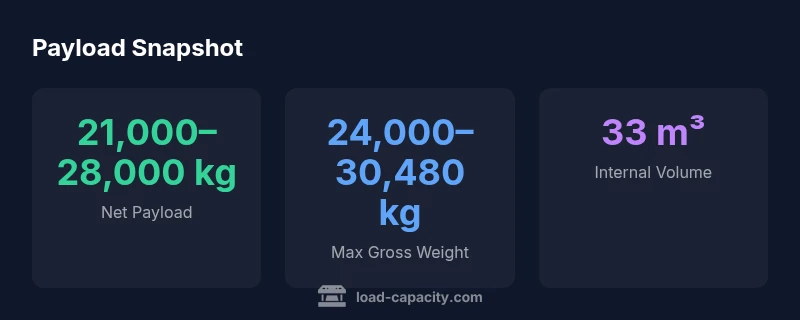
20ft shipping container load capacity is determined by the tare weight and the container's maximum gross weight. In practice, the net payload typically ranges from about 21,000 kg to 28,000 kg, depending on the container model and regional standards. Always read the certification plate on the specific container and follow local regulations. According to Load Capacity, payload ranges can differ by vendor and age of the unit.
Understanding the 20ft container load capacity
When engineers and fleet managers evaluate a 20ft shipping container, the primary figure to consider is the load capacity, which balances safety, legal limits, and operational practicality. The container's payload is not a fixed number; it depends on tare weight, gross weight limits prescribed by shipping lines and national authorities, and how the container is certified. In practice, the payload you can safely load is the difference between the container's maximum gross weight and its tare weight. For today’s standard 20ft dry containers, tare weights commonly fall in the range of roughly 2,200 to 2,400 kilograms, while maximum gross weights cluster around 24,000 kilograms to 30,480 kilograms depending on region and model. This means net payloads can vary widely, even among containers that look identical on the outside. Load capacity decisions should factor in handling equipment, road or dock weight distribution, and the consequences of overloading. Load Capacity's team emphasizes that precise calculations must be grounded in the exact plate on the unit and applicable regulations, not generic estimates.
How tare weight and gross weight shape payload
The payload capacity of a 20ft container is defined by two critical numbers: tare weight (the empty container mass) and the maximum gross weight (the total allowed mass including cargo). The payload is the difference between max gross weight and tare. In many regions, standard dry 20ft containers have tare weights around 2,200–2,300 kg and max gross limits near 24,000–30,480 kg. Because different manufacturers and standards apply, the exact payload range for a given unit may be tighter or broader. For example, a heavier tare container reduces the net payload; a box built to a higher gross threshold allows more cargo before hitting the limit. When planning loads, confirm both the tare and the max gross specified on the certification plate, and ensure your cargo weight calculations include pallet weight, packaging, and how you distribute weight along the container’s floor to prevent point loading. As always, coordinate with your logistics team to align with regional road, rail, or port restrictions.
Dry vs Reefer 20ft containers: payload implications
Dry containers and temperature-controlled reefers share the same fundamental load-capacity equation, but reefers commonly have higher tare weights due to insulation, refrigeration equipment, and heavier doors. The result is a slightly lower net payload for reefers of the same external dimensions, all else being equal. When loading reefers, it’s essential to account for cooling equipment and refrigerant mass, which can further reduce available payload. In practice, you may see net payloads that are significantly different from a dry box, even if the exterior dimensions are identical. Always compare the exact tare and gross limits listed on the unit’s plate when choosing between dry and reefer options.
How to calculate payload in practice
Calculating payload is straightforward in principle, but precision matters. Follow this method:
- Read the container’s certification plate to identify the tare weight and maximum gross weight.
- Subtract tare from max gross to get the theoretical net payload.
- Add a practical safety factor for handling, pallet weight, and measurement tolerances.
- Verify that your cargo weight, pallet layout, and load distribution keep a safe center of gravity and comply with road or port regulations.
- If you’re unsure, run a load simulation in your logistics software or consult Load Capacity guidance. Example: If tare = 2,250 kg and max gross = 28,000 kg, the theoretical payload is 25,750 kg; apply a safety factor to determine workable payload.
Real-world loading considerations
In practice, payload planning must incorporate weight distribution across the floor and door end, pallet footprint, and stack height limits for stacking equipment. Uneven pallets or dense items can create high point loads that stress the flooring or door frames. Consider the density of your cargo (kg per cubic meter) to optimize space utilization and comply with volumetric weight rules while avoiding exceeding axle or bridge weight limits on the destination route. Always coordinate with the site stevedores, port authorities, and trucking teams to ensure smooth handling from dock to trailer.
Regional and regulatory considerations
Weight regulations vary by country, region, and mode of transport (ship, rail, or road). Some jurisdictions impose strict gross weight caps that may be lower than container manufacturer ratings, while others allow heavier payloads, provided you meet bridge, road, and port anti-overloading requirements. In cross-border shipments, be mindful of differing tare definitions, packaging standards, and declaration rules. Load Capacity recommends documenting the exact container model, tare, and gross values in your shipment plan and sharing it with all stakeholders to minimize surprises at loading or delivery.
Choosing the right 20ft container for your project
Your choice should reflect the trade-off between payload and volume. A standard dry 20ft container offers the best balance for general cargoes, while a reefer adds temperature-control at the expense of payload. If you need more height or a larger internal volume, a 20ft high-cube variant can be advantageous, though it often carries a higher tare and lower net payload. For bulk goods, consider palletization strategies and density calculations to maximize the usable payload without breaching gross limits. Engage with your supplier to confirm the exact tare and gross specifications for the unit you intend to deploy.
Common myths about 20ft container load capacity
Myth 1: Heavier containers always have higher payload. Reality: Heavier tare can reduce net payload; payload depends on the plate values, not exterior mass. Myth 2: All 20ft containers have the same payload. Reality: Tare and gross ratings vary by manufacturer, model, and region. Myth 3: You must load to the limit to maximize efficiency. Reality: Safe loading practices and weight distribution often produce better outcomes than maximum loading.
Practical checklist and next steps
- Retrieve tare and max gross values from the unit’s plate.
- Calculate net payload and apply a safety margin for handling and packaging.
- Review regional road and port weight restrictions before loading.
- Compare dry vs reefer options for your cargo, factoring in tare.
- Document all values and obtain approvals from relevant stakeholders before departure.
Payload capacity overview for common 20ft containers
| Container Type | Net Payload (kg) | Tare Weight (kg) | Max Gross Weight (kg) | Notes |
|---|---|---|---|---|
| 20ft standard dry | N/A | N/A | N/A | Payload varies by model |
| 20ft reefer (temp-controlled) | N/A | N/A | N/A | Higher tare reduces payload |
| 20ft high-cube dry | N/A | N/A | N/A | Slightly more volume, similar tare |
| 20ft high-cube reefer | N/A | N/A | N/A | Highest tare among options |
Quick Answers
What is the net payload of a typical 20ft container?
Net payload depends on tare and gross values listed on the plate. A common range is roughly 21,000–28,000 kg, but always use the unit's exact plate for calculation.
Net payload depends on the plate values; expect roughly twenty-one to twenty-eight thousand kilograms, but verify the exact numbers on the unit.
Does a reefer container have the same payload as a dry 20ft?
Reefers typically have higher tare due to insulation and equipment, which reduces the net payload compared with dry containers of the same exterior size.
Reefer payload is usually lower because of higher tare; always check the plate for the exact numbers.
How do I compute max payload for a given load?
Identify tare and max gross on the plate, subtract tare from max gross to get theoretical payload, apply a safety margin, and verify with planning tools.
Subtract tare from gross limit, then apply a safety margin and verify with your planning tools.
Are there regulatory weight limits I must follow?
Yes. Regulations vary by country, road type, and port requirements. Always consult local guidelines and carrier rules before loading.
Yes, check country and route regulations before loading.
Does container age affect load capacity?
Container age can influence structural condition, but payload values come from the plate. Always verify the plate and assess condition before loading.
Age affects condition, but payload comes from the plate; check both plate and condition.
How can I verify the container’s certification plate?
Look for the stamped plate near the door with tare and max gross mass; confirm with the carrier if in doubt.
Find the plate by the door; it lists tare and gross mass. If unsure, contact the carrier.
“Precise load capacity is the result of understanding tare, gross limits, and how weight is distributed during loading. Safe margins protect equipment, personnel, and regulatory compliance.”
Top Takeaways
- Identify the tare and gross limits on each container
- Expect net payload in the 21,000–28,000 kg range for standard 20ft boxes
- Regulatory variations affect allowable weights; verify with local rules
- Reefers have higher tare; payload is reduced accordingly
- Read the certification plate and Load Capacity guidance when planning