Load Capacity for a 40ft Container: Practical Guide
Learn how to size and plan loads for a standard 40ft container, including payload ranges, gross weight limits, calculation methods, and practical tips for safe, compliant shipments.


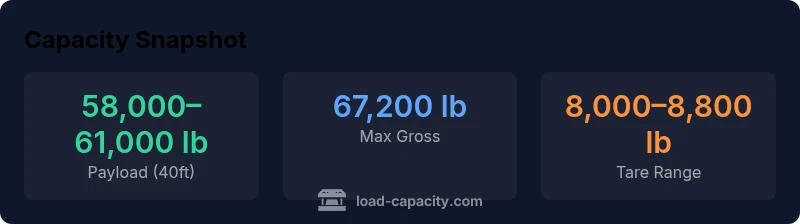
A standard 40ft container typically supports a payload of about 58,000–61,000 lb (26,000–28,000 kg), with a maximum gross weight of 67,200 lb (30,480 kg). Actual usable capacity varies with tare weight, pallets, and fuel; always reference the data plate and plan with a safety margin. For planning, engineers should account for packaging mass and dynamic loading conditions.
Overview of load capacity for 40ft containers
In intermodal freight, the term load capacity refers to how much weight a container can carry safely, factoring tare weight and the container’s own structural limits. For a 40ft unit, the relationship between payload, tare, and gross weight determines how much cargo you can place inside while meeting safety and regulatory requirements. The Load Capacity team emphasizes that capacity is not a single number; it depends on the container variant, the cargo mix, and how the container is loaded. The most fundamental quantities are payload (the load you carry inside), tare (the mass of the empty container), and gross weight (payload plus tare). Understanding these concepts is essential for reliable load planning, whether you’re packing consumer goods, automotive parts, or industrial equipment.
For the specific query 'load capacity 40ft container', engineers evaluate the payload and gross weight with data-plate constraints, then apply a practical safety margin to account for real-world conditions like pallet weight, fuel, and handling losses. In practice, the standard 40ft container offers roughly 58,000–61,000 pounds of payload, translating to about 26,000–28,000 kilograms when palletized goods are used. The maximum gross weight is stamped on the data plate at 67,200 pounds (30,480 kg). These numbers can shift with the design of the container (standard vs high‑cube vs refrigerated) and the exact tare. Importantly, the same container can deliver different usable capacities depending on how the cargo is arranged, the packaging, and where in the container the weight is placed. For engineers, this means a mindful approach to packing diagrams, stacking patterns, and compliance with safety margins.
Payload vs Gross Weight: The core numbers you need
When people discuss load capacity, they often conflate payload with gross weight. Payload is what you can put inside the container; gross weight is payload plus tare. For a standard 40ft container, the payload is typically in the 58,000–61,000 lb range (26,000–28,000 kg), while the max gross weight is 67,200 lb (30,480 kg). The tare weight commonly falls around 8,000–8,800 lb (3,600–4,000 kg) depending on construction and hardware. Because pallets, dunnage, and fuel impact weight, the actual usable payload typically trends toward the lower end of the range when you consider packaging and handling loss. Understanding this distinction is critical to avoid underloading (which reduces stability) or overloading (which can breach safety margins or damage the container.
From Load Capacity insights, you should always confirm the data plate before loading, as variations exist across container vintages and manufacturers. Differences between standard and high‑cube variants can further alter available space and allowable weight distribution. For risk management, teams frequently apply a conservative loading factor (for example, a 5–10% safety margin) to account for dynamic forces during transit and for regulatory tolerances. In practical terms, this means calculating the actual usable payload by subtracting anticipated packaging weight and anticipated fuel from the stamped maximum gross weight.
How to calculate payload for a specific shipment (step-by-step)
-
Identify the container type and read the data plate: note the Maximum Gross Weight and the Tare Weight.
-
Estimate packaging, pallets, and dunnage: sum these items to represent the expected tare plus cargo packaging.
-
Compute usable payload: subtract the estimated tare (container + packaging) from the Maximum Gross Weight.
-
Apply a safety margin: reduce the result by 5–10% to account for dynamic loads during transport and for regulatory tolerances.
-
Check against regulatory and carrier limits: ensure the final payload does not exceed the actual legal weight for the route or vessel.
Example: Suppose a 40ft standard container has a Tare Weight of 8,200 lb and a Maximum Gross Weight of 67,200 lb. If pallets and cargo add 9,000 lb, the initial payload would be 67,200 − 17,200 = 50,000 lb. Applying a 5% safety margin yields 47,500 lb as recommended usable payload. If your cargo notably includes liquids or hazardous materials, additional constraints apply, and you should consult the appropriate standards. The takeaway is to start with the data plate, account for packaging mass, and plan with a conservative loading factor.
Factors that affect real-world capacity
- Pallet footprint and stacking patterns influence how weight distributes across the floor.
- Weight distribution affects stability during handling and transit; aim for even load spread and avoid high-concentration zones.
- Tare weight variability across container vintages and manufacturers changes usable payload even when gross weight is constant.
- Fuel, lubricants, and other onboard consumables add to the tare and should be included in planning.
- Temperature-controlled containers (reefers) and insulated variants can alter payload due to heavier infrastructure inside the container walls.
- Packaging decisions (skids, crates, and dunnage) contribute to effective tare and adjust usable payload.
Container variants: standard vs high-cube vs reefer
The 40ft standard container remains the baseline for most freight, with payload typically in the 58,000–61,000 lb range and a stamped gross weight of 67,200 lb. A 40ft high‑cube container increases interior volume, which is excellent for space efficiency, but payload limits generally remain governed by the same gross weight and tare constraints; the higher volume can change loading strategies and weight distribution. Temperature-controlled (reefer) containers add structural and insulation mass, often reducing payload by several thousand pounds relative to a standard unit. When planning shipments, consider both physical capacity and the weight of the equipment that keeps temperature controlled.
Planning and compliance: safety margins and standards
Accurate load capacity planning hinges on strict adherence to data plates and carrier limits. Before loading, verify the stamped Maximum Gross Weight and measure the tare weight for the container on hand. Apply a safety margin to account for dynamic forces, securing materials, and potential shifts during transport. Compliance with relevant standards—such as ISO container specifications and safety conventions—helps prevent overloading and ensures safe handling at every transit stage. For engineers, a structured loading diagram that labels weight concentration, stack heights, and pallet footprints is an invaluable tool to minimize risk and maintain regulatory compliance.
Practical applications and conclusions
Comparison of 40ft container capacity variants
| Model Type | Max Payload | Max Gross | Tare Weight |
|---|---|---|---|
| 40ft Standard | 58,000–61,000 lb | 67,200 lb | 8,000–8,800 lb |
| 40ft High-Cube | 58,000–61,000 lb | 67,200 lb | 8,100–9,000 lb |
| 40ft Reefer | 52,000–60,000 lb | 67,200 lb | 7,500–9,500 lb |
Quick Answers
What is the payload capacity of a standard 40ft container?
Typical payload ranges from 58,000–61,000 lb (26,000–28,000 kg) for a standard 40ft container. This assumes standard pallets and excludes shipping fuel or ancillary containers. Always confirm with the data plate before loading.
A standard 40ft container can carry about 58,000 to 61,000 pounds of cargo, depending on factors like pallets and ballast.
How is payload calculated for a loaded 40ft container?
Payload = Maximum Gross Weight − Tare Weight. Then apply a safety margin to account for real-world conditions. Check that the final weight does not exceed route or vessel limits.
Payload is the max gross minus tare, then adjust for safety margins.
Do pallets and water/free liquids affect capacity?
Yes. Pallets, liquids, or unusual cargo add to the tare and reduce usable payload. Use accurate pallet weights and consider securing materials that may shift during transit.
Pallets and liquids quietly eat into capacity; plan for their weight in your calculations.
Are there safety margins required by standards?
Most planning practices incorporate a conservative margin, typically 5–10%, to accommodate dynamic forces and regulatory tolerances. Always align margins with carrier requirements.
Yes—plan with a margin to stay within safety margins.
Can a 40ft container be overloaded if I pack it tightly?
Overloading is unsafe and illegal. Exceeding maximum gross weight can cause structural damage, braking issues, and regulatory penalties. Use data plate limits and distribute weight evenly.
No, don’t overload; always respect the max gross weight and keep weight balanced.
“Accurate load capacity planning for a 40ft container hinges on using the container's rated gross weight and measured tare, then applying a conservative safety margin.”
Top Takeaways
- Plan around payload ranges, not single numbers.
- Always verify the data plate and stamped gross weight.
- Account for pallets, packaging, and fuel in tare estimates.
- Apply a safety margin to counter dynamic loading.
- Choose container type to best match cargo volume and weight needs.