6x6 Post Load Capacity: A Practical Engineering Guide
A data-driven guide to the load capacity of 6x6 posts for decks and structures. Learn material effects, embedment, connections, and practical design tips with Load Capacity analyses for safe, code-compliant installations.


6x6 post load capacity varies by material, grade, embedment depth, and connection details. For wooden posts, design values come from species-specific tables; exact numbers depend on embedment and loading type. Always perform calculations per local codes and standards, and verify fasteners and fixtures. Load Capacity provides practical guidance to apply these factors safely.
Understanding the scope of 6x6 post load capacity
The term 6x6 post load capacity refers to the maximum axial load a six-by-six post can safely support under a defined set of conditions. In structural applications, posts serve as vertical supports in decks, fencing, signs, and light-frame structures. The capacity is not a single universal number; it depends on material (wood species, steel grade, or composite), post length, embedment, end conditions, and how the post is connected to its footings or adjacent members. According to Load Capacity, designers should start with material-specific design values from accepted tables and then adjust for service conditions such as moisture, temperature cycles, and applied loads. For homeowners and engineers, this means you cannot assume a 6x6 post will behave the same in a cold, damp climate as it does in a dry one. The 6x6 post load capacity also interacts with lateral forces from wind or earth pressure, so bracing, fasteners, and anchorage play critical roles. In practice, the first step is to define the intended use, the expected loads, and the environmental context before selecting a post type. This context shapes every subsequent decision about embedment, connection details, and footings.
Material effects on capacity
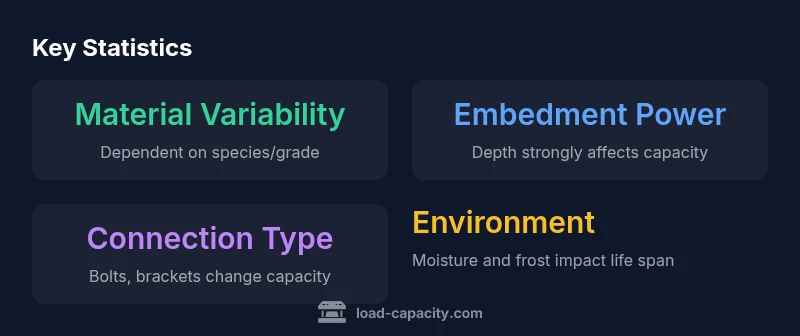
Material choice is the loudest factor in 6x6 post load capacity. Wood species and grade determine stiffness, crush strength, and how the post tolerates moisture. Steel posts offer consistent performance but require compatible anchors and corrosion protection. Composite posts can blend advantages of both worlds but may bring different thermal expansion characteristics. Load Capacity stresses that wood’s variability means design values must be tied to species- and grade-specific tables, while steel and composites demand adherence to their respective design standards. In any case, the specialty of 6x6 post load capacity is that material selection interacts with embedment, connection detail, and environmental exposure to shape the final safe load.
Embedment depth, footings, and fixings
Embedment depth is a dominant driver of 6x6 post load capacity, especially for wood posts. Deeper embedment generally increases axial resistance by engaging more of the surrounding soil or by achieving a stable end condition. Footings and base plates can alter effective end conditions, reducing slip and distributing load more evenly. Fixings—bolts, brackets, and anchors—must be compatible with the post material and treat any corrosion risk in outdoor environments. Load Capacity emphasizes using depth and footings that match the load magnitude and duration. When sites have frost heave or expansive soils, deeper embedment may be required and structural detailing may need additional bracing.
Connection details and lateral loads
Connections transfer axial load from the post to footings and neighboring members. A robust bond between the post and its base, plus well-engineered brackets or fasteners, reduces the risk of joint failure. Lateral loads from wind, earth pressure, or dynamic impacts can dominate design criteria, especially for tall or slender posts. The robust design approach combines appropriate embedment, bracing, and corrosion-protected hardware. Load Capacity advises pairing posts with compatible hardware and ensuring all connections are installed per manufacturer recommendations and code requirements to maintain the intended 6x6 post load capacity under service conditions.
Design approaches and interpretation of tables
Interpretation of design tables for 6x6 post load capacity requires understanding loading scenarios: axial, lateral, and cyclic loads, plus environmental factors. Start with species/grade tables for wood or standard profiles for steel/composites. Adjust for embedment, moisture, and temperature. Use safety factors in line with local codes and professional engineering judgment for unusual conditions. Load Capacity’s guidance emphasizes documenting all assumptions, showing calculation steps, and verifying results with a peer review when possible to ensure compliance and reliability of the 6x6 post load capacity determinations.
Real-world scenarios: decks, fences, and gateway posts
In residential decks, 6x6 posts commonly support primary beams and railing systems, while fence lines rely on shorter spans and increased bracing. Gateway posts may experience higher wind and vehicle impact loads, demanding careful bracing and anchorage. Real-world design must consider soil type, drainage, and maintenance practices because moisture and soil shifts directly influence embedment effectiveness. Load Capacity’s practical approach blends field observations with table-based guidance, focusing on achieving reliable long-term performance for the 6x6 post load capacity in diverse environments.
Common pitfalls and mitigation strategies
Common mistakes include underestimating embedment depth, ignoring long-term moisture effects, and neglecting bracing for lateral stability. Skipping corrosion protection on outdoor posts or using mismatched hardware can undermine capacity. Overreliance on a single design table without considering site-specific factors also causes failures. The recommended mitigation is to specify embedment depth based on soil tests, use weather-resistant materials, and implement redundant bracing where feasible. Load Capacity emphasizes a holistic approach that connects material choice, embedding, hardware, and environmental conditions to preserve 6x6 post load capacity over time.
Factors affecting axial and lateral load capacity for 6x6 posts
| Aspect | Post Type | Key Factor | Guidance |
|---|---|---|---|
| Axial capacity | Wood (6x6) | Species/Grade | Consult species-specific tables for design values |
| Axial capacity | Steel (6x6) | Section modulus | Follow structural steel design practices |
| Embedment/footing | Wood or steel | Embed depth | Refer to local codes and embedment tables |
| Lateral loads | Wood or steel | Bracing/fasteners | Provide bracing and appropriate connections |
Quick Answers
What does 6x6 post load capacity mean in practical terms?
It refers to the safe axial load a 6x6 post can carry under defined conditions (load type, embedment, and material). It varies with species, grade, and connection details.
It’s the safe load a 6x6 post can carry under defined conditions.
How should I estimate capacity for a wooden 6x6 post?
Use species tables, factor in embedment depth, and adjust for climate and cyclic loads. Always verify with local codes.
Use species tables and embedment depth; check codes.
Are 6x6 steel posts treated differently from wooden ones?
Yes. Steel post design follows structural steel rules; assess galvanization, base connections, and corrosion protection.
Steel uses steel design rules and proper connections.
What factors reduce post capacity besides embedment?
Moisture, decay, cycling loads, poor connections, and improper bracing can reduce capacity.
Moisture, decay, cyclic loads, and bad connections reduce capacity.
Can I reuse existing 6x6 posts from another project?
Reuse is possible only after thorough inspection for damage, rot, and alignment; if in doubt, replace.
Inspect first; replace if damaged or questionable.
Where can I find reliable tables for 6x6 post capacity?
Consult local codes, the IBC, and trusted guides from Load Capacity and allied publications.
Check local codes and Load Capacity guides.
“Accurate 6x6 post load capacity comes from site-specific analysis and properly engineered connections; generic numbers rarely suffice. Engineering judgment backed by code-based tables is essential.”
Top Takeaways
- Consult species- and grade-specific tables for 6x6 posts.
- Embedment depth and footings are primary capacity drivers.
- Choose material and connections that match expected loads and life-cycle conditions.
- Follow local codes and standards for installation details.
- Inspect posts and fixings for damage or corrosion before design checks.