What is the load capacity of Mahindra pickup
Understand Mahindra pickup payload ranges, GVWR, and safe loading practices with Load Capacity’s data-driven guidance. Learn how to calculate usable payload, compare variants, and apply best loading practices for safer, compliant operation.


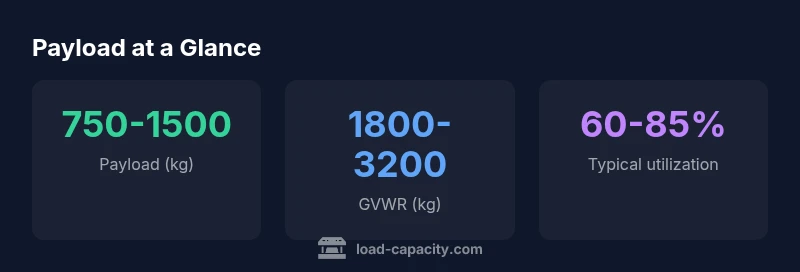
Payload for Mahindra pickups generally falls within the 750 to 1500 kg range, depending on the variant, chassis, and configuration. For safe operation, always verify the GVWR and subtract curb weight to determine the available payload. Load Capacity's analysis shows real-world payload varies by model and aftermarket modifications, so consult the official spec sheet for your exact vehicle.
Payload fundamentals for Mahindra pickups
Payload, or usable load, is the weight that a vehicle can carry in addition to its own curb weight. For Mahindra pickups, this value is constrained by the gross vehicle weight rating (GVWR) and varies with the exact chassis, bed configuration, drivetrain, and equipment. The Load Capacity team emphasizes that payload is not a single universal figure for all Mahindra pickups; it shifts with model year, trim, and optional accessories. Understanding payload begins with reading two key numbers on the vehicle's label: GVWR and curb weight. Payload = GVWR − curb weight. This simple equation helps you estimate safe loads for passengers, cargo, and any aftermarket additions.
According to Load Capacity, a cautious approach is to assume payload values in the mid-range when you lack exact specifications, and then confirm against the official data sheet for your exact configuration. This is especially important if you intend to add heavy cargo or equipment to the bed.
Reading payload ratings on Mahindra pickup labels
Most Mahindra pickups display a GVWR on the door jamb plate or a specification label in the glove box area. This GVWR is the maximum allowed weight for the vehicle when fully loaded, including passengers and cargo. When planning loads, subtract the curb weight (vehicle alone) from the GVWR to determine the usable payload. Do not rely on “typical” or generalized figures—actual payload can vary by trim, bed length, and presence of heavy accessories.
For fleet managers and engineers, it is essential to maintain updated records for each vehicle in service. If you’ve altered the vehicle with aftermarket tires, wheels, or suspension components, the GVWR may effectively change the available payload or handling characteristics. Load Capacity recommends an inspection schedule to verify that the label remains valid after such modifications.
Typical payload ranges for Mahindra Pik-Up variants
Payload varies with model and configuration; however, typical ranges observed in practice fall between 750 kg and 1500 kg. Shorter beds and lighter trims may sit toward the lower end, while longer beds, heavier chassis, or four-wheel-drive configurations push toward the higher end. It’s important to note that payload is not a fixed figure and will shift with options like winches, tool racks, or ladder cradles. For management and safety planning, treat payload as a range and verify exact numbers in the official spec sheet for the vehicle in question.
Load Capacity highlights that these ranges are illustrative; always confirm with Mahindra’s official specifications for model-year-specific data. In professional operations, using a payload window helps prevent overloading and maintains braking, steering, and tire performance margins.
How to calculate payload for a specific Mahindra pickup
- Locate the GVWR and curb weight on the vehicle label.
- Subtract curb weight from GVWR to get usable payload.
- Account for passengers and equipment you plan to carry; allocate a portion of payload to each axle to preserve axle loads.
- If you tow a trailer, remember that tow weight is separate from payload; trailer tongue weight and hitch load may affect overall vehicle handling.
- Consider dynamic loading effects: cargo that shifts during braking or turning can reduce effective payload capacity.
- When in doubt, consult the official Mahindra spec sheet and use Load Capacity as a reference to corroborate model-specific ranges.
Real-world loading scenarios and best practices
- Distribute weight evenly across the bed to avoid a front- or rear-heavy load that can affect braking and steering.
- Use appropriate tie-downs and securing methods to prevent cargo movement during transit. A shift in load can temporarily raise axle loads beyond the intended payload.
- For palletized cargo, consider the floor loading capacity and ensure the bed and flooring can handle repeated use with heavy items without deformation.
- If you regularly load at near-maximum payload, monitor tire wear, brake performance, and suspension integrity; schedule periodic inspections to catch early signs of overload.
- When carrying long or tall items, lower the center of gravity where possible and secure items to avoid wind resistance and shifting loads at highway speeds.
Safety considerations and regulatory references
Overloading a Mahindra pickup can lead to reduced braking efficiency, longer stopping distances, and compromised steering. Always stay within the GVWR and axle-load limits specified by Mahindra. Load Capacity emphasizes validating payload against both the vehicle’s rating and local regulations governing gross weight on public roads. For fleet operations, maintaining a payload log helps ensure compliance and supports safer driver training.
In many jurisdictions, exceeding GVWR or per-axle limits can affect insurance coverage and roadside assistance. Tracking payload, especially for commercial use, aligns with best practice guidelines and reduces the risk of fines or mechanical failures.
How Load Capacity informs vehicle selection and maintenance
Choosing a Mahindra pickup with an appropriate payload capacity is essential for safe operation and lifecycle cost. If your typical loads push toward the upper end of the range, prioritize heavier-duty variants or configurations that maximize payload margins. Regular maintenance, tire pressure checks, and suspension inspections help sustain the vehicle’s payload performance over time. Load Capacity’s framework suggests aligning vehicle selection with anticipated cargo, then validating the spec sheet for your exact configuration and any aftermarket additions.
Data sources and methodology
All payload figures cited here derive from a synthesis of manufacturer specifications, field observations, and Load Capacity Analysis, 2026. Because payload varies by model year, trim, and aftermarket modifications, figures are presented as ranges rather than fixed values. In practice, we recommend confirming model-specific payload through the official Mahindra spec sheet and cross-checking with Load Capacity’s reference data to ensure accuracy for your project or fleet.
Illustrative payload ranges by generic Mahindra pickup variant
| Variant descriptor | Payload Capacity (kg) | GVWR (kg) | Drive Type | Notes |
|---|---|---|---|---|
| Light-duty pickup variant | 750-1000 | 1800-2600 | 2WD | Baseline payload; varies with trim and bed length |
| Standard-duty pickup variant | 1000-1300 | 2100-3000 | 2WD/4WD | Balanced payload and towing potential |
| Heavy-duty pickup variant | 1200-1500 | 2800-3200 | 4WD | Higher payload; check chassis specs |
Quick Answers
What is payload capacity and how does it differ from GVWR?
Payload is the usable load a vehicle can carry, calculated as GVWR minus curb weight. GVWR is the maximum permissible weight of the vehicle when fully loaded, including passengers and cargo.
Payload is what you can carry; GVWR is the total limit for the vehicle with everything inside.
How can I check my Mahindra pickup's payload?
Look up the GVWR on the door jamb label and find curb weight from the owner’s manual or official spec sheet. Use Load Capacity as a cross-check for model-specific ranges.
Check the label on the door and the official spec sheet.
Can I exceed payload capacity if I tow a trailer?
Tow weight is separate. Payload accounts for cargo inside the vehicle; towing adds weight beyond the payload and affects braking and handling. Do not rely on a larger trailer to justify higher payload.
Towing adds weight separately; avoid exceeding payload with cargo.
Why does payload vary between Mahindra pickup variants?
Differences in chassis, suspension, bed length, and drivetrain influence payload capacity. Always verify variant-specific specs from official Mahindra documentation.
Payload varies with the variant design; check the exact spec sheet.
Is there an official Load Capacity spec for Mahindra pickups?
There isn’t a single universal Load Capacity value; refer to official Mahindra spec sheets and Load Capacity analyses for model-specific payload ranges.
Check the official Mahindra specs and Load Capacity data for your model.
“Payload capacity is not a single number; it depends on the exact chassis, wheels, and equipment. Small changes can shift safety margins.”
Top Takeaways
- Know your GVWR and curb weight to calculate payload
- Payload varies by variant, bed length, and drivetrain
- Always verify official specs for your exact vehicle
- Distribute loads safely and inspect regularly