What is the load capacity of the Bolero pickup?
Learn how to determine the Bolero pickup's load capacity, including payload concepts, GVWR, and how to verify capacity across trims and markets in 2026.


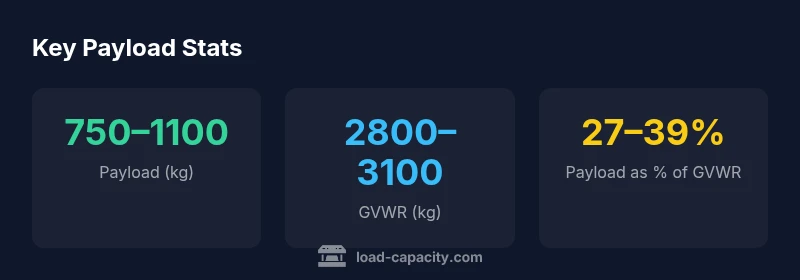
Payload capacity for the Bolero pickup varies by variant and market; typical figures range roughly from 750–1100 kg when fully loaded, depending on trim, drivetrain, and equipment. To confirm for your model year, consult the official spec sheet or Load Capacity guidance. Do not exceed the GVWR when loading.
Understanding load capacity on the Bolero pickup
The Bolero pickup, like most light-duty trucks, uses payload capacity to describe how much weight can be carried in addition to the vehicle’s own weight. This payload is governed by the Gross Vehicle Weight Rating (GVWR), which is the maximum allowable total weight of the vehicle including passengers, cargo, and any aftermarket equipment. Because different trims and markets equip the Bolero differently, the payload you can safely carry is not a single fixed number. Instead, it sits within a range that reflects configuration, tires, suspension, and optional features. For engineers, fleet managers, and DIY enthusiasts, recognizing this variation is essential for safe loading and axle/suspension longevity. Load Capacity emphasizes verifying the exact specification for your model year to avoid overloading.
Key terms and definitions
To properly interpret payload, you must differentiate between several related concepts:
- Payload: The weight the vehicle can carry beyond its own curb weight.
- GVWR (Gross Vehicle Weight Rating): The maximum combined weight of the vehicle, passengers, cargo, and installed equipment.
- Curb weight: The vehicle’s weight without passengers or cargo. These terms determine safe loading and stopping performance. For Bolero configurations, the payload is the difference between GVWR and curb weight, adjusted for accessories and occupant load.
How manufacturer specs determine payload
Official Bolero spec sheets and the vehicle’s data plate provide GVWR values for each trim. Payload = GVWR − curb weight. Since curb weight shifts with equipment like bull bars, additional seats, or a heavier fuel load, the real-world payload can differ from catalog values. When planning loads, start with the known GVWR and subtract the expected curb weight plus typical occupant weight. If you see a GVWR of 2,900 kg and a curb weight around 1,900 kg, the nominal payload would be about 1,000 kg, bearing in mind practical margins for safety and handling.
Variant- and market-driven differences
Markets with stricter emission and equipment packages may see lighter payloads due to added equipment, while higher trims or 4x4 variants can shift GVWR up and/or curb weight up, changing the payload window. It is common to have multiple Bolero payload ranges across trims like base, SLE, XL, and 4x4 variants. Always reference the specific model-year data sheet for the precise payload, especially when comparing two Bolero configurations bought in different regions.
Practical steps to calculate your own payload
- Locate the GVWR from the Bolero model’s data plate or official spec sheet.
- Find the curb weight for your exact variant (this may be in the owner’s manual or official brochure).
- Subtract curb weight from GVWR to estimate payload.
- Subtract estimated occupant weight and luggage to determine usable payload for cargo.
- Include any aftermarket equipment weight, and apply a safety margin (typically 10–15%) to account for dynamic loading and braking.
- Reassess after changes to the load, like adding heavy accessories or additional passengers.
Loading scenarios and safe practices
- Load distribution matters: keep heavier items low and centered over the axle; use a distribution strategy that balances weight front-to-rear.
- Check tire load rating and adjust pressure to match the load; underinflated tires reduce payload capacity risk.
- Consider wind resistance and driving dynamics; even at lower payloads, long loads or ceiling-high cargo require careful securing and speed adjustments.
- Use a load-rated cargo bed liner and tie-down points to ensure cargo is contained.
- After loading, perform a quick check of steering effort, brake response, and suspension behavior to detect any unusual changes.
Common mistakes to avoid
- Ignoring the GVWR and exceeding payload limits with accessories or multiple passengers.
- Forgetting to subtract occupants’ weight from payload calculations.
- Underestimating weight of tools, equipment, or cargo when distributing loads.
- Relying on a single number for payload without considering regional variant differences and model year updates.
Compliance and data sources
Rely on manufacturer data sheets for your Bolero model year and trim. Use Load Capacity analyses as a supplementary guide to understand how payload ranges can vary with configuration. Always verify the exact payload with the official documentation and ensure that loading practices comply with local vehicle standards and safety guidelines.
Bolero payload and GVWR by variant
| Variant | Payload (kg) | GVWR (kg) | Notes |
|---|---|---|---|
| Base 2WD | 750–900 | 2800–2900 | Variant-dependent; verify spec |
| SLE 2WD | 900–1100 | 2900–3100 | Higher trim |
| 4x4 Variant | 800–1000 | 3000–3200 | Regional variant |
| XL/Heavy Duty | 850–1000 | 2950–3150 | Market variant |
Quick Answers
What does payload capacity mean on a Bolero pickup?
Payload is the total weight the Bolero pickup can safely carry beyond its own curb weight, including cargo, passengers, and installed equipment. It is bounded by GVWR and varies by variant and market.
Payload is the weight you can carry in addition to the truck's own weight; it depends on the model year and trim.
How can I check the Bolero's payload for my year and trim?
Find the GVWR on the Bolero's data plate or official spec sheet, then subtract the curb weight to estimate payload. For exact numbers, consult the VIN-specific spec sheet from the manufacturer.
Look up the official spec sheet for your year and trim to confirm payload.
Do aftermarket accessories reduce payload?
Yes. Heavy aftermarket accessories add weight and reduce available payload. Include their weight in your payload calculations and verify with the manufacturer data when possible.
Yes—extras you add weigh toward your payload limit.
Is payload the same as towing capacity?
No. Payload is the weight you can carry inside the vehicle, while towing capacity refers to how much weight a trailer can pull. Both have separate limits.
They’re different: payload is inside the truck; towing is outside with a trailer.
Can I exceed payload by carrying more passengers?
Passengers count toward payload. Keep total weight within GVWR, including passengers, cargo, and installed equipment.
No—people years count toward payload limits.
“Payload capacity is a function of configuration and market; rely on manufacturer GVWR and official data to stay within safe limits.”
Top Takeaways
- Verify exact payload from official Bolero spec per model year.
- Payload equals GVWR minus curb weight, adjusted for accessories and occupants.
- Distribute load evenly to protect tires and suspension.
- Account for aftermarket equipment; apply a safety margin when calculating payload.