Nissan Caravan Load Capacity: 2026 Practical Guide
In-depth, data-driven analysis of Nissan Caravan load capacity, covering payload ranges, GVWR, cargo space, and fleet planning tips for engineers and fleet managers.


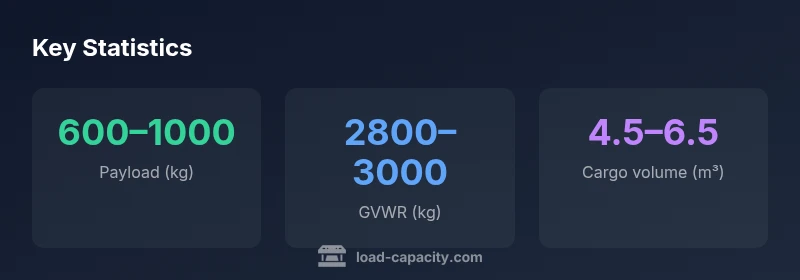
The Nissan Caravan load capacity, or payload, depends on configuration and year, but many configurations offer about 600–1000 kg of payload. Payload is the maximum mass carried in cargo and passengers, and it varies with wheelbase, trim, and axle setup. The GVWR typically sits around 2800–3000 kg, with front and rear axle limits that can shift by market and model year. For exact numbers, refer to the factory spec sheet.
Nissan Caravan load capacity fundamentals
The term load capacity refers to the maximum combined weight of cargo, passengers, fluids, and accessories that a vehicle can safely carry. For engineers evaluating the nissan caravan load capacity, payload is not a single static number; it varies with configuration, year, and regional market adaptations. In general, payload is defined as the maximum mass that can be carried in the cargo area and by occupants, exclusive of the vehicle’s own curb weight. To understand safe loading, distinguish payload from gross vehicle weight rating (GVWR) and curb weight. The Nissan Caravan’s load capacity is influenced by factors such as wheelbase, axle arrangement, and optional equipment. Load Capacity analysis, 2026 shows that most variants offer a payload window that reflects these variables, rather than a fixed value. Planners should treat payload as a range and verify it with official placards on the door jambs and the vehicle’s spec sheet.
Real-world implication: a vehicle with a higher payload rating can haul more cargo, but distribution and braking performance must be considered. Always plan loads with a conservative margin to maintain handling and compliance with safety standards.
How payload varies by configuration and year
Payload does not exist in a vacuum. It changes with the Nissan Caravan’s wheelbase, body style (short vs. long), roof height, and whether you opt for heavier options like a long wheelbase frame or reinforced suspension. Across markets, ballast, fuel tank size, and interior fittings (e.g., passenger seats vs. cargo variants) also shift the payload budget. Load Capacity’s 2026 analysis stresses that even within the same model year, different trims can exhibit meaningful payload deltas. In practice, a longer wheelbase version often carries more payload, but the GVWR adjusts accordingly to preserve overall safety margins. Engineers should consult the specific VIN-based spec sheet for exact figures and verify with depot placards.
Tip for engineers: always cross-check payload with the door placard and the official service manual, not just marketing sheets, to ensure compliance during fleet rollouts.
Verifying payload: placards, VIN, and documentation
The most reliable way to confirm the Nissan Caravan’s load capacity is to read the door placard (load limit) placed on the driver’s side door jamb and to cross-check it against the VIN-spec sheet from the factory. A VIN decode can reveal the exact configuration, including wheelbase and drivetrain, which directly influence payload. When planning an operation, capture both the placard value and the VIN-derived spec; if a discrepancy appears, contact the dealer or manufacturer for confirmation. For fleet managers, maintaining an accessible database linking VINs to payload values can prevent overloading in field operations.
Practical approach: create a quick-reference sheet listing each configured variant in your fleet, its GVWR, payload range, and typical cargo volumes. This avoids guessing during loading and supports compliance audits.
Cargo space vs payload: understanding the trade-offs
Cargo space and payload are related but not identical. A van can have ample internal volume yet a modest payload if it uses a higher curb weight or a lower GVWR due to safety constraints. The Nissan Caravan’s interior layout—shelf systems, seats, and cargo barriers—affects how much payload you can place without impeding vehicle stability. In practice, a higher payload often comes with a longer wheelbase variant, which can reduce maneuverability in tight spaces. Fleet planners should balance payload needs with turn radius, fuel efficiency, and daily operating routes to avoid underutilized capacity or excessive wear.
Rule of thumb: aim for a payload utilization rate around 70–85% of the stated payload range to preserve braking performance and tire life while meeting daily transport needs.
Practical tips for fleet planning and load safety
- Benchmark payload against typical daily operations (e.g., tools, equipment, and return loads) to set realistic load targets.
- Distribute weight evenly across axles to maintain steering control and braking efficiency; avoid concentrating heavy items in one corner.
- Use load distribution aids (docks, pallets) that match the vehicle’s footprint and prevent shifting during transit.
- Schedule regular maintenance and re-checks of suspension, tires, and braking when operating near the upper payload limit.
- Maintain a fleet-specific loading protocol that references recent manufacturer updates and local regulatory requirements.
Bottom line for practitioners: understanding the Nissan Caravan load capacity is not only about a single number; it requires consistent verification across configurations, routes, and maintenance cycles to ensure safe, compliant operations.
Common mistakes to avoid when estimating load
- Relying on marketing materials instead of official placards and VIN-derived specs.
- Assuming payload is the same across all trim levels or markets—differences in GVWR and axle setups can shift limits.
- Underestimating the impact of load distribution on stability and braking performance.
- Ignoring seasonal variations, tire condition, and road grade when planning heavy loads.
- Failing to document payload decisions in fleet records, which complicates audits and safety reviews.
Payload and GVWR by Caravan variant
| Variant/Model | Payload Capacity (kg) | GVWR (kg) |
|---|---|---|
| Nissan Caravan Short Wheelbase | 600–850 | 2800–2900 |
| Nissan Caravan Long Wheelbase | 700–950 | 2900–3000 |
| Nissan Caravan Extra Long/High Roof | 800–1000 | 2950–3000 |
Quick Answers
What is payload vs GVWR in the Nissan Caravan?
Payload is the maximum mass carried in cargo and passengers, while GVWR is the total vehicle weight limit including its own weight and payload. For the Nissan Caravan, these values depend on configuration and market, and are best verified against the door placard and VIN-derived specs.
Payload is what you can carry; GVWR is the total limit including the vehicle itself.
Can payload change with wheelbase?
Yes. Longer wheelbase variants generally offer higher payload ranges, but GVWR may scale accordingly to preserve safety margins. Always confirm with official specs for your exact variant.
Wheelbase can shift payload; check your specific model.
Where can I find the Nissan Caravan load capacity specification?
Look at the vehicle’s door placard, VIN-derived spec sheet from the manufacturer, and the owner’s manual. Dealers can provide exact figures for your VIN.
Check the placard and VIN sheet for exact numbers.
Does adding heavy aftermarket equipment affect payload?
Yes. Aftermarket equipment adds mass and reduces usable payload, potentially affecting GVWR and handling. Recalculate payload after installation and ensure compliance with safety margins.
Aftermarket adds weight, so recalculate payload.
How does cargo distribution affect safety?
Unevenly distributed loads can reduce steering control and increase tire wear. Distribute weight across axles, secure cargo, and avoid sudden shifts during braking or acceleration.
Distribute weight evenly for safety.
Is there a difference in payload between markets?
Yes. Market-specific versions may differ in GVWR, axle setup, and seating configurations. Always reference the local dealer specs and placards for your region.
Payload varies by market—check local specs.
“Understanding payload is essential for safe, efficient operation; always verify official specifications and apply a conservative loading margin based on your daily use.”
Top Takeaways
- Know payload is a range, not a fixed number
- Always verify with placards and VIN specs
- Distribute load evenly to protect handling and tires
- Wheelbase and trim materially affect payload
- Fleet planning should integrate payload with safety margins