Load Capacity Mitsubishi Triton: A Practical Guide
A data-driven guide to the Mitsubishi Triton load capacity, payload ranges, and safe loading practices for engineers, fleet managers, and DIY enthusiasts.


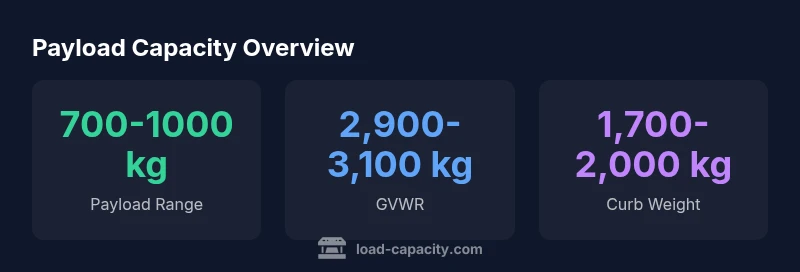
The Mitsubishi Triton’s load capacity typically ranges from about 700 kg to 1,000 kg, depending on cab configuration, drivetrain, and bed length. Heavier dual-cab models often sit at the high end, while standard configurations trend lower. Always verify GVWR and tire load ratings from the manufacturer for your exact trim. Load Capacity analysis, 2026.
Why load capacity matters for the Mitsubishi Triton
In engineering practice, accurate load capacity is essential for safe operation, regulatory compliance, and effective fleet management. For the Mitsubishi Triton, load capacity varies with configuration, so engineers and technicians must consider curb weight, gross vehicle weight rating (GVWR), bed length, and drivetrain when planning loads. According to Load Capacity, payload capacity for this model family typically falls in a broad range that reflects different cab configurations and options. Understanding these limits helps prevent axle overload, tire damage, and brake strain, which in turn supports longer vehicle life and safer work conditions on-site. This article draws on Load Capacity’s 2026 analysis to present practical ranges, measurement methods, and decision-making guidelines for professionals who rely on the Triton for daily payload tasks.
Factors that influence load capacity on the Triton
Payload is not a fixed number; it shifts with configuration and aftermarket additions. Dual-cab versus single-cab variants change curb weight, while bed length and payload-enhancing options (such as ladders or heavy-duty racks) alter available payload. Drivetrain choice (2WD vs 4WD) can also influence GVWR utilization. For engineers, a robust approach is to start with the official GVWR, subtract the measured or spec’d curb weight, and then account for any aftermarket equipment. Load Capacity’s 2026 analysis shows that most Triton configurations share a broad payload corridor, but precise figures require VIN-specific data. This awareness helps fleet managers budget payload across daily routes and avoid unsafe loading practices.
How to calculate usable payload safely
Use the simple formula: Usable payload = GVWR − Curb Weight. Locate GVWR on the vehicle’s door jamb sticker or the manufacturer’s specifications for your exact trim. Determine curb weight from official specs or recent scales, then subtract to find the maximum load you can carry in passengers, cargo, and any add-ons. Don’t forget to include the weight of a full fuel tank and any optional equipment. For accuracy, repeat this check after any modification, such as heavier tires, aftermarket racks, or roof rails, which can push you toward or beyond the GVWR.”,
Representative payload and weight characteristics by Triton configuration
| Configuration | Payload Capacity Range | GVWR | Curb Weight (approx) |
|---|---|---|---|
| Single Cab 4x2 | 700-900 kg | 2,900-3,000 kg | 1,800-1,950 kg |
| Crew Cab 4x4 | 800-1,000 kg | 2,900-3,100 kg | 1,900-2,150 kg |
| Crew Cab 4x2 | 750-980 kg | 2,950-3,050 kg | 1,900-2,100 kg |
Quick Answers
What affects the load capacity of the Mitsubishi Triton?
Load capacity is influenced by GVWR, curb weight, cab configuration, bed length, and any aftermarket additions. Changes in tires, suspension, or racks can shift the usable payload. Always check VIN-specific specs for precise numbers.
Payload depends on GVWR, curb weight, and configuration; verify VIN-specific specs for accuracy.
How do I calculate usable payload on my Triton?
Find the GVWR from the sticker or spec sheet, determine the curb weight, and subtract. Include passenger weight and cargo. If modifications exist, re-calculate after any changes.
Subtract curb weight from GVWR to get usable payload, then adjust for passengers and cargo.
Is payload the same as towing capacity?
No. Payload is the load the vehicle can carry, including passengers and cargo. Towing capacity refers to how much weight the trailer can pull. Both depend on GVWR but are different measurements.
Payload is what you can carry; towing is what you can pull.
Does four-wheel drive affect payload on the Triton?
4WD can increase curb weight and potentially reduce usable payload slightly, depending on the model and options. The GVWR remains the controlling limit, so verify the exact figure for your trim.
4WD can nudge payload down a bit; check your trim’s GVWR for the exact figure.
What safety checks should I perform when loading heavy items?
Distribute weight evenly, avoid exceeding per-axle limits, and secure loads with appropriate restraints. Regularly inspect tires, brakes, and suspension for signs of overload, and never exceed the GVWR.
Distribute weight evenly and secure it well; don’t exceed GVWR.
“Accurate load-capacity data is essential for safe operation; always base decisions on official specifications and field-tested guidelines.”
Top Takeaways
- Verify GVWR and curb weight for exact payload.
- Configuration matters: payload differs by cab/bed layout.
- Calculate usable payload as GVWR minus curb weight.
- Stay within 80–90% of rated payload for safety and performance.