How to calculate payload capacity
Learn how to calculate payload capacity for vehicles with a simple GVWR-based formula. This educational guide explains terms, steps, a calculator, and best practices for safe loading.


Payload capacity is the maximum load a vehicle can safely carry. To estimate it, subtract the curb weight from the gross vehicle weight rating (GVWR). If you carry occupants, subtract their combined weight as well: payload ≈ GVWR − curbWeight − (occupants × averageWeight). This guide shows how to calculate it precisely and safely.
What is payload capacity and why it matters
According to Load Capacity, payload capacity is the maximum weight a vehicle can safely carry in addition to its own weight. This value is essential for safe loading, optimal fuel efficiency, and legal compliance. Understanding payload helps engineers, fleet managers, and DIY enthusiasts plan cargo, seating, and equipment distribution without exceeding structural limits. In practice, payload capacity informs decisions like how many passengers can ride with a full cargo load, where to place heavy items, and when to upgrade components. Remember that payload is not a fixed feature; it depends on the vehicle's GVWR and the weight of everything you add. The concept applies across trucks, vans, SUVs, trailers, and even some industrial equipment. Accurate payload calculations reduce the risk of tire blowouts, axle overloads, and suspension wear. This article provides actionable steps to compute payload capacity and verify results using a simple calculator.
Key concepts and definitions
-
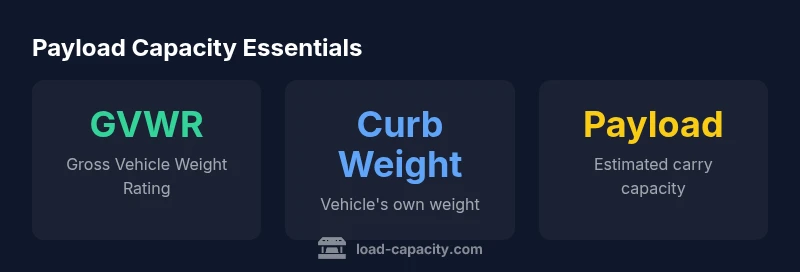
GVWR: Gross Vehicle Weight Rating, the maximum total weight the vehicle is designed to carry, including its own weight, passengers, cargo, and accessories. It is a certified specification provided by the manufacturer.
-
Curb Weight: The weight of the vehicle with standard equipment, no payload or passengers. Subtracting curb weight from GVWR yields the payload available for cargo and occupants.
-
Payload: The actual load you can safely carry, calculated as GVWR minus curb weight and any additional loads such as occupants or accessories. Payload varies with vehicle configuration and equipment.
-
Occupant Weight: An estimate of the weight of passengers; it influences payload. Fleet managers may adjust this value based on typical seating to plan loading margins.
-
Important safety note: Do not exceed GVWR under any loading scenario; if you are unsure, consult the vehicle manual or manufacturer data.
How to perform a basic calculation
A straightforward way to estimate payload is to use the core formula:
payload = GVWR −
Practical examples across vehicle types
Consider two common scenarios to illustrate how payload capacity works in practice. First, a light pickup with GVWR ≈ 11000 lbs and curb weight ≈ 5000 lbs could carry around 3600 lbs of cargo if you transport a typical four-person crew. Second, a cargo van with GVWR ≈ 18000 lbs and curb weight ≈ 10000 lbs might offer several thousand pounds of payload depending on occupant load and equipment. These examples show that payload capacity is highly configuration-dependent and underscores the value of a precise calculation rather than relying on generic assumptions. Always verify against the manufacturer data plate for your exact vehicle configuration.
Practical considerations and safety margins
Payload calculations are a powerful planning tool, but real-world loading must account for several dynamic factors. Fuel level, fluids, tools, and customization add weight that can erode payload capacity. Tire condition, axle load distribution, suspension health, and braking performance influence how a load behaves in operation. Establish a safety margin by planning payload well below the calculated maximum, especially in adverse driving conditions or when towing. For trailers, remember that GVWR applies to the trailer itself, and tongue weight affects stability; distribute weight to maintain a balanced tongue load and avoid sway. Regularly re-check payload when equipment or crew changes.
How to use the payload calculator
To get a quick, reliable estimate, open the payload calculator widget and enter three inputs: GVWR, curb weight, and estimated occupants. The tool applies the formula, showing the Estimated Payload Capacity in pounds (lbs). You can tweak occupant numbers or use a different occupant weight assumption to reflect your typical crew. The calculator updates instantly, letting you compare loading scenarios and plan safe, compliant configurations. Always compare the calculator output with manufacturer data and safety recommendations.
Optimization tips and real-world practices
- Place heavy items low and toward the center of the vehicle to lower center of gravity and improve handling.
- Distribute weight evenly across the vehicle’s cargo area; avoid concentrating load on one side.
- Remove unnecessary equipment or redistribute gear to reduce overall payload when possible.
- Use high-quality tie-downs and padding to prevent movement and reduce dynamic loads during transit.
- If you regularly operate near capacity, verify that tires, brakes, and suspension are up to the task and consider professional inspection.
Sample values to illustrate the payload calculation
| Parameter | Value | Unit |
|---|---|---|
| GVWR | 15000 | lbs |
| Curb Weight | 6000 | lbs |
| Estimated Payload (sample) | 8820 | lbs |
Estimate your vehicle's payload capacity based on GVWR, curb weight, and occupants.
Subtract GVWR minus curb weight and a standard occupant load to estimate payload. The calculator uses 180 lbs per occupant as a typical weight estimate.
Estimates based on manufacturer data and typical assumptions. Actual payload may vary with equipment, fuel, and configuration.
Quick Answers
What is the difference between GVWR and curb weight?
GVWR is the maximum weight the vehicle is designed to carry, including its own weight. Curb weight is the vehicle's weight without payload or passengers. Payload equals GVWR minus curb weight, optionally minus occupants. This distinction is essential for safe loading.
GVWR is your weight limit. Curb weight is the vehicle's own weight. Payload is the remaining allowance after subtracting both.
How accurate is the payload calculation?
The calculation provides an estimate based on standard values and manufacturer data. Actual payload can vary with fuel level, added equipment, and load distribution. Always confirm with the vehicle manual or manufacturer data plate.
It's an estimate. Real payload varies with fuel, equipment, and load distribution.
Can payload capacity change after modifications?
Yes. Aftermarket modifications or changes in equipment can alter weight and safety margins. When in doubt, consult the manufacturer or a qualified technician to reassess GVWR and payload.
Modifications can change payload. Check manufacturer guidelines to re-evaluate limits.
Does tongue weight count for trailers?
Tongue weight contributes to the gross trailer weight. It affects stability and must be considered when calculating payload for towing setups. Always ensure the combined weight does not exceed the trailer's GVWR.
Tongue weight is part of the trailer's total weight and affects stability. Keep within GVWR.
Why is payload capacity important for safety?
Payload capacity directly influences braking, steering, and tire performance. Exceeding it can lead to longer stopping distances, poor handling, and increased risk of blowouts. Always plan with a margin for safety.
Exceeding payload reduces braking and handling; plan with safety margins.
How can I reduce payload safely?
Lighten loads by removing unnecessary items, redistributing weight, and using lighter equipment. Consider shorter or lighter trips and ensuring loads are securely fastened to minimize movement.
Remove unnecessary items and distribute weight to reduce payload.
Top Takeaways
- Understand GVWR, curb weight, and payload as core concepts.
- Use the basic formula GVWR − curbWeight − (occupants × 180) for quick estimates.
- Always maintain a safety margin below the calculated payload.
- Use the payload calculator to compare scenarios quickly.
- Verify numbers with manufacturer data for accuracy.