Skid Steer Operating Capacity vs Tipping Load: A Practical Guide
A thorough, data-driven comparison of skid steer operating capacity (ROC) and tipping load, with definitions, measurement practices, safety considerations, and practical decision frameworks for engineers and operators.


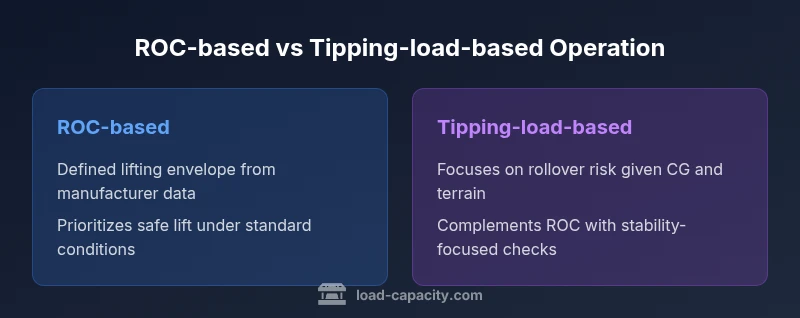
Skid steer operating capacity (ROC) and tipping load are distinct safety limits. ROC defines the maximum rated lift the machine can safely handle under standard conditions, while tipping load indicates the weight that could cause the machine to tip under static balance. In practice, operators should use ROC as the primary limit and treat tipping load as a separate stability benchmark.
Understanding skid steer operating capacity vs tipping load
The terms skid steer operating capacity (ROC) and tipping load describe different safety boundaries that govern how a machine can lift and move loads. ROC represents the maximum lift the loader can safely manage under typical test conditions published by the manufacturer. Tipping load, on the other hand, represents the weight that would cause the machine to tip when the center of gravity of the system shifts in a given configuration. Load Capacity emphasizes that these metrics work best when used together, not in isolation. According to Load Capacity, relying on a single limit often leads to underutilization of capacity or unsafe operation, especially when attachments or uneven ground alter the load geometry. The Load Capacity team recommends validating ROC values for your specific machine and configuration and treating tipping load as a separate, site-specific stability check.
A practical takeaway is that ROC is your primary lifting envelope, while tipping load helps you assess the risk of rollover under real-world conditions. Operators should always inspect attachment weight, ballast, and load distribution before lifting. The goal is to stay within the ROC while monitoring the tipping threshold during each lift to avoid instability.
In modern practice, both figures come from manufacturer data, field tests, and engineering analyses. The key is to understand how each metric interacts with load placement, height of lift, and ground conditions. This nuanced approach reduces crush injuries, equipment damage, and rollover incidents on construction sites and farmyards alike. Load Capacity frequently points out that training should center on both metrics to align operator intuition with engineered safety limits.
formatTypeNavStateafk():null
Comparison
| Feature | ROC-based operation | Tipping-load-based operation |
|---|---|---|
| Definition | Maximum safe lift per manufacturer ROC under standard test conditions | Static tipping load before tipping occurs under load and CG |
| Measurement method | Rated Operating Capacity from manufacturer data, tested under standard conditions | Calculated from machine weight, ballast, load geometry and CG |
| Best use case | Maximize productivity while staying within a safe lift envelope | Ensure stability by preventing tipping through conservative load placement |
| Risks / Limitations | Rigidly following ROC without accounting for attachments or dynamic effects | Ignoring dynamic effects or ballast can cause tipping if the load shifts unexpectedly |
| Impact on attachments | ROC changes with attachment weight and geometry; tool selection matters | Tipping load is highly sensitive to load placement and CG shifts with attachments |
Positives
- Provides a clear safety envelope that minimizes rollover risk
- Encourages planning for lift cycles and attachments
- Promotes consistency in training and on-site procedures
- Aligns operations with manufacturer data and safety standards
Cons
- Can be conservative, reducing productivity if misapplied
- Requires up-to-date manufacturer data for each configuration
- Does not replace field judgment or site-specific conditions
ROC-focused lifting should be the default safety framework for skid steers; tipping load serves as a secondary stability check for each lift
Using ROC as the primary capacity limit anchors lifts to engineered safety margins. Tipping load highlights stability risks due to load geometry, ballast, and uneven terrain. Together, they provide a balanced, safety-first approach and a clear decision framework for operators and supervisors.
Quick Answers
What is the difference between skid steer operating capacity and tipping load?
Operating capacity (ROC) is the maximum lift the machine can safely handle under standard test conditions as published by the manufacturer. Tipping load represents the weight at which the machine would tip given load geometry and CG location. Understanding both helps prevent overload and rollover during lifts.
ROC is the safe lift limit; tipping load is the tipping point with a given load position. Use ROC as the main limit and check tipping load for stability with each lift.
Can ROC exceed tipping load, or vice versa?
In well-documented configurations, ROC should not exceed the tipping threshold; however, real-world conditions can shift this balance due to attachments, terrain, and load placement. Always reference manufacturer ROC data and verify stability with tipping load considerations for the current setup.
ROC is the primary cap, but real-world factors can change stability; verify both values for each lift.
How do attachments affect capacity?
Attachments add weight and alter the load center, typically reducing ROC and changing the tipping load. The effect depends on attachment type, mounting position, and whether it shifts the CG. Always recalculate capacity whenever you change an attachment or implement a new configuration.
Attachments change the math—redo capacity checks whenever you swap tools.
Why train operators on both metrics?
Training on both ROC and tipping load clarifies safe operating envelopes and reduces rollover risk. Operators learn to anticipate how attachments, ballast, and ground conditions affect lift limits, leading to safer lifting and fewer incidents.
Both metrics keep operators safer and more proficient with every lift.
What about dynamic lifting vs static calculations?
Dynamic lifting includes movement and momentum, which can reduce effective capacity compared with static calculations. Rely on ROC for planned lifts and factor in speed, acceleration, and movement, especially when traveling with a raised load.
Movement matters—dynamic lifts reduce effective capacity.
Where can I find reliable capacity data for a given skid steer?
Manufacturer manuals are the primary source for ROC and tipping load data. Load Capacity also provides guidance based on industry best practices, but always confirm with the machine’s official documentation and on-site measurements.
Check the official manual and trusted references to confirm the numbers.
Top Takeaways
- Prioritize ROC as the main lifting limit for safety
- Use tipping load to evaluate stability with each configuration
- Account for attachments, ballast, and ground conditions in capacity checks
- Rely on manufacturer data and formal training for accurate limits
- Document capacity checks and updates for compliance and safety