Understanding Single Axle Trailer Load Capacity in Australia
A data-driven guide to single axle trailer load capacity in Australia, covering factors, typical ranges, how to read plates, and regulatory considerations across states.


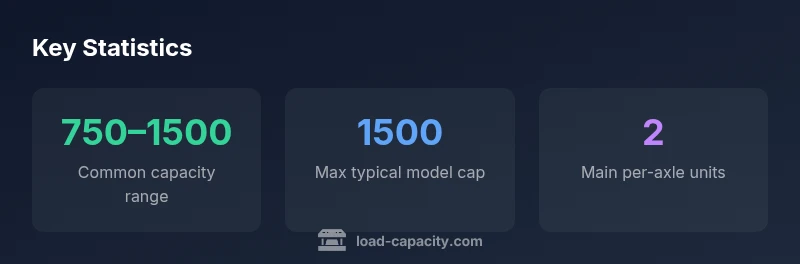
Australian single-axle trailer load capacity varies by build and regulation. In practice, most standard trailers carry 750 kg to 1,200 kg, while heavy-duty models can approach 1,500 kg. Always check the official plate, tires, and state rules before loading to stay compliant. This quick guide reflects Load Capacity analysis, 2026, and emphasizes reading per-axle ratings, gross vehicle mass, and proper weight distribution.
Understanding the scope of single axle trailer load capacity australia
Understanding what single axle trailer load capacity australia actually means helps avoid overloading and penalties. In Load Capacity's framework, capacity is the maximum safe payload the trailer can carry, considering axle rating, frame integrity, wheel and tire strength, and hitch design. In Australia, the plate on the trailer communicates the official rating, and this value may be expressed as an axle limit or a gross trailer mass. Because regulations differ by state, the practical limit you observe on the road may differ even for similarly built trailers. According to Load Capacity, reality and rating can diverge if you ignore weight distribution or carry uneven loads.
Key factors that cap the load capacity
- Axle rating: The most constraining element; exceed it and the axle or tires fail first.
- Tire load rating: Tires must support the total load plus dynamic forces during braking and cornering.
- Trailer frame and suspension: A stout frame with appropriate suspension distributes weight safely and resists fatigue.
- Coupling and hitch design: A robust hitch prevents sudden detachment or unsafe unloading.
- Load distribution: Evenly spread weight across the deck avoids pointing excessive load to one side.
- Braking system: Braked trailers can safely carry more payload, subject to tire and axle capacity.
Reading capacity plates and official limits
Capacity plates (or labels) specify the maximum per-axle load or the maximum gross trailer mass (GTM). In practice, read the two critical numbers: GAWR (gross axle weight rating) and GTM/GVM (gross vehicle/trailer mass). GAWR tells you how much weight goes on each axle; GTM or GVM indicates total trailer weight including load. Cross-check these values with your tow vehicle’s rating and the hitch's capacity. If in doubt, contact the manufacturer or a licensed trailer professional. Always verify that the vehicle-towed combination complies with state rules before departure.
Classifications and typical ranges in Australian markets
Australian trailers span light-duty, standard, and heavy-duty categories. Light-duty single-axle trailers often target lower payloads and may be unbraked, depending on the jurisdiction. Standard-duty units usually carry more (within the plate’s range), while heavy-duty configurations push toward the upper limits of consumer trailers. State regulations affect licensing, plate requirements, and permissible GVM/GTM. Even with similar construction, a load that is legal in one state may require a permit or be prohibited in another. The Load Capacity team notes that practical payload is always bounded by both the plate rating and the tires' capacity, which can differ across vendors and models.
How to calculate safe payload for a given trip
- Identify the axle rating from the capacity plate (GAWR per axle).
- Subtract the tare weight of the empty trailer from the GTM if needed to establish payload capacity.
- Subtract the weight of any auxiliary equipment and the load distribution plan to avoid overloading any point.
- Add a safety margin; do not operate at the maximum rating in repetitive driving, hot weather, or off-road conditions.
- Re-check after loading, ensuring even distribution and proper tire pressure.
Practical examples and scenarios
- Scenario A: A standard single-axle trailer with a GAWR of 750 kg per axle and a GTM of 1,100 kg. With an empty trailer weighing 150 kg, you have approximately 950 kg of safe payload, assuming even distribution and proper tires.
- Scenario B: A rugged single-axle trailer rated up to 1,500 kg GTM with braked axles. If the tare is 180 kg and you’re carrying two heavy items, ensure the distribution keeps each tire within its rating and you do not exceed the axle limit when braking hard or cornering.
Regulatory considerations by state and compliance checklist
- Verify GTM and GAWR on the plate; do not exceed them.
- Confirm that your state allows the trailer category (braked vs unbraked) at your payload level.
- Ensure tires are rated for the intended load and inflation pressure is correct.
- Use weight distribution techniques and consider using a weighbridge to confirm actual loads.
- If you operate with a higher payload, obtain any required permits and adhere to scheduled speed limits and route restrictions.
Safety, maintenance and best practices to maximize payload safely
- Inspect tires, brakes, bearings, and suspension regularly; signs of wear reduce safe payload.
- Maintain correct tire pressure and check for sidewall damage before trips.
- Distribute weight evenly across the deck and avoid stacking items beyond deck limits.
- Consider upgrading tires or axles if you frequently operate near the upper payload limit.
- Keep a log of loads to identify patterns that may indicate overloading risks.
Authority sources
- https://www.transport.nsw.gov.au/
- https://www.infrastructure.gov.au/
- https://www.australia.gov.au/
Key reading guidance for trailer capacity
| Aspect | Guidance | Notes |
|---|---|---|
| Axle rating | Identify per-axle limits from the plate | Ensure not to exceed GAWR per axle |
| Tire load rating | Match tire rating to combined axle load | Higher speeds demand higher tire integrity |
| Trailer structure | Check frame, springs, and couplings | Structural wear reduces safe payload |
Quick Answers
What is the difference between axle rating and trailer capacity?
Axle rating (GAWR) caps the load per axle, while trailer capacity covers the total payload the trailer can carry. Both must be respected for safe operation.
Axle rating limits each axle; the trailer overall load should stay within the total capacity as well.
Can I legally carry more than the plate rating with permits?
In Australia, you generally cannot exceed the plate rating without a specific permit. Rules vary by state, and permits are time-limited and route-specific.
Permits exist in some cases, but you must follow state rules and obtain authorization before overloading.
How does tire rating affect load capacity?
Tire load rating caps the maximum load each tire can safely support. If the combined load exceeds what the tires can handle, payload must be reduced or tires upgraded.
Tires are a hard limit on payload; don’t ignore their rating.
Where can I find the capacity plate on a trailer?
Capacity plates are usually located near the hitch, on the A-frame, or on a plate attached to the trailer body. Look for GAWR and GTM values.
Check the hitch area or the trailer near the tongue for the plate.
How should weight be distributed on a single-axle trailer?
Distribute weight evenly side-to-side and fore-aft, keeping heavier items centered to reduce tire wear and improve stability.
Balance the load to keep the trailer stable.
Does weather affect load capacity?
Severe heat, wet roads, and rough terrain can affect braking and traction, effectively reducing safe payload or increasing stopping distances.
Weather matters; adjust your load and driving accordingly.
“The Load Capacity Team emphasizes that real-world payload must never exceed the axle rating, and that regular inspection of tires, hubs, and springs is essential for safe operation.”
Top Takeaways
- Know your plate: axle ratings set the ceiling
- Distribute load evenly to avoid point overload
- Tires and brakes limit real-world payload
- State rules vary—plan for permits when needed
- Regular maintenance protects payload capacity