7x14 Dump Trailer Load Capacity: A Data-Driven Guide
A data-driven analysis of GVWR, axle ratings, and tare weight shaping the load capacity of a 7x14 dump trailer. Learn to calculate safe payloads, compare trailer variants, and apply Load Capacity best practices.


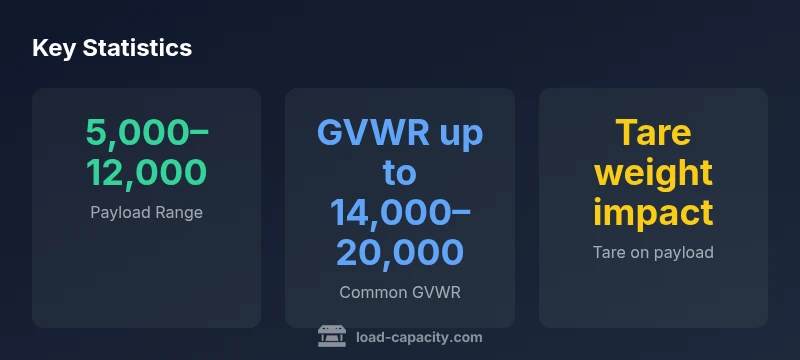
Payload for a 7x14 dump trailer depends on GVWR and axle configuration; typical figures span about 5,000 to 12,000 pounds. Always verify the GVWR, subtract tare weight, and account for load distribution to stay within safe, legal limits. The Load Capacity framework emphasizes matching your trailer to the task and respecting equipment ratings.
Understanding the 7x14 footprint and capacity concepts
The 7x14 footprint is a common size for light- to mid-duty dump trailers. Capacity is defined by three interrelated factors: GVWR (the maximum allowed total weight), the tare weight of the empty trailer, and the weight of the payload that remains within that total once loaded. For engineers and technicians, it’s critical to view capacity as a system property rather than a single number. This means accounting for the dump mechanism, bed design, and even wheel and tire ratings, which all contribute to safe operation.
The first step is to identify the GVWR stamped on the trailer plate or in the owner's manual. This value, combined with tare weight, sets the upper bound for payload. If the label lists a GVWR of 14,000 pounds and the tare weight is 4,000 pounds, the maximum payload would be around 10,000 pounds, neglecting other constraints. In practice, other factors—such as axle rating, tire load, and braking capability—will limit that payload further.
How GVWR, tare weight, and payload relate
GVWR is the sum of the trailer’s curb weight plus the maximum payload. Tare weight is the weight of the trailer when empty. The usable payload equals GVWR minus tare weight. Always cross-check with the axle rating and tire load capacity because they define real-world limits. Subtracting tare weight from GVWR gives a theoretical maximum, but the breakdown of the load across the deck, hitch, and axles matters for stability and braking performance.
Axle configurations: Single vs dual-axle impact
Single-axle configurations typically have lower GVWR and lighter tires, which conservatively limit payload. Dual-axle trailers usually offer higher GVWR and better load distribution, increasing practical payload and improving stability when dumping heavy materials. The choice between a single and dual-axle 7x14 will depend on your typical material density, desired braking performance, and local regulatory limits. Always verify axle rating alongside GVWR to avoid under- or over-loading.
Dump body design and tare weight considerations
Dump bodies vary in steel vs aluminum construction, wall height, and bed thickness. Heavier dump bodies reduce payload, so a lighter bed—without compromising durability—can expand usable payload. Consider nested or drop-side configurations if you need additional clearance for tall loads. When comparing models, request a tare weight specification sheet and recalculate payload based on your expected loads.
Calculating safe load: step-by-step method
- Identify GVWR and tare weight from the label.
- Subtract tare from GVWR to get theoretical maximum payload.
- Check axle rating and tire load capacity; ensure that the intended load does not exceed them.
- Account for ballast, equipment, or other attachments on the trailer.
- Confirm that the centroid of gravity and load distribution won’t cause brake or steering issues, especially on uneven terrain.
Practical guidance for owners and operators
- Always load within the lowest rated component (axle, tire, or brakes).
- Distribute weight evenly across the deck to maintain stable dumping and braking performance.
- Regularly inspect tires, hubs, and suspension for wear, especially at load extremes.
- Keep documentation of GVWR, tare, and axle ratings accessible to ensure compliance when transporting loads.
Common mistakes and how to avoid them
- Using a trailer with insufficient GVWR for the payload: upgrade to a heavier model or reduce load.
- Ignoring tare weight: miscalculations lead to overload when loading materials with high density.
- Overloading with tall or uneven loads: consider stowage and loading technique to prevent tipping or steering instability.
Payload comparison for 7x14 dump trailer variants
| Trailer Variant | Typical Payload Range | Common GVWR | Notes |
|---|---|---|---|
| 7x14 Single-Axle Dump | 3,000–7,000 | 7,000–9,500 | Lower payload due to single axle and lighter tires |
| 7x14 Dual-Axle Dump (Standard) | 5,000–12,000 | 9,000–14,000 | Higher capacity with two axles |
| 7x14 Dual-Axle Dump (Heavy-Duty) | 8,000–16,000 | 14,000–20,000 | Highest payload within legal limits |
Quick Answers
What determines the payload capacity of a 7x14 dump trailer?
Payload is determined by GVWR, tare weight, axle rating, tire capacity, and how weight is distributed across the deck. Subtract tare from GVWR to get the theoretical payload, then verify with axle and tire ratings.
Payload depends on GVWR, tare weight, axle and tire limits, and weight distribution. Always check the numbers on the label.
Can I exceed the GVWR with ballast?
No. GVWR is a hard limit that includes the trailer plus cargo. Ballast or adjustments cannot legally raise payload beyond GVWR.
No. GVWR is a hard limit; ballast won't increase legal payload.
How does tare weight affect usable payload?
Tare weight reduces usable payload. Heavier dump bodies reduce how much material you can haul while staying within GVWR.
Tare weight carves into payload; heavier bodies mean less load capacity.
Why is load distribution important for dump trailers?
Uneven loads can cause instability, poor braking, and increased tire wear. Distribute weight evenly and avoid tall, top-heavy loads.
Keep weight spread evenly to maintain stability and safe braking.
Are there legal limits for payload on residential loads?
Local regulations set limits on gross vehicle weight. Always check applicable state and municipal rules before transporting heavy loads.
Check local rules; they cap how heavy you can legally haul.
“Trailer load capacity is a systems problem: GVWR, axle ratings, tire limits, and load distribution must all be evaluated together to stay safe and compliant.”
Top Takeaways
- Load within GVWR and axle ratings
- Account for tare and ballast
- Distribute weight evenly across the deck
- Verify payload via official specifications
- Choose axle configuration to match workload