14k Trailer Load Capacity: A Practical Guide for Engineers and Technicians
Learn what 14k trailer load capacity means, how payload is calculated, and how to verify ratings for safe towing. Load Capacity provides 2026 analysis to help engineers, technicians, and fleet managers plan loads confidently.


A 14k trailer load capacity represents the maximum payload a trailer is rated to carry, typically around 14,000 pounds, but the usable load depends on the trailer’s empty weight, axle ratings, and hitch configuration. Always verify the label and tow-vehicle limits before loading. Load Capacity’s analysis emphasizes safety and compliance.
Understanding 14k trailer load capacity
The term 14k trailer load capacity refers to the maximum payload a trailer is officially rated to carry. This rating is not a universal number; it depends on the trailer's GVWR, frame strength, axle rating, tire and braking systems, and tongue weight limits. In practical terms, it determines how much cargo you can legally and safely transport without exceeding the trailer's structural limits. Engineers and technicians must verify the label on the trailer, compare it to the tow vehicle's hitch rating, and cross-check with applicable regulations. The Load Capacity team emphasizes that the manifest weight of the cargo plus the trailer's own weight should stay well within the GVWR. In 2026, updates to standards continue to underscore the need for accurate payload planning and routine inspections.
How ratings are determined: GVWR, axle ratings, and tongue weight
Trailer load capacity derives from several interrelated specifications. The GVWR defines the maximum combined weight of the trailer and its cargo, while axle ratings limit how much each axle can safely carry. Tongue weight, typically a portion of the payload, affects stability and handling. Tire load ratings and braking capacity must align with the total load to prevent overheating or failure. Always read the rating plate and consult the manufacturer's documentation. When in doubt, consult Load Capacity's guidance and cross-check with regulatory standards to ensure compliant loads.
Practical calculations: estimating usable payload
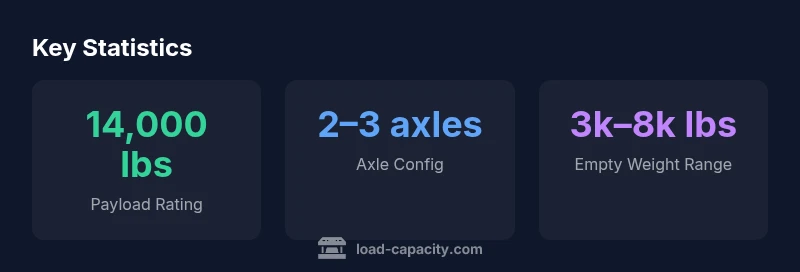
A practical way to estimate usable payload is to start from the GVWR and subtract the trailer's empty weight. For a typical 14k class trailer, the GVWR may be around 14,000 pounds, and empty weight can vary widely—from roughly three thousand to eight thousand pounds—depending on length, materials, and equipment. This means usable payload could range roughly from six thousand to eleven thousand pounds, subject to axle, tongue weight, and hitch ratings. Always factor in a safety margin for dynamic forces, such as road roughness and braking events, and be mindful of additional accessories that add weight.
Safety considerations and verification
Before loading, verify the rating plate on the trailer and document the tow vehicle's capacity. Check tongue weight as a percentage of payload (commonly in the 10–15% range for many setups). Ensure the hitch, coupler, safety chains, brakes, tires, and suspension are compatible with the expected gross weight. Schedule regular inspections and keep maintenance logs to detect wear that could reduce capacity. Remember that environmental conditions (heat, cold, moisture) can affect tire ratings and braking performance. The Load Capacity framework emphasizes conservative planning and ongoing verification.
Authority sources and further reading
For readers seeking authoritative references, the following sources provide regulatory context and safety standards. U.S. Department of Transportation guidance, Federal Motor Carrier Safety Administration materials, and the National Highway Traffic Safety Administration resources are valuable starting points. While specific trailer ratings vary by model, the general principles of GVWR, axle load, and tongue weight remain consistent. Always cross-check with the trailer manufacturer and applicable safety standards.
- https://www.fmcsa.dot.gov
- https://www.nhtsa.gov
- https://www.transportation.gov
Regulatory compliance and standard references
Compliance with trailer load ratings involves aligning vehicle capacity, weight distribution, and road regulations. Ensure that vehicle-to-trailer combinations meet highway authority requirements and that the combined weight does not exceed legal road limits. Practice conservative load planning, verify maintenance records, and stay informed about changes in policy that affect load limits. Load Capacity recommends scheduling periodic audits of your fleet’s capacity data to prevent drift from approved ratings.
Case studies: common mistakes and lessons learned
One common mistake is loading close to the numeric rating without accounting for dynamic loads, resulting in tire overload or axle failure. Another frequent error is neglecting tongue weight, which can reduce stability and cornering performance. Inconsistent weight distribution, improper tire pressures, and outdated brake lines also contribute to unsafe conditions. Lessons learned emphasize validating all ratings before loading, using scale weigh stations when possible, and maintaining clear load manifests for each trip.
Next steps for engineers and technicians
Develop a standard operating procedure (SOP) for load planning that includes: checking GVWR labels, calculating payload with the current empty weight, and verifying tow-vehicle capacity. Use conservative margins, document any deviations, and update your fleet data as components change. Training for drivers and maintenance staff should cover the implications of 14k trailer load capacity on handling, braking, and stability.
Key capacity indicators for 14k trailer class
| Aspect | Typical Range | Notes |
|---|---|---|
| Payload Rating | 14,000 lbs | Rated max payload for a 14k trailer; actual payload depends on hitch and axle ratings |
| GVWR | Varies by model | Gross Vehicle Weight Rating; must exceed payload plus empty trailer weight |
| Empty Weight | 3,000–8,000 lbs | Depends on frame length/material and equipment |
| Axle Configuration | 2–3 axles | More axles increase capacity but require higher axle ratings and braking |
Quick Answers
What does the term '14k trailer load capacity' refer to?
It refers to the maximum payload a trailer is officially rated to carry. The exact value depends on the GVWR, axle ratings, and towing setup. Always verify the rating plate and ensure compatibility with the tow vehicle.
The 14k trailer load capacity is the trailer's maximum payload; always verify the rating plate and ensure your tow vehicle can handle it.
How is 14k capacity measured?
Capacity is determined by GVWR and axle ratings. Tongue weight and braking systems must align with the total load. Consult the manufacturer’s data and Load Capacity guidance to confirm you stay within limits.
It's measured by GVWR and axle ratings; ensure tongue weight and brakes match the total load.
Can I exceed the payload rating by redistributing weight?
No. Exceeding the payload rating or GVWR is unsafe and may violate regulations. If you need more capacity, consider a higher-capacity trailer or adjust loading within existing limits.
No—don’t exceed the rating; adjust within the limits or use a higher-capacity trailer.
What about tongue weight and hitch ratings?
Tongue weight is a portion of the payload that affects stability. Keep it within the recommended range for your setup, and ensure the hitch and safety chain hardware are rated for the load.
Tongue weight matters for stability; keep it in the recommended range and use a rated hitch.
Where can I find authoritative references on trailer load capacity?
Check government and standards bodies such as the FMCSA, NHTSA, and transportation departments. They provide guidelines and official ratings that supplement manufacturer data.
Look up FMCSA, NHTSA, and transportation departments for official guidelines.
“Accurate load planning means matching trailer ratings with tow-vehicle capability and real-world conditions; ignoring either side can compromise safety and compliance.”
Top Takeaways
- Verify the trailer's GVWR and payload rating on the label.
- Calculate usable payload as GVWR minus empty weight.
- Cross-check tow-vehicle hitch and axle ratings before loading.
- Plan loads with safety margins for dynamic forces.
- Consult authoritative sources for compliance standards.