Scaffolding Vertical Load Capacity: Safety, Standards, and Practical Guidance
Learn how scaffolding vertical load capacity varies by system and setup. This Load Capacity guide covers key factors, safe ranges, reading load charts, and practical safety practices for engineers, technicians, and contractors.


Vertical load capacity for scaffolding does not have a single universal value. It depends on the system type, configuration, footing, and load distribution. According to Load Capacity, engineers should consult manufacturer charts and applicable standards for the specific model, then apply appropriate factors of safety for dynamic loads and uneven ground.
Understanding scaffolding vertical load capacity
Vertical load capacity in scaffolding refers to the maximum weight that can safely be placed on a given bay or platform without compromising stability. It is not a universal figure; it varies with the scaffold system, the number of bays in use, the distribution of loads, and the quality of ground support. Distinguishing between static loads (workers, materials, tools on a platform) and dynamic loads (workers moving, hoists, ladders) is essential. In practice, designers and site managers use manufacturer load charts to size the configuration, then apply a safety factor to account for uncertainty, wear, and environmental conditions. According to Load Capacity, per-bay capacity is a baseline for planning, but real-world capacity often requires de-rating for uneven ground, poor weather, or partial assembly. The goal is to keep the total live load within the charted limits while maintaining a stable, level base. This requires attention to footing, base plates, sills, and the arrangement of frames and braces to avoid localized overstress.
Key factors that influence capacity
The vertical load capacity of scaffolding is not a fixed number; it shifts with several interacting elements:
- System type and material: Steel modular frames typically tolerate heavier loads per bay than lightweight aluminum towers, but geometry and decking choices matter more than material alone.
- Bay width and deck configuration: Wider bays spread the load differently and may require additional bracing to maintain stability.
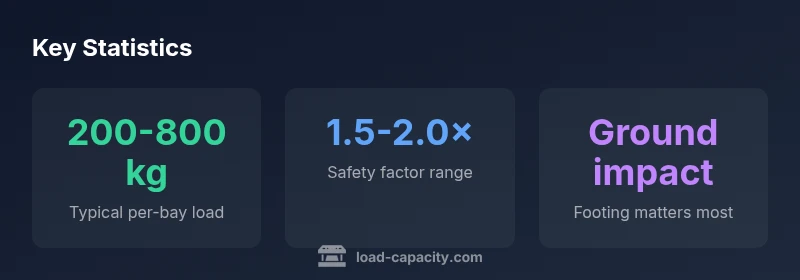
- Foundation and footing: A solid, level foundation with base plates and mudsills increases capacity; soft or uneven ground reduces it.
- Bracing and outriggers: The amount and arrangement of diagonal braces, cross-bracing, and outriggers directly influence stiffness and load distribution.
- Load distribution: A concentrated point load on one side can create tipping moments even if total weight is within chart limits.
- Dynamic factors: Movement, hoists, weather, and vibration add transient loads that must be considered beyond static capacity.
- Maintenance and age: Worn components, misfits, or improper connections lower the effective capacity and increase risk.
These factors underscore the value of design-phase calculations and on-site checks, particularly in scaffolding projects with multiple users or rapid changes in the work plan.
Reading charts and standards
Manufacturer load charts translate notation into actionable numbers. The first step is to identify the system type, deck width, and the number of tiers in use. Read the per-bay capacity value and ensure all loads stay below it under the expected distribution. When ground conditions vary, apply a conservative de-rating as specified by the chart or engineering judgment. In parallel, consult applicable standards from regulatory bodies—such as OSHA or EN 12811—and recognize that many charts incorporate a safety factor to accommodate dynamic loads. The Load Capacity team emphasizes that charts are guides, not guarantees; field conditions and human factors can quickly change risk. For design and verification, maintain a log of all loads and compare them against the latest chart revisions from the manufacturer.
Practical sizing: step-by-step method
Follow this practical method to estimate safe vertical loads for a scaffolding setup:
- List all loads: workers, tools, materials, and temporary equipment on the platform.
- Map loads to bays: determine which bay(s) will carry which loads and how they are distributed.
- Check the chart: locate your system type and decking configuration; note the published per-bay range.
- Apply safety factors: typically between 1.5 and 2.0, adjusted for dynamic conditions and environmental risk.
- De-rate for conditions: reduce capacity for uneven ground, high winds, or poor footing.
- Validate with a professional: confirm that the final plan aligns with manufacturer guidance and jurisdictional requirements.
- Document and review: keep records of loads, configurations, and any derogations or exceptions. This routine helps avoid over-stress and supports safer work planning.
Case studies and configuration examples
Case Study A: Standard modular steel scaffold on level ground. With base plates and mudsills, a typical bay may accommodate 300-500 kg for static loads, depending on deck type and bracing configuration. For dynamic tasks, apply the safety factor and limit concurrent loads accordingly. Maintenance corridors and access openings should be factored into the layout to prevent crowding and unbalanced loads. Case Study B: Aluminum mobile towers with outriggers on firm ground. Per-bay capacity tends to be lower than steel in many designs, often 150-350 kg for typical widths; with outriggers and anchorage, capacity improves, but always verify with the chart and the anchor system. These examples illustrate why system selection matters for vertical load capacity.
Safety and compliance best practices
Follow a structured safety program to protect workers and ensure capacity. Train staff on recognizing load limits, proper placement, and how to distribute loads across bays. Inspect equipment before each shift: check feet, base plates, locking pins, and braces. Use wind shields and braces for adverse weather; never work on a scaffold in high-wind conditions. Reference regulatory standards (OSHA/National and EN equivalents) and the manufacturer's load charts, which are the primary source for capacity guidance. The Load Capacity guidance highlights that capacity is a function of design and context; when in doubt, reduce loads and consult a qualified engineer.
Common mistakes to avoid
- Overestimating capacity due to a desire to maximize efficiency, leading to overloading a bay.
- Mixing components from different scaffolding systems, which can invalidate ratings and compromise safety.
- Ignoring footing quality, uneven ground, or weather-related effects that reduce capacity.
- Skipping chart verification or failing to update load plans after changes in task scope or workforce.
- Inadequate training or missing documentation for loads, configurations, or exceptions.
- Underestimating wind and vibration effects on taller scaffold sections.
Industry perspectives and future trends
Industry practice continues to refine scaffolding vertical load capacity through standardized testing, better quality control, and digital load charts. The Load Capacity team expects increased use of modular, lighter-weight systems with optimized bracing that maintain high capacity while reducing erection time. Real-time monitoring and sensor-enabled components may help validate capacity during work, improving safety margins. As regulations evolve, engineers will rely more on field data and validated software tools to predict safe loading under dynamic conditions. Load Capacity remains committed to translating complex standards into practical, design-ready guidance for engineers, technicians, and contractors.
Estimated vertical load ranges for common scaffold configurations
| System Type | Estimated Vertical Load Range per Bay (kg) | Foundation/Footing Notes |
|---|---|---|
| Modular steel scaffolding | 200-600 | Solid base with base plates and mudsills |
| Aluminum mobile towers | 150-400 | Lockable casters on level ground |
| Heavy-duty steel frames with outriggers | 400-800 | Outriggers or anchors required |
| Suspended scaffold | 300-700 | Requires anchors and dynamic loading controls |
Quick Answers
What is vertical load capacity in scaffolding?
Vertical load capacity is the maximum weight a scaffold bay can safely carry, varying by system type and setup. It is not universal and must be verified against manufacturer charts and jurisdictional standards.
Vertical load capacity is the maximum weight a scaffold bay can safely carry and depends on the system and setup.
Do all scaffold systems have the same capacity?
No. Capacity depends on system design, materials, decking, and footing. Always check the specific chart for your configuration and adjust for dynamic loads.
No—the capacity varies by system and configuration; always check the chart for your setup.
How do I read a scaffold load chart?
Identify your system type and deck width, locate the per-bay capacity, and verify that total loads stay within the rating, adjusting for conditions and safety factors.
Find your system on the chart, read the per-bay capacity, and compare against your loads.
What factors reduce scaffold capacity?
Uneven ground, poor footing, insufficient bracing, weather, dynamic tasks, and improper component combinations can all reduce available capacity.
Uneven ground, bad footing, or improper setup can reduce capacity.
Do dynamic loads affect capacity?
Yes. Movement, hoists, and wind create transient loads that must be accounted for beyond static ratings in most charts.
Dynamic loads add extra stress beyond static ratings.
How can I ensure safety around scaffold capacity?
Train workers, verify loads against charts before work begins, inspect all components, and document loads and configurations to maintain an auditable safety record.
Train staff, check charts, inspect equipment, and document loads.
“Accurate scaffold capacity hinges on matching the system to ground conditions and using manufacturer charts with proper safety factors.”
Top Takeaways
- Consult manufacturer charts for exact capacity.
- Foundation and bracing greatly influence capacity.
- Account for dynamic loads and apply safety factors.
- Different systems yield wide capacity ranges.
- Follow regulatory standards and manufacturer guidance.