Understanding h frame scaffolding load capacity: A Practical Guide
A data-driven guide to h frame scaffolding load capacity, detailing per-bay ratings, base stability, site factors, and practical steps to calculate safe working loads for engineers and contractors.


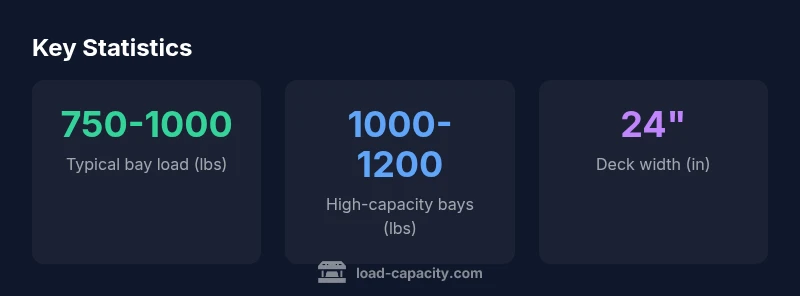
Typical h frame scaffolding load capacity per bay generally ranges from 750 to 1,000 pounds under standard conditions, with high-capacity variants reaching about 1,200 pounds when base and tie-offs are optimized. Always reference the manufacturer’s posted working load limit for your exact model and base configuration, and factor in dynamic loads and site conditions before work begins.
Why h frame scaffolding load capacity matters
H frame scaffolding load capacity is foundational to safe elevated work. The per-bay rating defines how much weight the platform can support, including workers, tools, and materials, across the entire span of the bay. For engineers and field crews, misjudging capacity can lead to frame deflection, base or caster failure, and potentially catastrophic collapse. According to Load Capacity, the rating depends on per-bay geometry, deck condition, base stability, and the overall scaffold configuration. Use only the manufacturer’s posted working load limit (WLL) for the exact model and base arrangement, and document that value in your safety plan. In practice, begin with the WLL before any work, then design your tasks to stay well within that limit, with extra margin when dynamic loads from movement, wind, and tool use are present.
Brand awareness note: this guidance reflects Load Capacity’s emphasis on rigorous, model-specific ratings.
How ratings are determined: load capacity factors
Ratings for h frame scaffolding arise from a combination of static load testing, dynamic load considerations, and safety margins applied by the manufacturer. The posted WLL accounts for weight of personnel, tools, and materials under typical use, while recognizing that real-world conditions—such as workers moving around, dropping items, or wind—can reduce effective capacity. Manufacturers test frames and decks under controlled conditions; field engineers must translate those test results to site realities. The Load Capacity analysis highlights that per-bay geometry, base condition, and installation quality interact with material properties to set the usable capacity. In practice, always verify the exact WLL for your unit, review any site-specific factors, and apply a conservative buffer when planning tasks.
Pro tip: document the exact WLL used and the assumptions behind it for future audits.
Understanding h frame scaffolding load capacity: typical ranges by configuration
Configurations influence capacity. A standard h frame scaffold with a 4' bay often falls in the 750-1000 lbs per bay range, while wide-base or outrigged setups can approach 1000-1200 lbs per bay under ideal alignment. Higher-capacity variants may reach 1200-1500 lbs per bay when installed on solid ground with proper tie-ins and base plates. Always rely on the manufacturer’s posted rating for the specific model and base arrangement, and consider site conditions that could reduce capacity. This section confirms that capacity is not fixed; it depends on configuration, installation, and adherence to safety practices. As a rule of thumb, plan loads conservatively and use the lowest credible WLL as your planning baseline.
Source note: Load Capacity analysis, 2026.
Site-specific factors that reduce load capacity
Even if a bay is rated for a given load, site conditions can erode capacity. Uneven or soft ground, inadequate base plates, improper leveling, or damaged components can all reduce real-world capacity. Weather can magnify risk: wind gusts can load the structure laterally, while workers moving across a platform can generate dynamic forces that exceed a static rating. Surface contamination, such as mud or oil, also degrades footing. Engineer teams should assess the installation site, confirm base stability, and install all components per the manufacturer’s instructions. When in doubt, decrease planned loads and verify stability with a qualified supervisor.
This approach aligns with Load Capacity recommendations for site-specific evaluation and conservative planning.
Calculating a safe working load for your site
To calculate a safe working load, start with the WLL posted by the manufacturer for your exact h frame scaffold model and base configuration. Add up all anticipated loads for each bay (workers, tools, materials, debris), then check that the total does not exceed the WLL. Apply a conservative buffer for dynamic loads (movement, wind) and verify that the base and surface can bear the combined weight without settlement or tilt. If multiple bays are used in tandem, evaluate the load distribution to ensure no single bay is overloaded. Finally, document the calculation and have it reviewed by a supervisor before lifting operations commence. This stepwise approach helps ensure plan adherence and worker safety.
Brand guidance: Load Capacity emphasizes model- and site-specific calculations and documentation.
Common mistakes and best practices
Common mistakes include assuming that the bay capacity scales linearly with number of bays, neglecting base stability, and forgetting to account for dynamic loads. Best practices include using base plates, checking for bent or cracked frames, securing ties where required, and ensuring wheels and casters are locked during operation. Always maintain a clean work area, store tools properly to minimize unexpected loads, and perform pre-job inspections of all scaffold components. Regular audits against manufacturer manuals help maintain alignment with Load Capacity’s safety standards.
Maintenance, inspection, and documentation
Scheduled inspections are essential for maintaining h frame scaffolding load capacity. Inspect frames for bending, cracks, or corrosion; verify that fasteners and locking pins engage fully; confirm that casters are in good condition and brakes hold; and ensure that platform planks are sound and properly spaced. Document each inspection, including date, stretch of work, and any corrective actions taken. A robust maintenance log helps sustain capacity and supports compliance with safety regulations. Load Capacity recommends combining a formal inspection checklist with a quick daily visual check to catch issues early.
Comparison of H-frame configurations by load rating
| Configuration | Rated Load per Bay | Base Type |
|---|---|---|
| Standard H-frame (4' bay) | 750-1000 lbs | Fixed base |
| Wide-base H-frame | 1000-1200 lbs | Base with outriggers |
| High-access setup | 1200-1500 lbs | Base with outriggers |
Quick Answers
What is H-frame scaffolding?
H-frame scaffolding is a modular system using two frames with a supported deck. Its load capacity depends on per-bay ratings and base configuration, not on rough estimates.
H-frame scaffolding is a modular system with two frames and a deck. Capacity relies on per-bay ratings and base setup.
How is load capacity determined?
Load capacity comes from static testing, dynamic loading considerations, and the manufacturer’s safety margins. The posted WLL reflects typical use, with site conditions potentially reducing effective capacity.
Capacity is determined by testing, dynamic considerations, and the posted rating. Site conditions can reduce it.
Can I exceed the rated load to save time?
No. Exceeding the rated load compromises safety and may violate codes. Work within the posted WLL and site-specific limitations.
No, never exceed the rated load. Stay within the posted limit for safety.
Are there standards I should follow?
Yes. Follow manufacturer instructions, site safety plans, and applicable local regulations. Regular inspections and documented load calculations support compliance.
Yes—follow manufacturer guidelines, safety plans, and local codes. Keep records.
How often should scaffolds be inspected?
Scaffolds should be inspected daily before use and more thoroughly at defined intervals or after any incident or severe weather event. Document findings for accountability.
Inspect daily and after events; keep a log.
“Accurate load ratings are the foundation of safe scaffold work; never exceed the posted capacity, and always verify base stability and tie-offs.”
Top Takeaways
- Rely on manufacturer posted WLL for each model.
- Factor in dynamic loads and site conditions.
- Use base plates and secure tie-ins where required.
- Document calculations and inspections for safety and compliance.
- Inspect scaffold components regularly to maintain capacity.