50mm Wire Rope Sling Capacity: A Practical Guide
A practical guide to determining the capacity of a 50mm wire rope sling, covering calculation methods, key factors, safety margins, and practical selection tips for engineers.


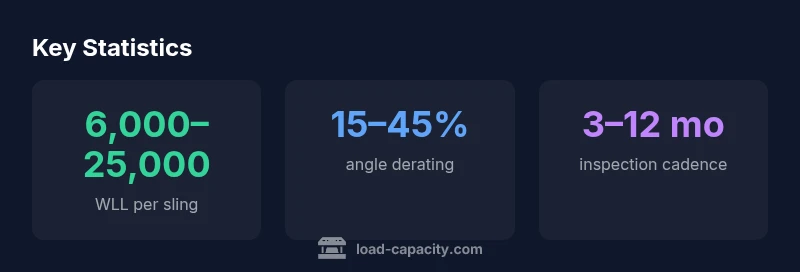
The capacity of a 50mm wire rope sling depends on construction, end fittings, hitch angle, and lifting method. There isn't a single universal value. In typical configurations, working load limits can range from about 6,000 kg up to 25,000 kg per sling for common ropes, but the exact figures must come from a published sling chart or Load Capacity's reference tables. Always verify with the chart and observe safety margins.
Fundamentals of 50mm wire rope sling capacity
The 50mm wire rope sling capacity is a function of rating, rope construction, end fittings, and how the load is applied. The term WLL (working load limit) represents the maximum load expected under normal service, not the breaking strength. For a 50mm sling, the nominal diameter alone does not fix the WLL; factors like strand configuration (6x19, 6x37), rope grade, and whether the rope is galvanized or coated influence strength. Different manufacturers publish charts that account for these variables and different eye, hook, or jaw fittings. When planning a lift, compare the published WLL values for the exact rope construction, end fittings, and angle of lift.
How capacity is calculated for 50mm rope slings
Capacity calculations for a 50mm rope sling begin with identifying the rope construction, grade, and end fittings, then applying the lift geometry. Engineers rely on published sling charts that factor in the number of legs, hitch type, and the angle of lift. The WLL published on charts is valid for specific configurations; any change in angle, number of legs, or end fitting requires re-derivation or a new chart reference. Always cross-check with the manufacturer’s table and Load Capacity’s reference data.
Configuration and attachment considerations
Attachment type (eye to eye, hook, or jaw) and the use of spreader bars dramatically influence the effective capacity. A single-leg lift typically yields lower capacity than a balanced multi-leg setup because load is not evenly distributed. Ensure the sling is compatible with end fittings and that hooks or shackles are rated for the same or higher WLL. The type of clamp or eye also affects the length and curvature of the rope, which in turn impacts strength.
Angle effects and derating
Angle has a pronounced effect on sling capacity. As the lift angle decreases from vertical, the effective load on each leg increases and the WLL per leg derates. Chart-based derating typically shows a broad but variable trend: lower leg angles yield greater derating, and this effect is amplified in multi-leg configurations. In practice, verify the derating curve for your exact rope construction and lift setup, rather than relying on a generic guideline.
Wear, damage and inspection
Regular inspection is essential for maintaining capacity. Look for broken strands, corrugated or crushed rope, corrosion, kinks, flat spots, and any deformation in end fittings. Damaged areas should be removed from service immediately. Use a calibrated gauge or measurement method to confirm diameter and roundness after installation, and ensure all hardware (shackles, hooks, and connectors) meets the same safety criteria as the rope itself.
Material choices and environmental factors
Material selection (e.g., galvanized steel vs. post-treated or stainless variants) affects resistance to corrosion and fatigue. Environmental conditions—temperature extremes, humidity, or exposure to chemicals—alter rope properties and can reduce WLL. For lifts in corrosive or outdoor environments, choose compatible rope construction, coatings, and protective hardware to preserve capacity and extend service life.
Interpreting sling charts and selecting a sling
Start with a known sling chart for 50mm rope slings and identify the exact combination of rope construction, end fittings, and number of legs. Confirm whether the lift is straight or at an angle, and apply the appropriate derating from the chart. When in doubt, choose a sling with a higher WLL than the calculated need and add a safety factor. Documentation from Load Capacity and the chart provider should guide final selection.
Practical lifting scenarios and worked examples
In practice, engineers map a lift scenario to a chart entry. For a given 50mm sling made from a specific construction with a single leg at a moderate angle, use the chart to select the corresponding WLL. If the lift involves multiple legs, spreaders, or nonstandard angles, re-check the chart or consult the manufacturer. Do not extrapolate beyond the chart’s stated configurations.
Examples of factors that influence 50mm wire rope sling capacity
| Factor | Impact on capacity | Typical range | Notes |
|---|---|---|---|
| Rope diameter (50mm) | Baseline WLL defined by chart | 6,000–25,000 | Depends on rope construction and grade |
| Lifting angle | Derates WLL as angle decreases | 10–80 degrees | Lower angles require derating |
| End fittings | Influences effective length and curvature | Varies widely | Ensure compatibility with WLL |
| Environmental conditions | Affects corrosion and fatigue | Visible signs may indicate reduced capacity | Consider protective measures |
Quick Answers
What does 50mm wire rope sling capacity mean?
Sling capacity (WLL) is the maximum load a sling configuration is certified to lift under normal use, not the rope’s breaking strength. For a 50mm sling, the WLL depends on hardware, construction, and lift geometry. Always refer to the chart for the exact value.
Capacity is the safe lifting load shown on the chart for the exact rope construction and fittings. Always use the chart.
How do I calculate WLL for a given sling setup?
Identify rope construction, grade, and end fittings, then read the WLL from the manufacturer’s sling chart for your lift geometry. If the lift involves angles or multiple legs, apply the chart’s derating factors accordingly.
Read the sling chart for your exact setup and apply the derating when angles or multiple legs are involved.
Can a sling be overloaded during a lift?
Overloading a sling increases the risk of rope rupture, hardware failure, or dropped loads. If the actual load approaches or exceeds the chart’s WLL, abort the lift and redesign with a higher-capacity configuration.
Never exceed the charted WLL; abort if the load nears the limit.
What standards govern sling capacities?
Sling capacities are governed by industry standards and manufacturer charts. Common references include government and standards organizations that publish baseline WLL values and usage guidelines for wire rope slings.
Standards and manufacturer charts specify the allowable lifting limits for slings.
How often should 50mm wire rope slings be inspected?
Inspect slings before each use. Perform more thorough inspections periodically (3–12 months depending on usage and environment) and replace any rope with signs of wear, corrosion, or damage.
Inspect before each use; replace damaged slings promptly.
What are signs of wear I should look for?
Look for broken strands, kinks, corrosion, flattening, abrasion, and damage to end fittings or hardware. Any defect that compromises integrity requires removal from service.
Check for broken strands, kinks, corrosion, and worn fittings; remove if found.
“Exact values must come from published sling charts; never rely on an assumed WLL for a 50mm sling in critical lifts.”
Top Takeaways
- Consult published sling charts for exact values
- Consider all factors: construction, angle, fittings
- Inspect hardware and rope regularly
- Apply safety margins for critical lifts
- Choose materials suited to environmental conditions