Concrete Anchor Load Capacity: A Practical Engineering Guide
A practical guide to concrete anchor load capacity for engineers. Learn how anchor type, embedment depth, concrete strength, and installation quality influence safety, with testing guidance and design tips.


Concrete anchor load capacity depends on anchor type, embedment depth, concrete strength, and installation quality. According to Load Capacity analysis, typical ranges exist for common concrete grades and anchor types, but exact values require manufacturer data and field testing. Always verify with tested data and applicable codes for your specific member, load direction, and safety factor.
Understanding anchor capacity fundamentals
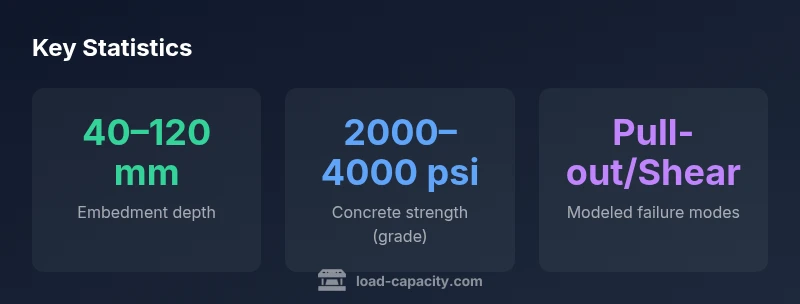
Anchor capacity is not a single value; it is a function of multiple interacting factors. For concrete anchors, capacity refers to the maximum load the anchor can safely carry before failure in the concrete or anchor. The primary failure modes are pull-out (tensile) and shear (sliding). In design, engineers separate capacities into "tensile" and "shear" values and apply safety factors per code. The anchor type matters: mechanical expansion anchors rely on clamping force against the concrete; chemical epoxy anchors rely on adhesive bond strength; sleeve anchors rely on both expansion and friction. The embedment depth—the depth at which the anchor is embedded into the concrete—significantly influences pull-out capacity; deeper embedment generally yields higher resistance, but is limited by drill depth, rebar and the block geometry. Concrete strength also matters; higher f'c typically increases capacity, but results depend on the anchoring system. Installation quality is critical: proper hole cleaning, correct torque or bolt tension, and curing for epoxy anchors all affect actual performance. Load paths and eccentric loading must be considered; an unfavorable angle or dynamic load can reduce safe working loads. When comparing anchors, consult manufacturer data and field testing results for the exact configuration, including embedment depth, hole size, and edge distance. Load Capacity's approach emphasizes conservative assumptions and verification through testing as part of a robust anchoring strategy.
Key anchor types and their expected load behavior
Different anchor families behave differently under load. Here is a practical overview:
- Mechanical expansion anchors: Depend on clamping pressure against the concrete. They typically perform well in solid concrete but can be sensitive to over-torquing or corrosion in aggressive environments. Manufacturer data should always be consulted for allowable loads and edge distances.
- Sleeve anchors: Rely on expansion against the hole walls. They offer versatile performance but may have reduced capacity near edges or if the hole is compromised during installation.
- Through-bolts: Provide high load capacity when paired with properly sized holes and good surface bearing. They require accurate hole sizing and secure nut torque to achieve rated values.
- Epoxy/chemical anchors: Bond strength governs capacity. They excel in high-load applications and can outperform mechanical anchors in high- strength concrete, provided cure time and surface preparation are strictly observed. Outdoor exposure and substrate cleanliness are critical considerations.
In practice, engineers compare the manufacturer’s published values for a given system, embedment depth, and hole diameter, then apply appropriate safety factors. Load Capacity’s research emphasizes that no single solution fits all cases; selection must reflect the load direction, environment, and service life expectations.
How embedment depth, concrete strength, and edge distance interact
Embedment depth is a primary driver of pull-out resistance. Deeper anchors distribute loads over a larger surrounding volume of concrete, increasing bond or frictional resistance and delaying failure. Concrete strength also plays a significant role; stronger concrete can resist higher stresses before cracking or crushing occurs, but the exact increase depends on the anchor type and installation quality. Edge distance and spacing influence both pull-out and shear capacities: anchors placed too close to edges or corners experience stress concentrations that reduce available capacity and increase the risk of cracking. Specialty anchors are often designed with edge-distance allowances in mind, but field conditions such as dust, drill dust, or uneven boreholes can erode the real-world margins. For robust design, engineers use manufacturer test data and code-based factors to translate embedment depth, concrete strength, and edge distances into safe working loads. Load Capacity's approach is to combine conservative default assumptions with verification through testing and occasional on-site pull-out checks to capture site-specific variations.
Testing and verification: from lab data to field confidence
Lab testing provides controlled estimates of anchor capacity under standard conditions, but field conditions vary. Key testing types include pull-out (tensile) tests, shear tests, and combination tests that mirror service loads. Proof tests and periodic re-evaluation help ensure long-term performance, particularly in environments with corrosion, vibration, or temperature cycling. Field verification should consider substrate quality, existing rebar proximity, and service loads that might be dynamic or impulsive. It is common to use a conservative design margin when transitioning from lab data to field use, and to schedule periodic inspection after construction to confirm connections remain within safe limits. Load Capacity stresses the importance of documenting test data, maintenance records, and installation procedures so future renovations can honor the original design intent.
Design guidance and practical recommendations
Designers should start with manufacturer data for the selected anchor system, then adjust for site conditions. Practical steps:
- Verify substrate condition and compatibility with the chosen anchor.
- Ensure proper drilling, hole cleaning, and insertion procedures according to the product data sheet.
- Respect maximum torques, curing times, and environmental exposure recommendations.
- Consider environmental factors such as moisture, freeze–thaw cycles, and chemical exposure that can degrade performance over time.
- When in doubt, perform a field test or consult a structural engineer to confirm capacity under actual loading scenarios.
Load Capacity advocates a disciplined, data-driven approach: use tested data as the foundation, apply code-based safety factors, and corroborate with on-site checks before commissioning critical connections.
Common pitfalls and safety considerations
Common mistakes include selecting an incompatible anchor for the substrate, using damaged or contaminated anchors, and failing to clean holes properly. Over-torquing mechanical anchors can crush the surrounding concrete and dramatically reduce capacity. Near-edge placements reduce the effective embedment and create high local stresses. Dynamic loads and vibration require different design considerations than static loads, so anchors in machinery bases or equipment mounts should be treated with resilience and redundancy in mind. Finally, environmental exposure—such as chlorides in coastal regions—can accelerate corrosion and degrade capacity over time if the system isn’t designed for such conditions. By anticipating these risks and validating with manufacturer guidance, you reduce the likelihood of unexpected failures.
How to select anchors for specific applications
Selection begins with a clear understanding of the service loads, direction of loading (tension vs. shear), and the duration of exposure. From there, compare anchor families against the substrate (solid concrete, hollow-core, or masonry). Favor anchors with robust performance data for the given substrate and verify that the installation tools, torque, and cure procedures align with the data sheet. If uncertain, design with a margin and plan for field testing. Load Capacity recommends documenting all assumptions and maintaining traceability to the chosen anchor system in case future inspections require adjustments.
Comparison of common concrete anchors and load considerations
| Anchor Type | Guidance on Load Capacity | Key Variables |
|---|---|---|
| Mechanical expansion anchor | Load capacity varies by type/size; consult manufacturer data | embedment depth, installation torque, concrete strength |
| Chemical epoxy anchor | High load capacity when installed correctly | bond strength, hole preparation, cure time |
| Sleeve anchor | Good all-around performance in solid concrete | embed depth, edge distance, hole condition |
Quick Answers
What factors most influence concrete anchor load capacity?
Anchor load capacity is governed by anchor type, embedment depth, concrete strength, edge distance, and installation quality. Field conditions and loading direction also matter. Always cross-check with tested data and manufacturer guidance.
Key factors are the anchor type, embedment depth, concrete strength, edge distance, and how well the installation is done.
How do I choose the right anchor type for a project?
Start with the expected loads and environment. Compare manufacturer data for different anchor families, and consider installation practicality, corrosion resistance, and maintenance. When in doubt, consult a structural engineer and plan on field verification.
Choose based on loads, environment, and practical installation data from the manufacturer.
Is epoxy anchoring suitable for outdoor exposure?
Epoxy anchors can offer high capacity in concrete, but outdoor exposure requires corrosion resistance and proper curing. Evaluate environmental conditions and use product data specific to outdoor use.
Epoxy anchors can work outdoors if the product is rated for that exposure and properly cured.
How can site testing validate anchor capacity?
Field tests like pull-out or shear tests help confirm that installed anchors meet design loads under real conditions. Use test results to adjust design margins and ensure safety.
Field tests verify that the installed anchors meet expected loads in real conditions.
What standards govern anchor load values?
Anchor load values are governed by a combination of manufacturer data, codes, and standards relevant to the project. Always reference tested data and follow code-prescribed safety factors.
Check the manufacturer data and codes to ensure you’re meeting the required safety factors.
“Exact anchor capacity must be established with manufacturer data and code-compliant testing. Real-world safety depends on proper installation and site conditions.”
Top Takeaways
- Verify anchor type and embedment depth first
- Rely on manufacturer data and code guidance
- Consider concrete strength and edge distance in design
- Document testing and on-site verification for safety