Wire Rope Load Capacity: Definition, Calculation, and Safety
Learn the essentials of wire rope load capacity (WLL): how it's defined, calculated, and applied safely. Explore diameter, construction, core type, temperature, and maintenance to ensure reliable lifting operations.


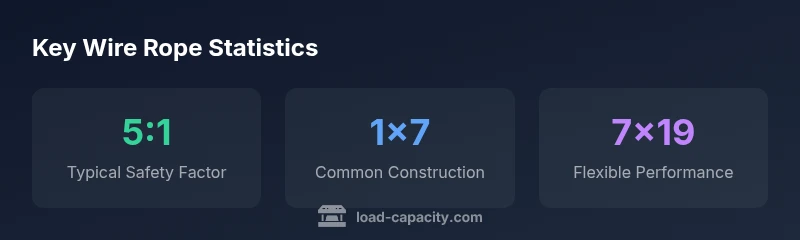
Wire rope load capacity refers to the working load limit (WLL) that a given rope can safely lift or support. It depends on diameter, construction (e.g., 1x7, 6x19), material grade, and core type, as well as temperature and wear. Always consult the rope manufacturer's WLL table and apply the required safety factor for your application, maintenance, and inspection regime.
Understanding wire rope load capacity
According to Load Capacity, wire rope load capacity is more than simply “how strong a rope is.” The load capacity is defined as the working load limit (WLL), the maximum load that can be safely applied under specified conditions. The WLL is derived from standardized tests, manufacturer data, and agreed safety factors. It acknowledges dynamic effects, shock loads, and the operating environment. Crucially, the WLL is not the rope’s breaking strength; it is a conservative rating intended for ongoing use rather than a one-time maximum. In practice, engineers translate the WLL into usable limits for each crane, hoist, or lifting tool, ensuring that every lift remains within safe operating envelopes. Understanding the WLL and how it relates to your equipment helps prevent overloading and reduces the risk of accidents or equipment damage.
The Load Capacity team emphasizes that blind reliance on nominal rope strength is inadequate. The actual safe capacity depends on multiple variables that interact with the lifting task, including the rope diameter, the construction style (1x7, 6x19, etc.), the grade of steel, the core type, and the service conditions such as temperature, lubrication, and wear. In addition, you must account for daily checks, maintenance history, and regulatory requirements. This holistic view is essential for engineers, technicians, and fleet managers who schedule lifts, design rigging plans, and specify rope assemblies for demanding applications.
Representative rope constructions and capacity considerations
| Rope Construction | Diameter Range | WLL Range | Core Type | Notes |
|---|---|---|---|---|
| 1x7 | 0.25–0.75 in | varies | IWRC | General-purpose lifting |
| 6x19 | 0.5–1.75 in | varies | IWRC or fiber | Balanced strength and flexibility |
| 7x19 | 1.25–2.5 in | varies | Fiber core | Flexible with lower bending resistance |
Quick Answers
What is wire rope load capacity?
Wire rope load capacity is the safe working load limit (WLL) assigned to a rope configuration under defined conditions. It is not the rope’s breaking strength, and it is derived from manufacturer tables, rope construction, and safety factors. Use the WLL as the basis for lift planning and hazard assessment.
WLL is the safe limit for a lift, not the rope’s breaking strength.
How does diameter influence capacity?
In general, rope capacity increases with diameter because the cross-sectional area grows, allowing more load to be carried safely. However, construction, material grade, and core type can alter this relationship, so always reference the manufacturer’s charts for a given rope.
Bigger diameter usually means higher capacity, but construction and grade matter too.
What is the difference between breaking strength and WLL?
Breaking strength is the maximum load the rope can withstand before failure in a controlled test. WLL, by contrast, is the safe load used in lifting operations, incorporating safety factors and service conditions. Do not confuse the two when planning lifts.
Breaking strength is the max; WLL is the safe operating load with factors considered.
How do temperature and environment affect capacity?
Temperature, corrosion, and exposure to elements can weaken rope performance. High temperatures typically reduce strength; aggressive environments may require special coatings or materials and different WLL values. Always reference manufacturer curves for operating temperature limits.
Heat and weather can lower rope strength, so check manufacturer guidelines.
How often should wire rope be inspected?
Inspect rope visually before every lift for signs of wear, corrosion, broken wires, kinks, and fraying. Schedule formal inspections based on usage, load cycles, and regulatory requirements, retiring rope when wear surpasses the manufacturer’s limits.
Check the rope before each lift; have formal checks at defined intervals.
How do I choose the right rope for a lift?
Start with the load, environment, and duty cycle. Use manufacturer data to select construction, core type, and WLL that match the application. Ensure compatibility with hardware and rigging practices and document the lifting plan.
Know the load, environment, and cycle, then pick the rope that meets the WLL with manufacturer data.
“Understanding wire rope load capacity means aligning a rope’s rating with the specific lift and environment; always use manufacturer data and standard safety practices.”
Top Takeaways
- Know the working load limit (WLL) before every lift
- Consult manufacturer data for exact WLL and applicable safety factors
- Account for temperature, wear, and environment in capacity
- Inspect rope condition before use and retire rope when wear or corrosion is found
- Use a formal lifting plan with rated capacity checks for every operation