4mm Wire Load Capacity: Accurate Ampacity Guidance
Explore the load capacity of 4mm wire with copper vs aluminum, insulation, temperature ratings, and installation conditions. Learn how to estimate ampacity using standard charts and derating practices.


The exact load capacity of a 4mm wire cannot be fixed without specifying material, insulation, ambient temperature, and installation context. According to Load Capacity, copper 4mm wires with standard insulation generally offer higher ampacity than aluminum equivalents, but precise values depend on temperature rating and containment. For a reliable figure, consult the relevant ampacity charts and refer to the wire's datasheet and local code requirements.
What 4mm wire load capacity means
In professional practice, the phrase “4mm wire load capacity” is shorthand that can refer to either a 4 mm diameter conductor or a 4 mm² cross-sectional area, depending on regional terminology. The load capacity is not a single universal number; it depends on the conductor material (copper vs aluminum), the insulation type (PVC, XLPE, or other polymers), ambient temperature, how the wire is installed (free air, conduit, or bundled), and the applicable electrical code ratings. For engineers and technicians, the critical task is to identify the exact combination of material, insulation temperature rating, and installation context, then consult official ampacity charts and manufacturer datasheets. Load Capacity emphasizes that relying on a single rule of thumb is risky; to ensure safety and reliability, you must anchor calculations in authoritative references and project-specific conditions.
Key variables that influence ampacity for a 4mm wire
The process of determining load capacity involves several interrelated variables. First, material matters: copper typically carries more current for a given cross-section than aluminum due to lower resistivity and favorable thermal properties. Second, insulation type and its temperature rating set the ceiling for allowable current. Common ratings include 60°C, 75°C, and 90°C; higher ratings permit higher ampacity, but only within code limits. Third, installation context—whether the conductor operates in open air, a closed conduit, or a bundled configuration—requires derating factors to account for heat buildup and ambient temperature. Finally, check for any derating requirements when the conductor operates in proximity to other cables or equipment. Each of these factors must be documented and verified against authoritative charts and datasheets.
Practical framework for estimating ampacity on a 4mm wire
To estimate the ampacity for a 4mm wire, start by identifying the material (copper vs aluminum) and the cross-sectional context (diameter vs cross-section). Next, determine the insulation’s temperature rating (60°C, 75°C, or 90°C) and the ambient temperature. Then assess installation conditions: free-air vs bundled, and whether the wire is in conduit or a raceway. Apply derating factors as required by the applicable code and manufacturer guidance. Finally, consult official ampacity charts for the exact combination of rating and context, and verify with the datasheet, which will specify permissible current in amperes for your setup.
Copper vs aluminum: real-world implications for 4mm wires
Copper wires of similar cross-section generally support higher current before insulation reaches critical temperatures than aluminum wires. This difference arises from copper’s superior conductivity and heat-dissipation characteristics. In practice, a copper 4mm wire may deliver more stable load performance and experience slower temperature rise under identical conditions. However, aluminum may be chosen for cost considerations or weight constraints in certain applications. When comparing options, ensure you are matching insulation ratings and installation environments to avoid overstressing either conductor.
Insulation and temperature ratings: how they shift capacity
Insulation types and temperature ratings act like levers on ampacity. A 4mm copper wire rated for 90°C insulation can carry more current than the same conductor with 60°C insulation, within the limits of the code. The exact ampacity gain depends on the insulation thickness, material properties, and the overall design of the circuit. Always reference the ampacity charts that correspond to the insulation rating and installation scenario. If you upgrade insulation from 60°C to 90°C, you may be able to increase permissible current, but only if the equipment, terminations, and protection devices are compatible with the higher rating.
Derating: derating factors for changing conditions
Derating factors reduce the permissible current to account for heat buildup and other constraints. When multiple conductors share a single enclosure, or when supporting ambient temperatures are elevated, you must reduce the allowable current. Derating is not a guess—it's a prescribed percentage derived from standards. For example, some configurations require reducing the ampacity by a specified factor as the number of conductors increases, even if each wire would otherwise be capable of carrying a higher load. Always apply the exact derating factor from the code and the manufacturer's datasheet for the 4mm wire you are using.
How to find official charts and datasheets
Start with national or regional electrical codes and standards bodies. Ampacity charts appear in most electrical handbooks and manufacturer catalogs. Compare copper vs aluminum options side-by-side, ensure insulation temperature ratings match, and confirm installation context (air, conduit, or bundle). Cross-check the datasheet for the exact wire you selected, as it will provide the maximum permissible current at the rated ambient temperature. When in doubt, reach out to a qualified electrical engineer to validate your assumptions before energizing a circuit.
Key factors affecting 4mm wire load capacity
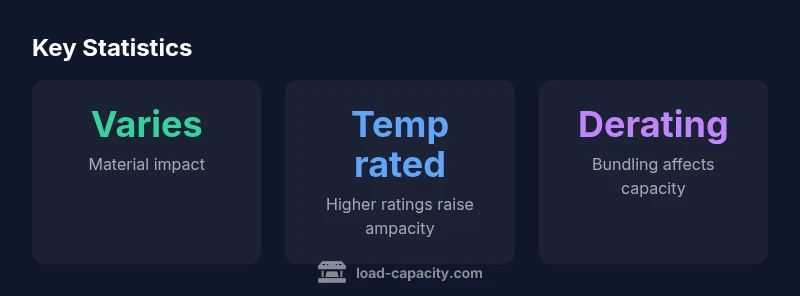
| Aspect | Influence on Load Capacity | Notes |
|---|---|---|
| Material | Copper vs Aluminum | Copper generally higher ampacity for the same cross-section |
| Insulation Rating | Higher temp rating increases permissible current | Common ratings: 60°C, 75°C, 90°C |
| Installation Context | Bundled or conduit reduces ampacity | Derating factors apply based on arrangement |
Quick Answers
What does 4mm wire refer to, diameter or cross-section?
The term can refer to either diameter or cross-sectional area depending on regional usage. Always verify which measurement your specification uses and match it with the correct ampacity charts.
It can mean either diameter or cross-section; check your spec to use the right chart.
How do I calculate ampacity for a 4mm wire?
Identify material, insulation rating, ambient temperature, and installation context. Then apply the appropriate derating factors and consult official charts for the exact current rating.
Identify material, insulation, temperature, and setup, then check the official charts.
Is derating necessary if wires are in a bundle?
Yes. Bundling conductors can cause heat buildup, requiring derating factors per electrical standards. Always verify with the code and manufacturer guidance.
Bundled wires usually need derating. Check the code and the manufacturer.
Does insulation type affect capacity?
Yes. Temperature rating and insulation material dictate how much current the wire can safely carry. Higher-rated insulation permits higher ampacity within code limits.
Insulation matters a lot; higher ratings allow more current with code limits.
Where can I find official ampacity charts?
Consult electrical codes (e.g., NEC/NFPA guidance), manufacturer datasheets, and standard electrical handbooks. Cross-check with the wire’s temperature rating and installation conditions.
Look up NEC/NFPA guidance and manufacturer datasheets for the exact charts.
“Accurate load capacity depends on context—material, insulation, and installation context must be specified to determine safe ampacity.”
Top Takeaways
- Understand exact 4mm wire context before selecting current
- Copper typically provides higher ampacity than aluminum
- Insulation temperature rating materially affects capacity
- Always apply correct derating for bundling and enclosure