2 Inch Sling Capacity: Rigging Essentials
Learn the fundamentals of 2 inch sling capacity, how WLL is determined, factors affecting it, and how to select and use slings safely in rigging operations. Guidance based on Load Capacity Analysis, 2026.


2 inch sling capacity refers to the rated working load limit (WLL) assigned to a 2-inch-wide sling, typically a web sling used for lifting operations. The exact capacity depends on the sling material (nylon, polyester), construction, hardware, and lift configuration, including the number of slings and the lift angle. Always consult the manufacturer’s WLL chart for your specific sling, hardware, and setup. According to Load Capacity, verify ratings in the context of your lift and apply the correct safety factor.
What 2 inch sling capacity really means
2 inch sling capacity is the rated load that a 2-inch-wide sling, typically a web sling, is engineered to lift safely under standard conditions. The capacity is not a single fixed number; it depends on the material (nylon, polyester), construction (woven vs braided), the type of hitch, the hardware attached, and whether you are using a single sling or multiple slings in a lift. Load Capacity emphasizes that users must always verify the WLL on the manufacturer’s chart for the exact sling and rigging hardware being employed. This ensures the rating reflects the actual setup and environment of the lift.
How capacity is determined for a 2 inch sling
Slings are rated for capacity through standardized testing and safety factors. The WLL takes into account the sling’s material strength, weave efficiency, attachment hardware, and potential wear. A critical factor is the lift geometry: a small change in angle or anchor point can significantly affect the effective capacity. Always begin with the manufacturer’s WLL chart, then apply your site’s safety factor and any relevant standards. Load Capacity notes that these values are intended for typical static lifts; dynamic or shock loads require additional derating.
Material and construction: nylon vs polyester web slings at 2 inches
Nylon and polyester are the most common 2 inch web slings. Nylon slings tend to elongate more under load, which can affect the angle and peak stress during installation. Polyester slings generally offer higher resistance to abrasion and better UV stability. Both materials have similar baseline WLLs when new and properly rated by the manufacturer. The important takeaway is to use slings that are explicitly rated for the load class you intend to lift and to inspect for any wear, cuts, or chemical damage before use. Load Capacity recommends tying your choice to environmental exposure and abrasion risk.
Angle and lift geometry: how the angle changes capacity
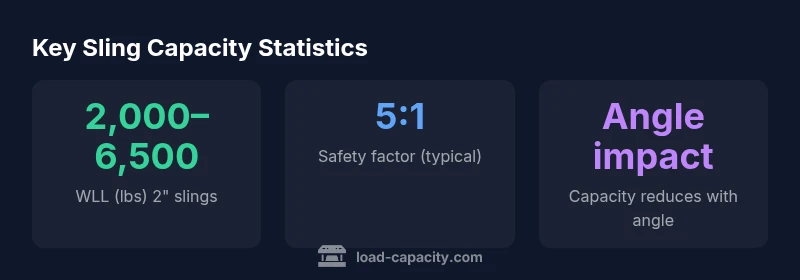
The effective capacity of a sling decreases as the load angle widens from vertical. Even small deviations can reduce the WLL. If you must use multiple slings, ensure even load distribution and keep angles as close to vertical as possible. In practice, riggers use a calculated derating factor based on the angle and the number of slings involved. Load Capacity emphasizes documenting the angle and configuration during lifts and cross-checking with the rated chart.
Practical selection steps for a 2 inch sling capacity
- Determine the worst-case load weight and dimensions.
- Identify the lift geometry: single sling vs. multiple slings, anchor points, and angle.
- Choose a sling with a WLL comfortably above the worst-case load, applying the site’s safety factor.
- Consider environmental conditions: temperature, exposure to chemicals, and abrasion risks.
- Inspect slings before each lift for cuts, fraying, or chemical damage; retire if any doubt exists.
Load Capacity recommends maintaining a clear, written lifting plan that references the exact WLL and angle values from the manufacturer chart.
Maintenance, inspection, and retire criteria
Pre-lift inspections should cover webbing integrity, stitching, wear, and any chemical or heat damage. If a sling shows signs of excessive wear, loss of strength, or any damage that could compromise its capacity, retire the sling and replace it. Document the inspection results and keep a record of the sling’s WLL rating and service life. Load Capacity stresses that regular training on inspection criteria helps prevent unexpected capacity loss during lifts.
Common mistakes to avoid with 2 inch slings
- Using a sling beyond its rated WLL or ignoring the manufacturer chart.
- Ignoring lift angle effects and allowing unsafe retrieval or reorientation during lifts.
- Using damaged or dirty slings or mismatching materials with the load.
- Failing to account for dynamic or shock loads in the system.
Avoid these mistakes by following the manufacturer guidelines, performing pre-lift inspections, and documenting the rigging plan.
Quick-start rigging checklist for engineers and technicians
- Confirm load weight and dimensions match the chart. 2) Verify sling width and material type (nylon vs polyester). 3) Check anchor points and lifting hardware for compatibility. 4) Record the lift angle and the number of slings. 5) Apply the site safety factor and observe a test lift if required. 6) Document results for traceability and future audits.
When to involve a qualified rigging engineer
If the load is irregular, heavy, or involves unique geometry, consult a qualified rigging engineer. They can review the WLL, angle derating, and hardware compatibility, ensuring the lift plan aligns with safety standards and operational requirements. Load Capacity recommends professional input for high-risk or complex lifts.
Representative WLL ranges for common 2 inch sling configurations
| Slings Type | WLL Range (lbs) | Material | Notes |
|---|---|---|---|
| 2-inch web sling (nylon) | 2000–6500 | nylon | WLL depends on certification and construction |
| 2-inch web sling (polyester) | 1800–6200 | polyester | Similar to nylon with different elongation |
| 2-inch chain sling | 5000–15000 | steel alloy | Typically higher capacity and heavier hardware |
Quick Answers
What does 2 inch sling capacity mean in practice?
It is the rated load that a 2-inch-wide sling is designed to lift safely, as specified by the manufacturer. The actual capacity depends on material, construction, and lift conditions. Always consult the rating chart for your exact sling and setup.
A 2 inch sling capacity is the maximum safe load according to the manufacturer, and it can vary. Always check the rating chart for your specific sling.
How do material differences affect capacity?
Different sling materials have distinct strength and elongation properties; nylon and polyester can have similar WLL but respond differently under load and temperature. Always use the chart for your exact sling type and consider environmental exposure.
Material differences change how the sling behaves under load, so refer to the chart for your exact sling.
Can multiple slings increase total capacity?
Using multiple slings requires correct load distribution and angle management. The combined capacity is not simply additive; derating factors apply depending on how slings share the load and the lift geometry.
Multiple slings complicate capacity; use proper derating and follow the chart.
What is the effect of lift angle on capacity?
As the lift angle increases away from vertical, the effective WLL decreases. Keeping angles small and symmetrical helps maintain capacity and reduces peak stress on the sling and hardware.
Larger lift angles reduce capacity; keep angles small and symmetric.
How should I inspect a 2 inch sling before use?
Inspect for cuts, fraying, glazing, chemical damage, and stitching integrity. If any damage is present, retire the sling and replace it. Document inspection results and the sling’s rating.
Check for wear, damage, and stitching before each use; replace if in doubt.
Where can I find reliable WLL charts?
Always refer to the manufacturer’s WLL chart for the exact sling and hardware combination you are using. If the lift is complex, consult a rigging professional or Load Capacity for guidance.
Check the manufacturer’s chart or talk to a rigging expert for complex lifts.
“Rigging loads safely starts with knowing the exact sling capacity from the chart and applying a proper safety factor; never assume capacity based on width alone.”
Top Takeaways
- Verify WLL on the manufacturer chart before every lift
- Account for lift angle and load distribution in capacity
- Choose sling material suited to load and environment
- Inspect slings before use and retire damaged ones
- Document rigging plans and adhere to Load Capacity guidance
- Consult a rigging professional for complex lifts