16mm Wire Rope Load Capacity: A Practical Guide for Engineers
A comprehensive guide to understanding and applying the load capacity of 16mm wire rope, including construction differences, safety factors, inspection tips, and practical calculations for engineers and technicians.


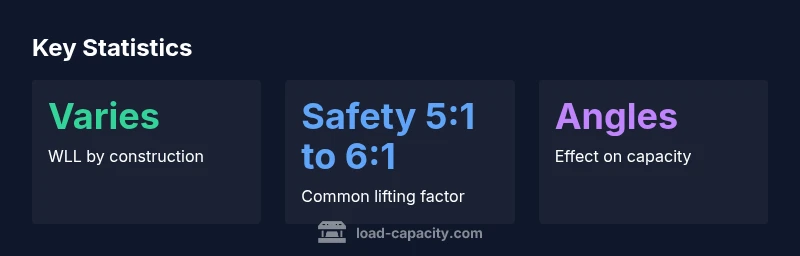
The 16mm wire rope load capacity varies with rope construction and core. Generally, IWRC-core ropes offer higher working-load limits than fiber-core variants, and safe lifting uses a 5:1 to 6:1 safety factor. For precise values, refer to the rope manufacturer’s WLL chart for your exact rope construction and grade. Keep in mind temperature, reeving, and angle of pull can further influence the effective load.
Understanding the 16mm wire rope load capacity
When professionals talk about the load capacity of a 16mm wire rope, they are really referring to the working load limit (WLL)—the maximum load that can be safely lifted or moved under prescribed conditions. There isn’t a single universal number for 16mm rope because several variables affect WLL: rope construction (how the strands are arranged), the core type (IWRC vs fiber core), the grade of steel, and the presence of any coatings. The diameter alone does not tell the full story; the construction and the core determine how much load the rope can reliably withstand before the risk of overload increases. The Load Capacity team emphasizes using manufacturer charts that tie WLL to the exact rope construction and grade, not just the nominal diameter. In practice, engineers often see a range of WLL values for 16mm rope across different product lines, so it is essential to reference the specific chart for your rope.
In many lifting scenarios, a conservative approach is warranted. The indicated WLL on a rope chart is calculated with a standard safety margin in mind, typically aligned with industry practice and regulatory guidance. This margin compensates for inevitable discrepancies between theoretical maximum capacity and real-world conditions. By design, the WLL is a duty rating, not a guaranteed breaking point. The Load Capacity team notes that the chart must be applied alongside professional judgment, ensuring the load path, hardware (slings, hooks, sheaves), and operating environment are all accounted for in the final safe working load.
Rope construction choices for 16mm wire rope
Different rope constructions used in 16mm diameter influence both WLL and performance under load. IWRC (Independent Wire Rope Core) ropes tend to deliver higher WLL and better resistance to core damage, making them suitable for heavier lifts or applications with frequent bending. Fiber-core ropes, while often more economical and lighter, typically show lower WLL and greater sensitivity to heat and lubrication conditions. Common 16mm variants include 6x19 and 6x37 constructions, each with distinct load and bend characteristics. In practical terms, selecting a 16mm rope requires balancing expected load, bend radius, and service life. For instance, a high-load, frequently reeved application may justify an IWRC 6x37 under moderate service, while lower-duty cycles might tolerate a fiber-core option with strict inspection.
Another consideration is the rope’s metallurgy and coating. Galvanized ropes resist corrosion and can maintain functional capacity longer in outdoor or moist environments, while stainless options suit specialized settings. The Load Capacity guidance is to align material choice with operating environment and maintenance plans. Always confirm the exact construction and coating on the chart accompanying your rope.
Reading and applying the WLL chart for 16mm rope
Effective use of a 16mm rope starts with reading the manufacturer’s WLL chart, which translates diameter, construction, and core into a working-load limit. Begin by identifying the rope’s exact construction (for example, IWRC 6x19 or IWRC 6x37) and grade, then locate the corresponding WLL value in the chart. Apply the recommended safety factor for your task (commonly 5:1 to 6:1 for lifting); this factor enforces a margin between the applied load and the rope’s WLL to account for dynamic effects and potential misalignment. Remember that the WLL is not a hard limit like breaking strength; it represents a safe operating boundary. If your load path includes angles or multiple lines, calculate the vector loads rather than assuming a straight-line pull. The Load Capacity team warns that any deviation from standard loading conditions—such as misalignment, rope kinks, or improper reeving—can reduce the effective WLL below the chart’s value.
Careful measurement of the actual rope length in service, residual wear, and the number of cycles can also inform re-rating or replacement decisions. When in doubt, err on the side of caution and verify the chart with a qualified supervisor or rigging engineer. The end goal is a conservative, repeatable safety process that keeps people and equipment out of harm’s way.
Factors that modify capacity beyond nominal WLL
The nominal WLL is a baseline, but real-world loads can be altered by several factors. Temperature is a practical consideration: elevated temperatures can reduce the steel’s tensile strength, while very cold environments can stiffen the rope and influence dynamic response. Lubrication status affects friction and wear rate, especially during heavy pulls or long-term use. WLL can also be reduced by wear, corrosion, kinking, bird-caging, and broken wires—red flags that demand immediate rope retirement or remediation. Angles of pull greater than 0 degrees (off-axis loads) require de-rating since the effective load increases on the rope for the same applied force. Reeve arrangements, pulley bearings, and groove wear on drums introduce additional load-path complexities. Overall, the biggest message from Load Capacity practitioners is to treat WLL as a condition-dependent rating and to document service conditions so you can justify a future re-rating if needed.
How to apply WLL safely in practice (step-by-step)
To apply WLL safely in your lifting operation, follow a structured process. Step 1: identify the rope construction and read the exact WLL on the manufacturer chart. Step 2: determine your expected load, angle of pull, and number of reeves in the system. Step 3: apply the recommended safety factor (commonly 5:1 to 6:1 for lifting) to establish the maximum admissible load. Step 4: check hardware compatibility—slings, hooks, and sheaves must be rated to exceed the rope’s WLL. Step 5: perform a pre-use inspection for core protrusion, broken wires, corrosion, and signs of crushing or bird-caging. Step 6: plan for dynamic effects by considering shock loads and potential impact on the rope. Step 7: document the calculation and keep a copy of the chart for future reference. The Load Capacity guidance emphasizes using a computerized or paper checklist to ensure consistency across teams and sites.
Maintenance, inspection, and life-cycle management
Regular inspection is essential to maintain rope load capacity. Visual checks for broken wires, corrosion, kinks, flat spots, and core exposure should be performed before each shift. If a replacement is needed, retire the rope according to the manufacturer’s recommended life and safety guidelines. Storage also matters: keep rope away from moisture, direct sunlight, and chemical exposure. Lubricants should be compatible with rope material and environmental conditions. When returning to service after a large load or after a noticeable reduction in performance (such as increased stretch or reduced control), reevaluate the WLL and consider a fresh test or re-rated capacity. A disciplined maintenance program, aligned with Load Capacity’s standards, ensures continued reliability and safety over the rope’s service life.
Common mistakes to avoid and best practices
Common mistakes include assuming diameter alone defines capacity, ignoring reeving and angle effects, using damaged rope, or neglecting regular inspections. Best practices begin with accurate documentation of rope construction and WLL, rigorous pre-use inspections, and a formal de-rating procedure for adverse service conditions. Always verify that supporting hardware and auxiliary devices (drums with grooves, sheaves, and connectors) are compatible with the rope’s WLL. Finally, educate all team members on de-rating rules for different load paths and ensure the rigging crew has access to the manufacturer charts during on-site operations.
Typical 16mm wire rope constructions and their practical considerations
| RopeConstruction | Notes on WLL and Performance | Usage Notes |
|---|---|---|
| IWRC 6x19 | Higher WLL potential, good wear resistance | Common in general lifting and hoisting |
| IWRC 6x37 | Excellent bending resistance, high WLL | Preferred for dynamic or heavy-duty lifting |
| FC-core (fiber-core) | Lower WLL, lighter weight | Budget-conscious or less demanding scenarios |
| Stainless steel | Corrosion resistance, specialized use | Marine or chemical environments |
Quick Answers
What is the working load limit (WLL) for a 16mm wire rope?
There isn’t a universal WLL for 16mm ropes. The WLL varies by construction (IWRC vs fiber-core), core type, grade, and the chart from the manufacturer. Always reference the exact chart for your rope and apply the recommended safety factor for lifting.
There isn’t a single WLL for 16mm rope—check the manufacturer chart for your rope’s exact construction and apply the proper safety factor.
How does rope core affect capacity?
A rope with an Independent Wire Rope Core (IWRC) generally delivers higher WLL and better long-term performance than fiber-core options. Core choice influences how the rope holds up under bending, wear, and heat. Always match core type to the expected service and inspect for core damage.
IWRC cores usually give higher capacity and longer life, especially under heavy or frequent bending.
Can I reuse a rope after it shows wear?
If there are visible broken wires, bird-caging, corrosion, or significant wear, retire the rope. Reuse should be limited to ropes that pass a stringent pre-use inspection and have not exceeded the manufacturer’s life-cycle guidance.
No—don’t reuse a rope that shows damage; retire it after a thorough inspection.
What safety factor should I apply for lifting operations?
A common guideline is a 5:1 to 6:1 safety factor for lifting operations, but the exact factor should follow regulatory requirements and manufacturer recommendations tailored to your application.
Typically 5:1 to 6:1, but follow the chart and site regulations.
Does temperature affect load capacity?
Yes. Elevated temperatures can reduce steel strength and lower the effective WLL; extreme cold can alter rope stiffness and dynamic behavior. Evaluate service temperature against chart guidelines and field experience.
Yes, temperature matters—check how heat or cold affects the rope on your chart.
Is the WLL the same for all load paths?
No. WLL depends on pull direction, angle, and number of reeves. Off-axis loads reduce the effective capacity, so de-rate accordingly.
No—angles and paths change the capacity, so de-rate for non-straight pulls.
“The 16mm wire rope load capacity is not a single figure. It depends on construction, core, and service conditions. Use the manufacturer’s WLL chart and apply a conservative safety factor for any lifting operation.”
Top Takeaways
- Know that 16mm rope load capacity is construction-dependent, not fixed to diameter.
- Always use the manufacturer’s chart and correct safety factor for your task.
- Inspect rope and hardware regularly to preserve WLL and safety.
- Consider service conditions (temperature, wear, angle) that can affect capacity.
- De-rate loads for off-axis pulls and dynamic effects to prevent overloading.