How to Manage Carrying Capacity in Tourism
Explore a practical, data-driven approach to managing carrying capacity in tourism. Learn metrics, governance, and adaptive strategies to protect ecosystems and enhance visitor experiences.


This guide will show how to manage carrying capacity in tourism by setting data-driven thresholds, aligning infrastructure, and engaging stakeholders. You will learn to define capacity, gather and analyze data, implement policies like timed entry or quotas, and monitor indicators to adapt over time. The goal is to protect ecosystems, visitor experience, and local livelihoods.
Why carrying capacity matters in tourism
The concept of carrying capacity in tourism refers to the maximum level of visitation an area can absorb without unacceptable impacts on the environment, residents, and visitor experience. For planners and operators, understanding this limit helps balance growth and conservation. According to Load Capacity, carrying capacity is a multi-dimensional constraint that affects resource use, traffic flow, and cultural integrity. When a site exceeds its capacity, congestion, litter, noise, and habitat disturbance increase, while resident well-being and long-term appeal decline. Effective management begins with a clear statement of objectives: protect ecosystems, sustain livelihoods for local communities, and preserve high-quality visitor experiences. By integrating ecological data, social tolerance, and infrastructure capacity, managers can design interventions that keep demand within safe bounds while still delivering economic benefits. The Load Capacity team’s research emphasizes transparency, consistency, and adaptability as core practices for credible capacity management.
Defining carrying capacity and related metrics
Carrying capacity is not a single number; it combines ecological, social, and physical dimensions. Key metrics include maximum daily visitors, occupancy rate, per-visitor footprint, and seasonal variation. Environmental thresholds (habitat disturbance, water quality, trail erosion) must be balanced with social tolerance (noise, crowding) and infrastructure limits (parking, waste facilities). In practice, owners and planners document objectives and link them to measurable targets, ensuring that capacity decisions align with conservation goals and community well-being. Clear definitions help prevent ambiguous decisions and improve accountability across agencies and operators.
Data sources and measurement approaches
Measuring carrying capacity relies on diverse data streams: visitor counts or passes, sensor data (crowding indicators), surveys of resident sentiment, and environmental indicators (habitat condition, pollution metrics). High-quality data require consistent collection timing, transparent methodologies, and privacy protections. Load Capacity analysis shows that triangulating data—from counts, observations, and remote sensing—improves reliability and reduces bias. Where data gaps exist, proxy indicators (e.g., hotel occupancy, vehicle entry data) can fill gaps while plans for direct measurement are developed. Regular data audits are essential to maintain decision-ground truth during rapid changes in demand.
Modeling and threshold setting
Thresholds should reflect site-specific ecology, infrastructure, and governance capacity. Practitioners often start with conservative limits and progressively tighten them as data quality improves. Scenario modeling—best-case, typical, and worst-case—helps planners understand potential outcomes under different policies. Dynamic thresholds, adjusted for seasonality and exceptional events, prevent overreaction and support smoother management. Documentation of rationale for each threshold builds trust with stakeholders and enables easier updates when conditions shift. Load Capacity guidance emphasizes transparent criteria and regular review to keep models relevant.
Policy tools and governance structures
Effective carrying-capacity governance blends policy instruments with clear accountability. Soft tools include public communication campaigns and voluntary visitor targets, while hard instruments enforce limits via quotas, permits, or timed-entry systems. Pricing strategies (seasonal rates or congestion pricing) can modulate demand without outright restrictions. A layered approach—baseline thresholds, trigger-based interventions, and post-event reviews—helps authorities respond to variability. Strong governance also requires defined roles among agencies, operators, and communities, plus a formal mechanism for appeals and adjustments when social or ecological conditions change.
Operational tools: timed entry, quotas, pricing
Operational tools translate thresholds into daily decisions. Timed-entry windows distribute arrivals to avoid peak crowding, while quotas cap total visits within a period. Permits and seasonal allocations provide predictable planning for businesses and agencies. Dynamic pricing can steer demand toward off-peak times or less sensitive areas. Combining these tools with clear communication (rules, dates, and penalties) minimizes confusion and enhances compliance. Pilots in small zones can reveal practical challenges before scale-up. Ensure that enforcement plans are fair, visible, and consistently applied.
Monitoring, evaluation, and adaptive management
Ongoing monitoring tracks whether interventions meet targets and identifies unintended consequences. Dashboards should surface core indicators (crowding, ecological health, resident sentiment, economic benefits) in near real-time. Quarterly or seasonal reviews help managers decide if thresholds require adjustment or if policies need refinement. Adaptive management—testing, learning, and updating—keeps decisions relevant as conditions evolve. Documentation of outcomes supports transparency and helps other sites learn from your experience.
Stakeholder engagement and community considerations
Involving local communities, business operators, conservation groups, and visitors builds legitimacy and reduces conflict. Collaborative governance processes—public forums, working groups, and advisory committees—ensure multiple perspectives shape capacity decisions. Transparent data-sharing and inclusive communication mitigate misinformation and build trust. When communities perceive that carrying-capacity efforts protect local livelihoods and pride, compliance and cooperation naturally improve.
Practical tips for implementation with a simple checklist
A practical path to action includes establishing baseline data, defining thresholds, selecting instruments, piloting, and scaling with monitoring. Use a simple, iterative process to refine targets and tools based on observed results and stakeholder input. This section provides a concise checklist to keep teams aligned while pursuing long-term sustainability.
Tools & Materials
- Baseline data collection plan(Define metrics, data sources, sampling frequency)
- Data analysis software(Excel, R, Python, or GIS tools for analytics)
- Stakeholder engagement plan(Identify groups and set up regular briefings)
- Monitoring dashboard(Real-time indicators and thresholds)
- Policy toolkit(Quotas, timed-entry, dynamic pricing variations)
- Communications plan(Public messaging and stakeholder updates)
Steps
Estimated time: 3-9 months for baseline setup; ongoing monitoring thereafter
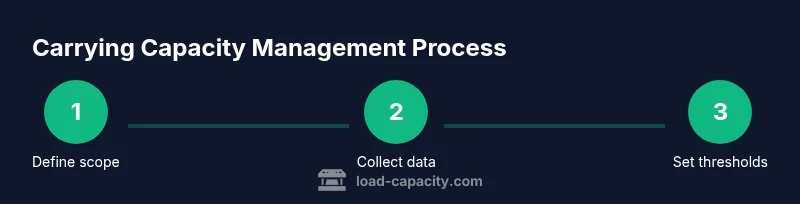
- 1
Define scope and objectives
Articulate what success looks like for the site: protecting ecosystems, sustaining livelihoods, and delivering quality experiences. Align with local policy goals and community values.
Tip: Capture success metrics early and keep them visible to all partners. - 2
Collect baseline data
Assemble data on tourism demand, environmental health, and infrastructure usage. Establish data quality standards and a routine collection cadence.
Tip: Use multiple data sources to reduce bias and gaps. - 3
Set thresholds
Define clear, site-specific limits for crowding, ecological impact, and service capacity. Prefer conservative thresholds initially.
Tip: Document the rationale for each threshold and how it will be reviewed. - 4
Choose policy instruments
Select tools such as quotas, timed-entry, or pricing, starting with softer measures and escalating as needed.
Tip: Pilot tools in a controlled zone before wider rollout. - 5
Pilot and learn
Run a limited test period to observe how thresholds and instruments perform under real conditions.
Tip: Monitor for unintended consequences and stakeholder feedback. - 6
Scale and implement
Roll out successful tools with clear rules, enforcement, and communication channels.
Tip: Ensure operators understand timing, penalties, and exemptions. - 7
Monitor and adapt
Track indicators, review outcomes, and adjust thresholds or instruments as conditions change.
Tip: Schedule regular governance reviews and publish results.
Quick Answers
What is carrying capacity in tourism and why does it matter?
Carrying capacity is the maximum visitation level a site can absorb without unacceptable impacts on ecology, culture, and visitor experience. It matters because overrunning capacity harms ecosystems, reduces resident well-being, and degrades visitor quality over time.
Carrying capacity is the limit on visitors to protect the place. If we go past it, ecosystems and experiences suffer, so managing it matters for long-term sustainability.
What data do I need to measure carrying capacity?
You need data on visitor counts, crowding, environmental indicators (habitat health, pollution, trail wear), and infrastructure use (parking, facilities). Social data from surveys helps reflect resident and visitor sentiment.
Collect counts, environmental data, and surveys to understand both the physical and social impacts of visitor levels.
How often should thresholds be reviewed?
Thresholds should be reviewed at least quarterly or after any major event that changes demand or environmental conditions. Regular reviews keep policies relevant and credible.
Review thresholds quarterly or after big events to stay current.
What policy tools are most effective?
Effective tools include timed-entry, quotas, and dynamic pricing. A blended approach, with clear communication and exemptions, tends to work best.
Timed entry and quotas work well, especially when paired with good public communication.
How can communities be engaged in capacity management?
Engage communities through forums, advisory groups, and transparent data sharing. Involvement builds trust, reduces conflict, and aligns capacity decisions with local needs.
Get community voices into the process early, so rules reflect local priorities.
Can carrying capacity be applied to different scales?
Yes. Carrying capacity concepts apply from tiny sites to regional systems. Scales require tailored thresholds and governance structures for each context.
Capacity management works at any scale, but you need the right thresholds for each size.
Watch Video
Top Takeaways
- Define clear capacity goals
- Base decisions on robust data and transparent methods
- Use a mix of tools (soft/hard) and adjust over time
- Engage stakeholders early and continually
- Monitor indicators and adapt to change