Wood Deck Load Capacity Calculator: Safe Design and Planning
Estimate safe deck loading with our wood deck load capacity calculator. Learn inputs, formulas, and practical guidance for engineers, builders, and homeowners planning wood deck projects.


Why wood deck load capacity matters
Understanding load capacity is foundational to safe deck design. Wood decks must support both intentional use (people, furniture, grills) and environmental factors (wind, snow, rain). A well-calibrated load-capacity assessment reduces the risk of structural failure, ensures code compliance, and prolongs service life. According to Load Capacity, adopting precise calculations helps engineers and technicians align framing details with expected loads, reducing unexpected deflection or joint stress. By modeling the deck as a system of joists, beams, and posts, designers can anticipate how variations in span, material grade, and fasteners affect overall performance. This is especially important for multi-level decks or installations attached to existing structures, where framing interactions become more complex.
How the wood deck load capacity calculator works
The calculator estimates safe design load by combining two key components: live load (occupancy and use) and dead load (structure and finishing materials). The tool requires a deck area and per-square-foot load values, then applies a straightforward formula to compute total pounds the deck must carry. Choosing appropriate input units (square feet and pounds per square foot) helps ensure consistent results. The calculator is intentionally simple to empower quick planning, while reminding practitioners to verify results against local codes, which may specify different live-load allowances for residential versus commercial decks. This balance between accessibility and rigor is a hallmark of Load Capacity’s educational resources.
Practical example: a 200 ft² deck scenario
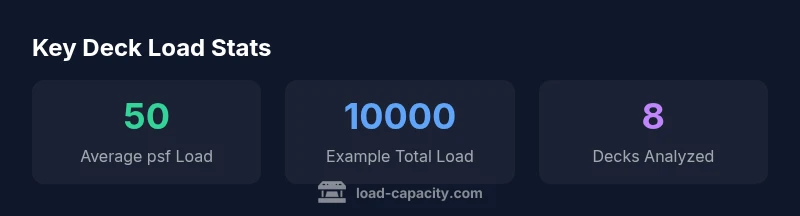
Imagine a 200 ft² residential deck with a live load of 40 psf and a dead load of 10 psf. The calculator sums live and dead loads to 50 psf, then multiplies by the area: 200 ft² × 50 psf = 10,000 lbs. This total design load represents the static loads the framing must support under typical conditions. In real designs, engineers would apply a factor of safety and verify beam sizing, joist spacing, and ledger connections to meet code requirements. This example highlights how a simple input set translates into a meaningful planning figure.
Safety margins and design choices
Code agencies often require a factor of safety to account for uncertainties in loads, material properties, and workmanship. When using a wood deck load capacity calculator, consider incorporating a conservative multiplier or consulting a structural engineer for critical projects. Material quality (grade of lumber, moisture content) and fastener performance directly influence capacity. Thermal expansion, humidity, and seasonal moisture can also alter stiffness and strength over time. For safety, keep design loads well above anticipated real-world use and schedule periodic inspections after construction, weather events, or remodeling.
How to use the calculator in planning and maintenance
In planning mode, input the expected deck area and per-square-foot loads to obtain a baseline total load. Compare this result to the allowable capacity of your framing system (joists, beams, ledger). If the calculated load approaches or exceeds the capacity, you should consider up-sizing members, reducing deck area, or increasing support spacing. For ongoing maintenance, re-run calculations after structural changes, added furniture, or changes in occupancy patterns. Maintaining a log of inputs and results helps track changes over time and supports safety reviews.
Data considerations and limitations
The calculator assumes uniform loading and static conditions. Real decks may experience point loads (a large outdoor heater), dynamic loading (people moving or dancing), or adverse weather impacts (snow drifting). Snow load, wind load, and live-use variations can significantly alter stresses. Therefore, users should treat calculator outputs as design targets rather than final specifications. When in doubt, consult a licensed structural engineer and reference local building codes for exact requirements and load allowances.