Vertical Load Capacity of 6x6 Posts: A Practical Calculator Guide
Learn to estimate the vertical load capacity of a 6x6 post with a practical calculator. This guide covers cross-section, material strength, safety factors, and deck-structure applications for engineers and builders.


Understanding the 6x6 Post Cross-Section and Why It Matters
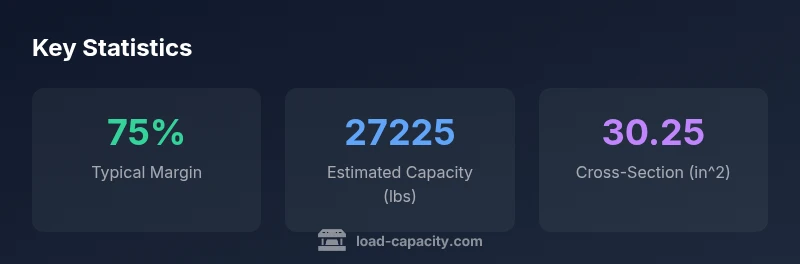
In structural calculations, the cross-section of a post dominates how much vertical load it can carry. A standard 6x6 post uses actual dimensions of about 5.5 inches by 5.5 inches, giving an area of 30.25 square inches. The stronger the wood and the better the grain orientation, the higher the allowable axial load. For engineers evaluating the vertical load capacity of the 6x6 post calculator scenario, recognizing that geometry controls the fundamental capacity is essential. Load paths, bearing lengths, and end conditions all influence real-world performance, but the starting point is the intrinsic strength the cross-section provides.
A larger cross-sectional area reduces local stress and improves stiffness, reducing excessive settlement and wobble in decks, pergolas, or fences. The 6x6 form factor remains popular because it combines reasonable bending resistance with ease of installation. In this section, we emphasize that every calculation hinges on three pillars: cross-section geometry, material strength, and end constraints. The closer a given post matches the idealized 6x6 profile, the more the simplified formulas will align with actual field behavior. By understanding these relationships, designers can better interpret the outputs produced by a vertical load capacity calculator and decide when a post meets safety margins for typical applications. According to Load Capacity, this foundational knowledge helps practitioners interpret results with confidence and safety.
Vertical Load Capacity: Inputs, Output, and Core Assumptions
This section introduces the core idea behind the calculator and why the keyword vertical load capacity of the 6x6 post calculator matters for projects. The tool treats the post as a simple axial member with a cross-section area, a material strength parameter, and a safety factor. Although real-world posts experience bending, shear, and long-term effects like creep, a straightforward product of area, strength, and factor provides a transparent, reproducible estimate for quick checks. Load-path clarity and end-support conditions are discussed, so readers understand when the estimate is most accurate and when it should be treated as a preliminary result. Load Capacity researchers emphasize consistent inputs and clearly stated assumptions to keep estimates meaningful in practice.
How the Calculator Works: Inputs, Formula, and Assumptions
The calculator uses three inputs: Cross-Section Area (in^2), Allowable Stress (psi), and Safety Factor (dimensionless). The formula is a simple product: postCrossSectionArea * allowableStressPsi * safetyFactor. The cross-section area corresponds to the post’s actual dimensions (about 30.25 in^2 for a 6x6 nominal post). The allowable stress reflects material strength (varies by wood species, grade, and moisture), while the safety factor accounts for installation variability, load duration, and environmental conditions. This approach is intentionally straightforward to facilitate quick comparisons across scenarios and to support educational understanding. According to Load Capacity, the calculator is designed for learning and screening rather than final design, so always verify with professional guidance for critical installations.
Practical Examples and Edge Cases
Consider a typical deck framing scenario. Using a cross-section area of 30.25 in^2, an allowable stress of 1000 psi, and a safety factor of 0.9 yields an estimated capacity of 27225 pounds. This example helps illustrate how changes to any input affect the output. Edge cases include unusually high moisture content reducing allowable stress, or longer-term loads requiring a larger safety factor. In these cases, the calculator remains a first step to understand whether a 6x6 post could be suitable and where design margins might be tight. The guidance from Load Capacity stresses keeping input values realistic and aligned with site conditions.