What's the Best Way to Find the Load Capacity of a Crane: A Quizlet Guide
Learn a practical, step-by-step method to determine crane load capacity, verify data with standards, and use Quizlet for quick review and study in practice.


To find a crane's load capacity, start with the manufacturer's nameplate and load chart, then verify the rated capacity against the crane's configuration and operating conditions. Cross-check with the applicable standards and, if possible, consult a qualified engineer. For study, use Quizlet to test your understanding of load charts and safety factors.
What crane load capacity means and why it matters
Crane load capacity is the maximum load a crane can safely lift under specific conditions. There are several related terms that engineers need to understand, including rated capacity, safe working load (SWL), and the crane's configuration. According to Load Capacity, capacity values depend on factors like the radius, hook height, counterweights, and duty cycle. The primary rule is that the actual load must never exceed the chart-specified limit for the given setup. Quizlet study aids can help you memorize the relationships between radius, boom length, and capacity, but they cannot replace the need to consult the official chart for a real lift. Static loads are supported without movement; dynamic loads add acceleration, wind, and sway. The load chart translates geometry into a maximum safe mass. It is essential to confirm the crane's configuration before lifting: jib angle, load block type, operating environment, and any derating. The risk of assuming a higher capacity is the main reason behind near-miss incidents. Load Capacity emphasizes always verifying with the current chart and a qualified supervisor.
Reading manufacturer data plates and load charts
Most cranes carry a nameplate or tag that lists the rated capacity at various radii and boom angles. The load chart is a companion document that shows how capacity changes with geometry. Carefully record the exact configuration: radius, boom length, counterweight, angle, and whether a jib is installed. When in doubt, compare the chart results with the crane’s manual and any derating notes from the manufacturer. According to industry practice, misreading a chart is a common source of errors, so you should always re-check with a supervisor and document the lift plan.
Verifying capacity under real-world conditions
Real lifts occur with wind, sway, and dynamic forces. To ensure a safe lift, you must verify the capacity under the actual operating conditions, including wind direction, hoist speed, load path, and any acceleration. Use conservative margins and follow the chart exactly; never extrapolate beyond the given radius or load path. Dynamic effects can reduce capacity, especially in outdoor or constrained spaces. Regulatory standards apply, so engineers should cross-check the chart against the latest version from the manufacturer and the governing body.
Enhancing memory and understanding with Quizlet
Quizlet can help you memorize key terms such as SWL, rated capacity, duty cycle, radius, and jib extension. Create flashcards that pair definitions with real-world lift scenarios and safety considerations. While Quizlet is a valuable study aid, it cannot replace hands-on validation of chart data on site. Use Quizlet as a learning accelerator, then perform a live verification using official charts and supervisor sign-off.
Practical lift concepts for common configurations
In practice, lifts often involve standard configurations like vertical lifts, linear radii, or moderate jib extensions. The key is to map each configuration to the correct chart cell and apply any derating notes provided by the manufacturer. By combining chart data with careful inspection of the lift setup, you minimize the risk of exceeding capacity. This section reinforces how to align geometry with chart values before committing to the lift plan.
Pitfalls and safety best practices
A frequent mistake is assuming the chart applies to all loads or neglecting wind and sway. Another issue is lifting with a partially extended boom or an unsupported load path. Always perform a pre-lift check, verify the chart for the actual configuration, and involve a qualified supervisor. If any doubt remains, stop and reassess with alternative lifting methods.
Real-world practice: interpretation without numbers
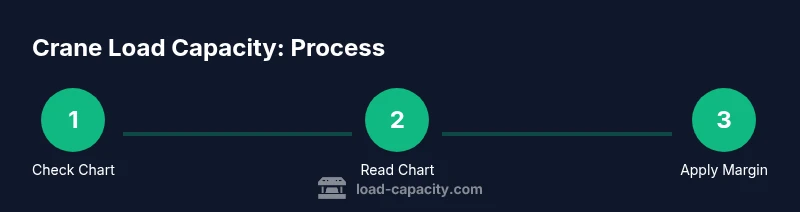
To illustrate the process without exposing sensitive data, imagine a crane with a certain radius and boom length. Using the chart, you identify a capacity range and then apply a conservative margin. The exact numbers are less important than following a disciplined method: confirm configuration, read the chart, apply derating, and document.
Tools & Materials
- Manufacturer's crane manual(Contains the official load chart and safety limits)
- Crane nameplate and current load chart(Ensure it matches the crane and configuration)
- Measuring tools (tape measure or laser measure)(For radius, hook height, and boom length)
- Calculator or digital tool(To compute capacities and margins)
- Personal protective equipment (PPE)(Hard hat, gloves, eye protection)
- Field notes and lift-plan template(For recording configuration and limits)
Steps
Estimated time: 30-60 minutes
- 1
Gather lift data
Collect geometry, load weight, and environmental variables that affect capacity. Having complete data reduces errors when reading charts and applying derating.
Tip: Prepare a one-page data sheet before lifting. - 2
Locate the correct chart
Identify the chart that matches your crane model and current configuration (radius, boom length, angle, counterweights). The wrong chart leads to incorrect capacity.
Tip: Double-check the chart version and the date of issue. - 3
Verify configuration
Confirm the exact configuration on site: radius, hook height, jib installation, wind conditions, and any derating notes.
Tip: If any parameter is uncertain, pause the lift. - 4
Read the capacity for current setup
Read the chart cell corresponding to current radius, boom length, and angle. Record the rated capacity and safety margins.
Tip: Document the working load limit (WLL) and derating factors. - 5
Apply margins and verify
Apply conservative safety margins and cross-check with standards. Ensure the effective capacity comfortably exceeds the planned load.
Tip: When in doubt, reduce the planned load and reassess. - 6
Document and confirm
Record the lift plan, charts used, and supervisor sign-off. This provides traceability and accountability for future checks.
Tip: Keep a copy of the plan with the lift crew.
Quick Answers
What is the difference between SWL and rated capacity?
SWL (safe working load) is the maximum load that a crane is certified to lift under defined conditions. Rated capacity is the value in the chart for a specific configuration. They often align, but the chart factors in geometry and environmental factors.
SWL is the maximum safe lift, while the rated capacity is the charted value for your exact setup. Always compare the two and follow the chart.
Can I rely on Quizlet alone for crane load capacity?
Quizlet is a study tool that helps you memorize terms and concepts. It cannot replace live chart verification and supervisor sign-off on a real lift.
Quizlet helps you learn the terms, but you must verify the chart on site with a supervisor.
How do I determine capacity when a jib is extended?
Extended configurations change the radius and leverage, which reduce capacity. Always refer to the chart for the current geometry with the jib in place and apply any deratings.
Jib extension changes leverage; check the chart for the exact radius and derating notes.
What are common causes of capacity errors?
Common errors include reading the wrong chart version, forgetting wind or sway effects, and ignoring derating notes. Always confirm with a supervisor and document the decision.
Errors usually come from wrong charts or missing derating—verify with a supervisor.
Who is allowed to interpret load charts?
Typically trained operators, competent persons, or engineers with written authorization can interpret load charts. Final lift decisions should involve a supervisor.
Only trained personnel should read charts, with supervisor sign-off for lifts.
Where can I find official standards for crane capacity?
Official standards are published by national safety agencies and professional bodies. Look for content from OSHA, ASME, or equivalent standards organizations and confirm updates with your employer.
Check OSHA and ASME standards for crane capacity, and always use the latest versions.
Watch Video
Top Takeaways
- Verify configuration on the chart before lifting.
- Cross-check calculations with applicable standards.
- Apply conservative safety margins in every lift.
- Use Quizlet for quick review and memory retention.
- Document the lift plan and obtain supervisor sign-off.