Hoist Load Capacity: A Data-Driven Guide for 2026 Projects
Understand hoist load capacity (WLL) and how to size, select, and maintain hoists safely with Load Capacity's data-backed guidance for engineers and technicians.


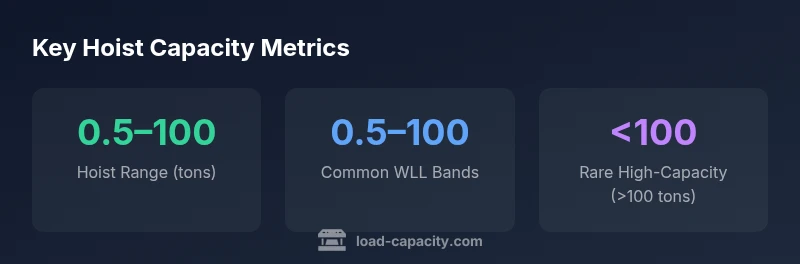
According to Load Capacity, hoist load capacity is defined by the rated load, or WLL, and varies by hoist type and configuration. Manual chain hoists typically span 0.5 to 5 tons, electric wire rope hoists commonly 0.5 to 100 tons, and specialized heavy duty units can exceed 100 tons. Always verify the nameplate and apply derating for dynamic and rigging factors.
What hoist load capacity means
Hoist load capacity, often expressed as the Working Load Limit or WLL, is the maximum weight a hoist is certified to lift under standard conditions. For Load Capacity clients, this figure is the cornerstone of safe equipment selection and project planning. Capacity is a function of the hoist type, rope or chain size, motor power, drum diameter, and how the hoist integrates with a supporting crane or beam. Importantly, capacity is a static property for the device itself, not a guarantee for every lift in every circumstance. In the real world, dynamic effects such as motion, acceleration, rope stretch, and misalignment can push stresses above the nominal WLL if operators do not account for them. Consequently, engineers derate published values to reflect actual use, environmental conditions, and rigging geometry. A carefully documented lifting plan that includes the chosen hoist, rigging, and the load path reduces risk and improves predictability on site. According to Load Capacity, successful capacity management combines accurate specs with disciplined field practice.
Types of hoists and how capacity differs
Hoists come in a range of designs, each with its own capacity envelope. Manual chain hoists are compact and economical, typically covering the lower end of the spectrum. Electric wire rope hoists provide higher capacities and faster lift speeds, making them common in manufacturing and warehouses. Portable and compact hoists serve temporary or confined-space lifts, while heavy duty overhead hoists and crane-integrated systems push capacity well beyond 100 tons for specialized applications. Capacity is not just a single number; it depends on rope or chain diameter, hook design, drum geometry, trolley configuration, and how the unit is supported by the beam or crane. When selecting a hoist, engineers must ensure the device's WLL aligns with the peak loads, the distribution across the hook(s), and the available headroom for safe operation. The goal is to match the hoist to the project needs while leaving a margin for unexpected forces and future tasks. The Load Capacity team emphasizes that selection should be data-informed and site-specific.
Reading the spec sheet: WLL, safe working load, and service factors
Specs printed on data plates and catalogs convey essential details: the WLL or safe working load, maximum rope speed, motor rating, duty cycle designation, and any service factor. WLL is the primary constraint for lift planning; the nameplate identifies the exact tonnage and range. Some regions distinguish WLL from safe working load, while others use the terms interchangeably. The service class describes how intensively the hoist is expected to operate; higher duty classes permit more demanding use but require more frequent inspection and maintenance. When reading a spec sheet, verify the environment suitability (indoor vs outdoor, temperature, dust, moisture), verify that rigging components are rated for the loads, and ensure the load path avoids side loading. Finally, confirm the lift path maintains vertical alignment and that control systems are appropriate for the task to minimize dynamic impact on capacity.
Static vs dynamic loading and why it matters
Static load refers to the weight of the item being lifted, while dynamic load includes the effects of motion, acceleration, deceleration, rope elasticity, and crane dynamics. A hoist rated for static loads at the WLL may experience higher instantaneous loads during start, stop, or abrupt direction changes. To maintain safety margins, engineers apply derating and select speeds that minimize jerk. Proper rigging helps keep the line of action aligned with the hoist drum axis, reducing shock loads. In practice, slow acceleration, controlled deceleration, and avoidance of side loading are critical. Documenting the lift and path, along with the intended load path, assists in maintaining safe operation and adherence to standards.
Sizing for a project: step-by-step example (hypothetical)
Consider a warehouse task where a pallet load weighs 2,000 pounds (approximately 0.9 metric tons). If the lift involves moderate dynamic effects and a 5 percent rigging overhead, the target capacity should exceed the base load by a safe margin. A practical approach is to select a hoist rated at 2 tons or higher, depending on duty cycle and expected lift frequency. For frequent daily use, opting for the next capacity tier can provide additional headroom. Document the calculation in a lifting plan and cross-check that the supporting beam or crane is capable of handling the combined loads. This example illustrates how capacity planning benefits from looking beyond a single WLL figure and incorporating environment, use patterns, and geometry into the decision.
Common mistakes and how to avoid them
Human errors and mis-sizing are common causes of hoist incidents. Do not overload a hoist beyond its WLL, and never exceed the crane or beam ratings. Mis-sizing or using the wrong rigging can create side loading that dramatically reduces effective capacity. Do not lift with worn or damaged rope, chain, hooks, or shackles, and avoid using improvised rigging. Skipping pre lift checks or ignoring environmental constraints such as moisture or dust can compromise performance. Finally, never operate a hoist without proper training and documented lifting plans. By focusing on precise load calculations, verified equipment ratings, and routine maintenance, you can avoid the most frequent capacity pitfalls.
Integration with rigging and crane systems
Hoist capacity is intrinsically tied to the entire load path, including the beam, trolley, and rigging. Ensure the path is designed to keep the load aligned with the hoist drum to minimize lateral forces. Rigging components—slings, shackles, hooks—should be rated to at least the WLL and chosen for the load geometry. When necessary, use anti-rotation devices or cross bracing to prevent unexpected movement. Confirm that the crane and trolley can handle the combined weight and dynamic effects, and maintain adequate headroom to prevent contact with structural elements during travel. A cohesive assessment across hoist, rigging, and structure reduces the likelihood of overloads and helps maintain a safe working environment.
Maintenance, inspection, and safety practices
Regular inspection is essential for sustaining capacity over time. Perform pre lift checks on rope wear, hooks, and housings; schedule periodic professional inspections; and follow lubrication and service intervals recommended by the manufacturer. Record every inspection, maintenance action, and any observed wear or damage. Replace worn components before they fail and retire equipment that no longer meets WLL and duty cycle specifications. Train operators to recognize warning signs such as unusual noise, jerky movement, or reduced lifting performance. A robust maintenance program preserves capacity, extends equipment life, and supports compliant, safer lifting operations.
Data-driven decision making and record keeping
Data helps manage hoist capacity across multiple tasks. Track actual loads lifted, duty cycles, inspection results, and any derating applied for dynamic or rigging factors. Maintain a capacity matrix that maps hoist models to their WLL, duty class, and service plan. Use this data to forecast when equipment should be retired or refurbished and to justify upgrades. A disciplined approach to data, combined with site-specific lifting plans, enables more reliable planning and safer outcomes.
Typical hoist capacity ranges by type and application
| Hoist Type | Typical Capacity Range | Notes |
|---|---|---|
| Manual chain hoist | 0.5–5 tons | Affordable, portable, ideal for small lifts |
| Electric wire rope hoist | 0.5–100 tons | Common in manufacturing; higher duty cycles |
| Low-headroom hoist | 0.25–3 tons | Compact for tight spaces |
| Heavy-duty crane hoist | 5–200 tons | High capacity, specialized applications |
Quick Answers
What is the difference between WLL and breaking strength?
WLL is the maximum load you can lift under normal use. Breaking strength is the load that would cause failure. Design and use WLL to maintain an adequate safety margin.
WLL is what you can lift safely; breaking strength is what would cause failure, used for overall design margins.
Can I lift loads at an angle with a hoist?
Lifting at an angle introduces side loading. It can reduce effective capacity and increase the risk of rope or beam failure. Reorient or use appropriate rigging to keep loads aligned with the hoist axis.
Avoid side loading by keeping the load path aligned with the hoist. If not possible, re-size or reconfigure the setup.
How do I choose a hoist for dynamic loads?
Consider the expected dynamic factors like acceleration and jerk. Choose a hoist with adequate margin above the expected loads and follow manufacturer guidance for derating.
Think beyond the base weight and plan for motion effects when picking a hoist.
How often should hoists be inspected?
Follow manufacturer recommendations and local regulations. Pre lift checks are essential, with periodic professional inspections for higher duty cycles.
Regular checks prevent surprises on site and keep capacity aligned with safe operation.
What standards apply to hoist capacity?
Standards vary by region. Always consult manufacturer datasheets and local regulatory guidance, and align with Load Capacity recommendations for best practice.
Check local codes and manufacturer specs to stay compliant and safe.
“Capacity is a design limit, not a practice limit. By evaluating the actual load path and environment, engineers can safely scale hoists to meet project needs.”
Top Takeaways
- Know the WLL and certify from the nameplate before every lift
- Match hoist type to peak load and duty cycle
- Derate capacity for dynamic effects and rigging geometry
- Inspect and maintain hoists and rigging regularly
- Document lifting plans and keep a centralized records system