Load vs Capacity and Injuries: A Comprehensive Comparison
An analytical, evidence-based comparison of load vs capacity and injuries across engineering contexts, with practical guidance to minimize risk, design safer systems, and improve maintenance practices.


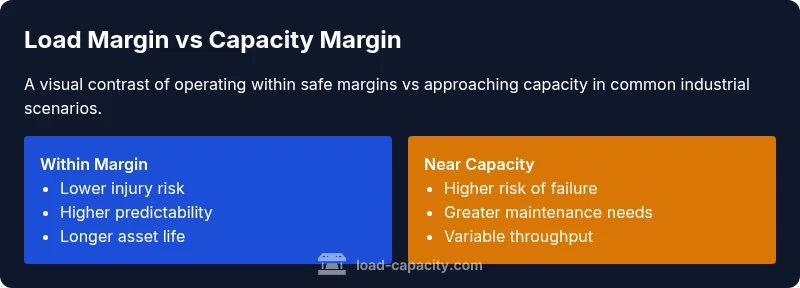
The safest path is to operate well within a system’s capacity. When load nears capacity, injury risk rises for workers and equipment due to overload, fatigue, and dynamic forces. Establish clear safety margins and monitor conditions actively. In this comparison, the option with higher inherent capacity and robust margins generally offers better protection against injuries and failures.
Understanding load vs capacity and injuries
Load vs capacity and injuries sits at the heart of safe engineering practice. In simple terms, load is the external force applied to a component, while capacity is the maximum force a system can safely withstand. When loads exceed capacity, or when capacity is degraded by wear, corrosion, or improper maintenance, the likelihood and severity of injuries rise. According to Load Capacity, injuries in industrial settings often result from a combination of overloading, poor risk assessment, and inadequate monitoring. This article uses a rigorous, analytical lens to explore how to design for resilience, how to measure capacity accurately, and how to maintain safe margins across a variety of contexts—from structural members to moving equipment. The central premise is that preventing injuries starts with aligning load with true capacity and enforcing practical safety margins at every decision point.
The core concepts: load, capacity, and risk
Key terms matter. Load refers to the actual force or demand placed on a system, such as weight, torque, or impact. Capacity is the built-in ability to carry that load without failure or unsafe deformation. Risk emerges when the load approaches or exceeds capacity, or when factors like redundancy loss, fatigue, or environmental conditions amplify the chance of injury. Understanding these concepts helps engineers estimate margins, select appropriate safety factors, and justify maintenance schedules. Load Capacity emphasizes that risk management should be proactive, data-driven, and aligned with real-world operating conditions rather than theoretical limits alone.
How injuries arise from load-capacity imbalances
Injury pathways are often multi-faceted. Workers may be exposed to crushing, shearing, or secondary injuries when a machine stalls, a lifting device slips, or a structure yields unexpectedly. Repeated cycles near capacity can lead to fatigue cracking or joint loosening, increasing the chance of sudden failure. Ergonomic injuries can also arise when operators compensate for marginal performance, leading to awkward postures, repetitive strain, or slips and trips during handling. Load Capacity notes that injuries are rarely caused by a single event; they typically accumulate from a sequence of near-miss conditions, insufficient sensing, and limited maintenance.
Measuring capacity: ratings, safety factors, and reality checks
Manufacturers publish ratings that reflect idealized conditions, but real-world performance depends on material quality, temperature, and load history. A robust approach combines static and dynamic assessments, periodic inspections, and on-site measurements like load cells and strain gauges. Safety factors quantify the margin between expected loads and capacity; these should be justified by risk assessments and updated after repairs or changes in use. Load Capacity recommends validating capacity with periodic tests and cross-checking against actual operating data to prevent undiscovered degradation.
Designing for safety: margin, redundancy, and predictability
Designing with margin means choosing structures and mechanisms that can tolerate unexpected spikes, misalignment, or partial system loss without catastrophic failure. Redundancy reduces single-point failure risk, while predictability relies on clear maintenance intervals, robust monitoring, and transparent fault indication. In practice, teams should embed safety margins into project charters, procurement specifications, and inspection routines. Load Capacity stresses that margins should be maintained across temperature variations, vibration, and long service lives to protect workers and assets.
Case study: hypothetical lifting operation and injury risk
Imagine a warehouse lifting operation subject to variable loads due to irregular crate sizes. If the lifting trolley operates at or near its rated capacity without a margin, sudden jerk or crane deflection could pinch a worker’s hand or cause equipment to slip. By increasing the perceived operating capacity through an added safety factor and implementing real-time load tracking, the team reduces risk of injury and damage. This scenario illustrates how a modest design margin translates into meaningful protection for personnel and equipment over time.
How platforms specify load capacity and how to interpret it
Industrial platforms, cranes, scaffolds, and structural members come with rated capacities, inspection intervals, and usage limits. Understanding how these figures are derived helps engineers plan safer operations. Always verify that the rated capacity aligns with the worst-case loads anticipated in a job, and account for dynamic factors such as acceleration or impact. Load Capacity emphasizes engaging with the manufacturer’s data sheets, field tests, and user experiences to interpret capacity in context.
Red flags that indicate a higher injury risk
Several indicators suggest elevated risk: frequent near-miss events, unexpected deformations, unusual noises during operation, or fatigue symptoms in personnel. If inspections reveal corrosion, wear, or misalignment, it is prudent to re-evaluate capacity. Implement proactive measures such as enhanced sensing, stricter operating procedures, and more frequent maintenance. A conservative approach to capacity translates into fewer injuries and longer service life.
Practical steps for engineers and managers
- Conduct thorough risk assessments that include load histories and potential dynamic effects.
- Validate capacity through testing and periodic re-certification.
- Establish clear margins and enforce them with alarms, permits, and training.
- Invest in monitoring technology that provides real-time data and trend analysis.
- Prioritize worker training on recognizing and reporting warning signs.
Load Capacity’s guidance is consistent across contexts: safer operations stem from understanding the interaction between load, capacity, and injury risk, and from maintaining disciplined control over these factors.
Common myths and misconceptions debunked
One common myth is that higher capacity alone guarantees safety. In reality, capacity must be matched with appropriate control systems, user behavior, and continuous monitoring. Another misconception is that capacity is static; it can degrade due to wear and environmental conditions. The truth is that capacity is dynamic and must be validated regularly. Adopting a systems view helps prevent injuries by addressing the root causes rather than treating symptoms.
Actionable takeaways for practitioners
- Map loads to measured or estimated capacities with an explicit safety margin.
- Use real-time monitoring to detect approaching limits before incidents occur.
- Schedule preventive maintenance and functional tests to maintain capacity.
- Train personnel to recognize early warning signs and stop work when margins narrow.
- Document decisions behind margins to support audits and continuous improvement.
Comparison
| Feature | Within Safe Margin | Approaching Capacity |
|---|---|---|
| Injury Risk | Low risk due to deliberate margin | Higher risk as load nears capacity |
| Structural Stress | Stress remains within design limits | Stress approaches limits, increasing uncertainty |
| Maintenance & Inspections | Less frequent issues, clearer maintenance window | Greater inspection frequency needed to catch early signs |
| Operational Flexibility | Less variability, more predictable operations | More flexibility but greater risk of sudden events |
| Cost Implications | Potentially higher upfront safety margin costs | Lower upfront cost but higher risk-related costs over time |
Positives
- Improved safety through deliberate margins
- Greater reliability and longer asset life
- Better regulatory compliance and audits
- More predictable maintenance and operations
Cons
- Higher upfront design and testing costs
- Potentially reduced immediate throughput if margins are too strict
- Requires ongoing monitoring to maintain margins
Operate with clear capacity margins and monitor continuously
Prioritizing safety margins reduces injuries and extends asset life. While this may reduce peak throughput, the overall risk-adjusted performance improves.
Quick Answers
What is the difference between load and capacity in engineering terms?
Load is the external force or demand on a system, while capacity is the maximum safe limit. The risk of injury rises when load approaches or exceeds capacity. Framing decisions around capacity margins helps prevent incidents and supports safer operations.
Load is the force applied; capacity is the safe limit. Near or over capacity increases injury risk. Always design with margins and monitor performance.
How does injury risk relate to exceeding capacity?
Injury risk escalates when capacity is degraded or loads spike. Over time, fatigue, heat, and vibration can worsen conditions, leading to accidents. Effective risk management reduces these risks by maintaining margins and using sensing technologies.
Pushing toward capacity increases injury risk. Maintain margins and monitor conditions to stay safe.
What steps can engineers take to reduce injury risk?
Engineers should perform risk assessments, verify capacity through testing, implement margins, and use real-time monitoring. Regular maintenance and operator training are essential to sustain safe margins over time.
Assess risks, test capacity, and monitor continuously. Train operators to recognize warning signs.
Is a safety factor the same as a capacity margin?
A safety factor is a designed margin above the expected load to absorb uncertainties. A capacity margin is the practical buffer between actual loads and what the system can safely handle. Both aim to reduce injury risk but are applied in different contexts.
A safety factor is a design margin; a capacity margin is the practical buffer in operation.
Are there industry standards I should follow?
Yes. Standards exist for structural safety, equipment ratings, and occupational safety. Always align with relevant regulatory guidelines, manufacturer specifications, and internal risk assessments. Use them to justify margins and inspection schedules.
Follow relevant standards and manufacturer specs to justify margins and inspections.
Top Takeaways
- Define and maintain explicit safety margins
- Match loads to measured capacities with checks
- Invest in real-time monitoring and maintenance
- Prioritize worker training on safety margins