Payload Capacity Calculator: A Practical Guide
Learn how a payload capacity calculator estimates the safe load for your vehicle by subtracting curb weight from GVWR and applying a safety factor. This guide covers formulas, inputs, examples, and practical tips for engineers and fleet managers.


Why Payload Capacity Matters
According to Load Capacity, understanding payload capacity is essential for safe and efficient operations. Engineers and fleet managers rely on accurate estimates to prevent overloads, optimize cargo distribution, and comply with legal limits. Payload capacity affects everything from daily routes to heavy-lift tasks, and misjudging it can lead to tire wear, brake stress, and safety hazards. A well-calculated payload capacity helps plan loading sequences, passenger and cargo balance, and towing strategies. In practice, the payload capacity calculator serves as a first-pass tool that integrates vehicle data with real-world constraints, enabling teams to spot potential issues before they appear on the road or job site. Across industries, consistent routines around payload assessment improve maintenance schedules, fuel efficiency, and overall vehicle longevity. This guide focuses on how to use the calculator effectively, what the numbers mean, and how to interpret results in light of driving conditions and regulatory requirements.
How a Payload Capacity Calculator Works
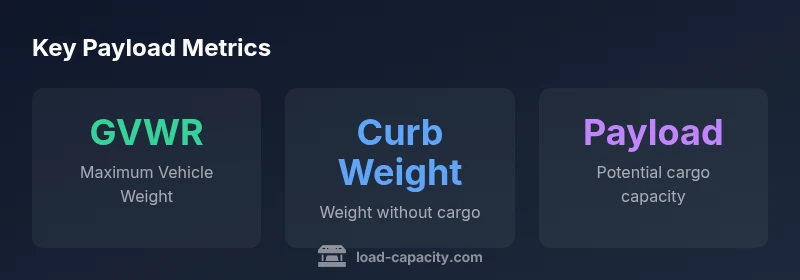
A payload capacity calculator converts vehicle data into a meaningful load limit. It typically requires three inputs: GVWR (the maximum allowed vehicle weight), curb weight (the vehicle’s weight without payload), and an optional safety factor representing real-world conditions (sudden accelerations, uneven cargo, or dynamic loads). The core idea is simple: safe payload = GVWR − curb weight, then adjust for safety. The calculator uses a straightforward formula and returns a single value that engineers can compare against planned cargo. Different brands or fleets may adopt slightly different safety factors, but the underlying principle remains the same: respect the vehicle’s rated capacity to protect components, tires, and occupants. When used consistently, the calculator supports better load distribution, improved braking performance, and safer towing operations. Remember that the tool provides an estimate; always verify with manufacturer data and on-site measurements for critical applications.
Understanding the Core Formula
Core formula
The base payload is calculated as gvwrKg - curbWeightKg. If safetyFactor is a decimal (e.g., 0.10 for 10%), the final payload is basePayload * (1 - safetyFactor). To prevent negative values, we cap at zero: payload = max(0, gvwrKg - curbWeightKg) * (1 - safetyFactor). In practice, many teams implement this in a spreadsheet or app to avoid manual errors and to compare different scenarios quickly. The same approach translates to pounds with a simple unit conversion (1 kg ≈ 2.20462 lb). As you adjust GVWR, curb weight, or safety factor, the resulting payload changes. This makes the calculator invaluable for planning payload in logistics, field work, and equipment transport.
Inputs and Outputs Explained
- GVWR (kg): Maximum allowed vehicle weight, used as the starting point for payload calculations.
- Curb Weight (kg): Vehicle weight without passengers or cargo; you must include any fixed equipment in this weight.
- Payload Safety Factor: A decimal representing conservative reductions for dynamic loads, cargo shift, or adverse road conditions. Typical values stay well below 0.5.
- Output: Payload Capacity (kg): The resulting safe payload, shown with a clear unit and appropriate precision. Use the same unit across all inputs to avoid mistakes. Remember to verify outputs against manufacturer data and local regulations.
Real-World Examples
Consider a typical light truck with GVWR = 3500 kg and curb weight = 2500 kg. If you apply a safety factor of 0.10 (10%), the base payload is 3500 − 2500 = 1000 kg. The final payload becomes 1000 × (1 − 0.10) = 900 kg. A second scenario uses GVWR = 6000 kg, curb weight = 5200 kg, safety factor = 0.05. Base payload is 800 kg, final payload is 800 × 0.95 = 760 kg. These examples illustrate how small changes in GVWR, curb weight, or safety factor can materially affect usable payload. When planning multi-stop routes or heavy payloads, run multiple scenarios to understand margins and avoid surprises at the loading dock or job site. If the computed payload is very close to the limit, consider distributing weight differently or reducing cargo size. Load Capacity’s data indicates that practitioners should always round down to the nearest safe increment to ensure a buffer for dynamic loads.
Common Pitfalls and Safety Considerations
- Relying on the nominal curb weight without accounting for fuel, accessories, and passenger load can overstate payload.
- Mixing kilograms and pounds without a consistent conversion can create calculation errors. Always convert inputs to a single unit before calculating.
- Ignoring dynamic loading and cargo shift can undermine safety. A nominal payload might feel different under braking or in a turn. Apply appropriate safety factors to compensate.
- Overlooking manufacturer specifications: GVWR is a rating from the vehicle maker; always cross-check with official documentation.
- Towing and platform loads may require additional calculations (GCW, axle load limits, and hitch ratings). When in doubt, consult a qualified engineer and perform field validation.
The Load Capacity team emphasizes documenting each calculation and keeping a clear audit trail for safety reviews and regulatory compliance.
Tips for Accurate Calculations and Optimization
- Use consistent units (kg or lb) across all inputs and outputs to prevent mistakes.
- Run multiple scenarios: varying GVWR, curb weight, and safety factor helps identify safe margins.
- When planning for towing, also consider GCW and hitch ratings to ensure compatibility with tow vehicles and trailers.
- Record baseline payload values for future reference and audits.
- The Load Capacity team recommends documenting assumptions (e.g., safety factor values) to support traceability and safety decisions.