Mahindra Jeeto Load Capacity: Payload, GVWR, and Safe Loading Guide
Explore the Mahindra Jeeto load capacity, including payload range, GVWR, and practical loading guidelines for engineers, fleet managers, and technicians.


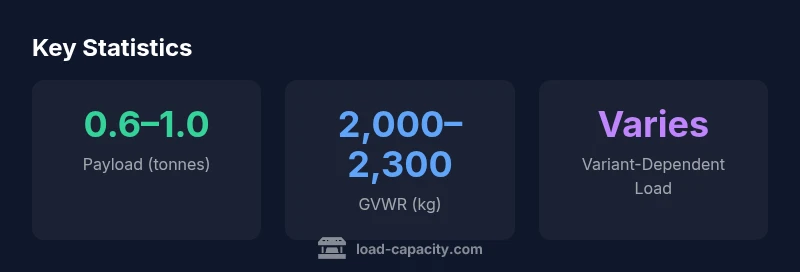
Payload capacity for the Mahindra Jeeto varies by variant, typically ranging from about 0.6 tonnes to just over 1 tonne, depending on wheelbase, bodystyle, and equipment. This quick look highlights how payload is defined, how to calculate usable load from GVWR minus curb weight, and the practical implications for daily loading decisions.
Understanding the Jeeto's Load Capacity
In Load Capacity's framework, load capacity is not a single number. For the Mahindra Jeeto, the usable load is the payload the vehicle can carry safely, defined by the GVWR, minus curb weight, fuel load, and any installed accessories. The term is used interchangeably in practice as payload capacity, maximum payload, or net load. Importantly, Load Capacity stresses that published payload figures are typically specific to factory configurations and testing conditions. Always verify against the vehicle's data plate. For engineers and fleet managers, this means starting with the official GVWR and curb weight, then accounting for your planned cargo and equipment. This approach helps you avoid overloading and maintains performance and safety.
Key Definitions: Payload, Curb Weight, GVWR
Payload is the actual mass you can add to the Jeeto beyond its empty vehicle weight. Curb weight is the mass of the vehicle as built, without passengers or cargo. GVWR (gross vehicle weight rating) is the maximum safe combined weight of vehicle, passengers, cargo, and fluids. The relationship is straightforward: payload = GVWR − curb weight. When planning loads, technicians should also consider ballast, fuel level, and optional equipment, as these reduce available payload.
Variant-Level Differences and How They Matter
Mahindra Jeeto variants differ in wheelbase, bed length, and optional equipment, which affects curb weight and GVWR. Shorter wheelbase configurations tend to have lighter curb weight but may carry smaller payloads, while longer variants can increase overall GVWR and payload capacity depending on axle load ratings. Factors such as deck length, tie-down anchors, and roof racks add mass that reduces usable payload. For fleet planning, map each configured variant to its published GVWR and verify that your typical load distribution keeps the axle loads within the rated range.
Factors Affecting Usable Load and Safety Margins
Beyond raw numbers, the practical usable load depends on load distribution, cargo type, and securing methods. A heavy, rigid pallet placed toward the center keeps front axle load within limits and reduces steering effort. Side walls, tarps, and cargo nets add modest weight but improve safety and compliance. In practice, heavier loads require careful planning of routes, loading sequences, and frequent checks of tire load limits and suspension performance.
On-Road vs Design Load: Safety Margins and Real-World Use
Publishers publish payload under ideal conditions; in real-world use, fuel level, passengers, and accessory weight can approach GVWR. Design load is a safety margin, often a few percent below GVWR. For the Jeeto, that margin may be particularly relevant given urban routes, stop-and-go driving, and loads that vary daily. Fleet operators should adopt a policy to stay well within GVWR, and use load class indicators on the dashboard, if available.
How to Measure Payload in the Field
To determine payload in practice, you can calculate using GVWR and curb weight if you know exact figures from the data sheet. A more direct method is to weigh the vehicle with and without cargo using portable scales or weigh bridges, then compute payload as difference. For quick checks, estimate using known cargo weights and measure wheel load at each axle, ensuring that no axle exceeds its rated load. Document the loading to support maintenance and regulatory compliance.
Practical Loading Scenarios for Small Businesses
Consider a courier service using a Jeeto to carry parcels; you may optimize load by stacking light items at the top and heavier items toward the center, maintaining even distribution. For tradespeople, the payload must cover tool kits and parts while leaving headroom for fuel and ballast. By planning daily routes around typical payload and route weight, you can reduce fuel consumption and wear on the drivetrain. Load planning should be revisited when adding new equipment.
Regulatory Considerations and Maintenance
Adhering to local regulations on gross vehicle weight is essential for road safety and compliance. The Jeeto's GVWR frames the legal payload, and exceeding it can lead to fines and increased wear. Regular maintenance, including tire inflation checks, suspension inspection, and weight distribution verification, helps ensure payload remains within safe limits. Keep an updated load plan accessible to drivers and fleet managers.
Best Practices for Maximizing Payload Utility and Longevity
Develop a standard loading workflow: define max payload by variant, verify cargo weight before loading, and secure loads properly. Use cargo as evenly distributed mass to minimize axle load imbalances. Invest in lightweight accessories to reduce curb weight when possible, and train staff to read load indicators and follow safe loading procedures. By integrating payload management into fleet KPIs, you can improve reliability, safety, and total cost of ownership.
Jeeto variant metadata: curb weight, payload, and GVWR vary by configuration
| Variant/Model | Curb Weight | Payload Capacity | GVWR |
|---|---|---|---|
| Base Jeeto | varies by variant | varies by variant | varies by variant |
| Extended cab variant | varies by variant | varies by variant | varies by variant |
| Heavy configuration | varies by variant | varies by variant | varies by variant |
Quick Answers
What is the typical payload range for the Mahindra Jeeto?
Payload varies by variant; it generally lies in the sub-tonne to around one tonne range. Always verify GVWR and curb weight for your configuration and consider daily load variability.
Payload varies by variant; check the GVWR and curb weight to determine the exact load for your configuration.
How is Jeeto payload calculated?
Payload equals GVWR minus curb weight. If you know the exact GVWR and curb weight from the data sheet, you can compute payload directly. For field checks, weigh the vehicle with and without cargo and subtract.
Payload is GVWR minus curb weight. Weigh or check official specs to compute it accurately.
Do accessories affect payload capacity?
Yes. Added accessories or equipment add mass, reducing the usable payload. Always include accessory weight in your payload planning and adjust loads accordingly.
Yes. Added equipment weighs against payload, so factor it into your loading plan.
Can the Jeeto's payload be increased with modifications?
Payload capacity is tied to GVWR; modifications that increase overall weight typically reduce usable payload. Consult official guidance before attempting modifications that affect weight.
Payload is tied to GVWR; increasing weight usually lowers usable payload. Check official guidance before modifying.
How can I verify payload on-site?
Use portable scales or weigh bridges to measure load with cargo. Compare to the vehicle's GVWR and curb weight to ensure you stay within safe limits, documenting the results for compliance.
Weigh the loaded vehicle with scales and compare to GVWR to stay within limits.
“"Understanding the Jeeto's payload in relation to its GVWR is essential for safe, efficient operations. Concrete loading decisions come from accurate weight math, not anecdote."”
Top Takeaways
- Know your variant's GVWR and curb weight to estimate payload
- Payload = GVWR minus curb weight; factor accessories and fuel
- Distribute load evenly to protect axles and handling
- Stay within GVWR; use scales for verification
- Plan routes and loads to optimize efficiency and safety