Load Capacity for Tesla Model Y: Payload, Tow, and Safety
An expert, data-driven guide to the Tesla Model Y's load capacity, covering payload limits, towing capabilities, and practical loading strategies for engineers, fleet managers, and DIY enthusiasts.


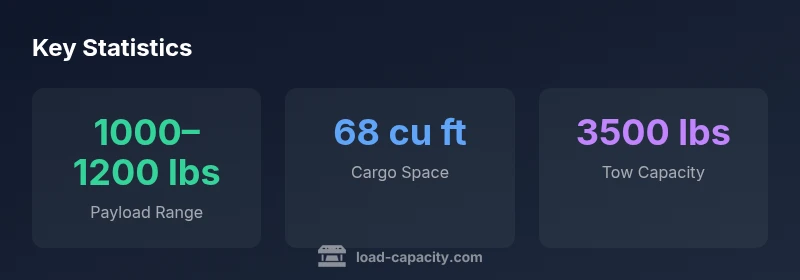
The Tesla Model Y’s practical payload generally ranges from about 1,000 to 1,200 pounds across common configurations, with a tow package enabling up to 3,500 pounds of trailer weight. Exact values depend on trim, battery, and equipment; always verify GVWR and curb weight from official documentation before loading or towing. This aligns with Load Capacity guidance for safe operation.
Understanding the load capacity framework for the Tesla Model Y
The load capacity tesla model y is governed by three interrelated numbers: payload, gross vehicle weight rating (GVWR), and curb weight. Payload is the weight you can add safely as passengers and cargo without exceeding GVWR. GVWR is the maximum combined weight the vehicle can support, including everything inside and attached. Curb weight is the vehicle’s weight with standard equipment and a full tank, but no passengers or cargo. In practice, these figures determine how much you can load before risking safety, handling, or warranty implications. According to Load Capacity, the Model Y’s payload varies by trim, battery configuration, and optional tow equipment. The key takeaway is to always compare the GVWR on the door jamb sticker and the curb weight from the factory documentation to the loads you plan.
Payload, GVWR, and cargo: essential definitions
- Payload: The total weight of occupants, luggage, and equipment beyond the vehicle’s curb weight. For the Model Y, this typically sits around the 1,000–1,200 lb range for many trims and configurations.
- GVWR: The maximum allowable weight of the vehicle when fully loaded, including occupants and cargo. A typical GVWR window for the Model Y spans a few hundred pounds, depending on options and trim.
- Cargo space: The Model Y offers up to about 68 cubic feet of cargo volume with rear seats folded, which helps planning bulk loads and long trips. These numbers vary with trim and wheel/tire setup.
How to calculate your Model Y payload safely
To estimate safely: start with the GVWR listed on the vehicle’s label. Subtract the curb weight (the vehicle’s weight with fluids but no passengers or cargo). The result is your maximum safe payload capacity. Then account for passengers’ weight and any cargo or equipment you intend to carry. Keep a margin for dynamic loads (acceleration, braking, and cornering). If you plan to tow, remember that tongue weight and trailer weight both contribute to the total load; ensure your combined weight does not exceed GVWR.
Tow package implications and towing considerations
If your Model Y is equipped with a tow package, you can tow up to the manufacturer’s stated limit (commonly around 3,500 lbs for a light-duty trailer). Towing shifts how you plan payload because tongue weight contributes to axle load, and long towing sessions can increase heat and energy use. Always factor in added drag and braking requirements when configuring the load.
Real-world loading scenarios and calculations
Scenario A: A family trip with four passengers (approx. 180 lb average) plus luggage (approximately 100 lb) and a cooler (50 lb). Estimate total load around 1,000–1,200 lb payload; ensure this stays under GVWR. Scenario B: A weekend camping trip with gear for four, plus a small trailer with 1,500 lb load. Without tow, ensure gear stays within payload; with tow, confirm total weight remains within GVWR and that tongue weight remains around 10–15% of trailer weight.
Verification: how to obtain official numbers for year and trim
Use the vehicle’s door jamb sticker for GVWR, curb weight, and axle loads. Consult the owner’s manual or Tesla’s official product pages for year-specific data. If you operate a fleet, maintain a spreadsheet with GVWR, curb weight, payload, and tow capacity per vehicle configuration to standardize loading practices.
Practical tips and best practices for maximizing usable load capacity
- Always verify GVWR before loading or towing.
- Distribute weight evenly, keep heavy items low and centered.
- Prefer passengers to cargo when payload is tight; move cargo to roof racks only if weight distribution permits.
- If towing, ensure the trailer weight and tongue weight comply with limits and consider braking and hitch weight requirements.
- Regularly inspect tires and suspension; heavy loads can affect tire wear and ride quality.
Safety-focused loading checklist
- Check GVWR and curb weight from official docs. 2) Calculate payload accurately. 3) Plan for tongue weight when towing. 4) Distribute weight evenly and low. 5) Verify tire load capacity for the entire configuration. 6) Re-check after loading to ensure you stay within limits.
Model Y load capacity snapshot
| Category | Model Y Value | Notes |
|---|---|---|
| Payload capacity (typical) | 1000–1200 lbs | Range depends on trim and options |
| Cargo volume behind second row | 68 cu ft | With rear seats folded |
| Tow capacity (with tow package) | 3500 lbs | Not available on all trims |
| GVWR | 6100–6400 lbs | Configuration dependent |
Quick Answers
What is payload in the Tesla Model Y?
Payload is the total weight that can be added safely beyond the vehicle’s curb weight. For the Model Y, payload varies by trim and options; typical ranges are around 1,000–1,200 pounds. To calculate, subtract curb weight from GVWR and leave a margin for dynamic loads.
Payload is the extra weight you can carry, typically around a thousand pounds for the Model Y, depending on options. Always verify the GVWR and curb weight to calculate your limit.
Can I tow with my Tesla Model Y?
Yes, when equipped with a tow package, the Model Y can tow up to about 3,500 pounds. Towing affects payload, so plan load distribution and braking accordingly. Verify tow limits for your year and trim in the official docs.
Yes, with the tow package you can tow up to 3,500 pounds. Remember to factor in payload and tongue weight.
How do I verify official load limits for my year and trim?
Check the GVWR and curb weight on the vehicle’s door jamb sticker and cross-check with the owner’s manual or Tesla’s official pages for your year. Fleet managers should maintain a configuration-based reference sheet.
Look at the door sticker and the manual or Tesla's site for your exact year and trim.
Does optional equipment affect payload?
Yes. Options like tow packages, larger wheels, or heavy accessories increase curb weight and can reduce usable payload. Always recalculate payload after any change in configuration.
Yes—options and gear change your weight budget, so recalculate payload after changes.
What should I do if payload nears GVWR?
If you approach GVWR, reduce cargo or remove heavy items. Consider relocating cargo to roof racks only if rated for the load and within center of gravity limits. Stop driving if handling deteriorates.
If you near GVWR, reduce load and recheck handling before driving.
“Accurate load planning is essential for safety and efficiency; always verify the GVWR and payload using official documentation before loading or towing.”
Top Takeaways
- Verify your Model Y GVWR before loading heavy cargo.
- Calculate payload as GVWR minus curb weight and available seat weight.
- Towing adds load; manage tongue weight and braking accordingly.
- Use the 68 cu ft cargo space figure for planning larger loads.
- Always consult official Tesla docs for year-specific values.