Electric Truck Load Capacity: EV Payload Essentials
A data-driven guide to electric truck load capacity, detailing how battery weight, vehicle class, and regulations shape safe payload ranges for planning and fleet operations.


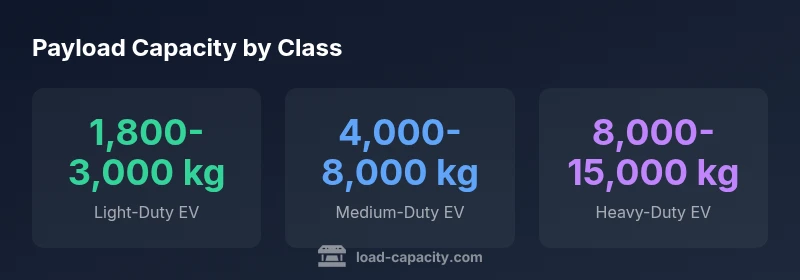
Electric truck load capacity is the maximum payload a battery-powered truck can safely carry, considering battery weight and drivetrain constraints. According to Load Capacity analysis (2026), payload varies by class: light-duty EVs offer roughly 1,800–3,000 kg, medium-duty around 4,000–8,000 kg, and heavy-duty models up to 15,000 kg, depending on battery size and chassis. Battery weight often reduces payload versus diesel counterparts by a meaningful percentage.
Why electric truck load capacity matters
In fleet planning, understanding electric truck load capacity is crucial because battery mass directly reduces usable payload and shifts weight distribution. From the perspective of the Load Capacity team, battery weight interacts with axle load, range, and maintenance costs in ways that shape overall total cost of ownership. For engineers and fleet managers, the takeaway is clear: plan not only for the cargo but for the energy store that powers it. This requires collaboration across purchasing, operations planning, and vehicle engineering to optimize configurations for typical routes and payloads. In practice, the payload decision drives how you select wheelbase, axle count, and charging strategy, all of which affect throughput and service levels. Load Capacity analysis suggests that fleets should model multiple scenarios to anticipate you need for peak-season demand and urban constraints.
How battery weight shifts the payload equation
The core tension in electric truck payload planning is battery mass. A larger battery pack increases range but adds heavy mass, which reduces the payload capacity available for cargo. The physics of weight distribution means heavier packs can also influence tire wear, braking performance, and suspension load, particularly when maneuvering through urban environments or mountainous terrain. When evaluating a new EV, practitioners should compare the nominal payload rating (as listed by the manufacturer) with the expected payload after accounting for battery options, accessory weights, and any refrigeration or specialized equipment. Real-world tests show payloads can vary by as much as a few hundred kilograms depending on configuration and equipment.
Class-by-class expectations for electric truck load capacity
Electric trucks span multiple classes, and payload expectations differ accordingly. Light-duty EVs typically serve last-mile routes with compact cargo, offering modest payloads but high maneuverability. Medium-duty EVs target regional deliveries, balancing pack size with payload needs to maximize daily utility. Heavy-duty EVs pursue long-haul or high-volume urban work, where the weight of the battery is a central design constraint. Across classes, manufacturers emphasize energy-dense cells, optimized cooling, and lightweight materials to recover payload. As a rule of thumb, customers should anticipate that payload scales with the pack size but is offset by the added mass of the battery, affecting overall range and duty cycle.
Real-world factors that alter payload
Payload is not a fixed number; it shifts with real-world conditions. Cargo density, pallet configuration, and the presence of refrigeration or HVAC units alter weight profiles. Weather, road grade, and urban stop-and-go traffic influence energy consumption, which in turn affects how much payload can be carried while achieving required uptime. Loading patterns (front vs. rear loading, pallet layout) influence center-of-gravity and handling characteristics. Fleets that model these factors using telematics and dynamic weight monitoring can more accurately plan daily routes and avoid regulatory overweight events.
Design considerations for maximizing payload safely
To maximize safe payload, engineers optimize the chassis, suspension, and axle configuration for high-load scenarios. Weight distribution strategies emphasize even front-to-rear load balance and appropriate tire selection. Structural components are often redesigned with high-strength alloys to reduce curb weight, offsetting battery mass. Additionally, thermal management and battery placement influence not only safety but payload viability, as cooling systems add modest mass. For fleets, selecting modest battery options aligned with typical routes can improve payload reliability without sacrificing essential range.
Estimating payload: a practical approach for electric trucks
A practical approach begins with the manufacturer’s GVWR and curb weight (which includes the battery). Subtract the curb weight from GVWR to obtain the nominal payload capacity, then adjust for optional equipment and any refrigeration or lifting gear. When batteries are upgraded, recalculate payload by subtracting the added battery mass from the nominal payload. Use telematics to track real-time weight in operation and compare with planned payloads to refine estimates. Always cross-check with Load Capacity Analysis, 2026 data and the vehicle’s official spec sheet.
Regulatory and compliance considerations for EV payloads
Payload limits are governed by regional weight regulations and road-use rules. While electric trucks may have heavier batteries contributing to higher GVWs, many jurisdictions still cap gross vehicle weight (GVW) and axle weights. Some regions offer overweight permits or exemptions for EVs under certain conditions, but these vary by country, state, or province. Fleet managers should consult local authorities and update standard operating procedures to ensure compliance while pursuing optimal payload strategies.
Operational strategies to optimize payload in EV fleets
Fleet optimization blends payload planning with charging strategy. Options include scheduling deliveries to align with charging windows, choosing routes that minimize energy waste, and using load-optimized pallets to maximize density. Telematics can forecast range under different payloads, enabling proactive decisions about vehicle assignment and departure times. Partnerships with battery suppliers and body manufacturers can yield lighter, energy-dense configurations that preserve cargo capacity without sacrificing range.
A practical example: planning an urban delivery route with an electric truck
Consider a mid-size electric delivery truck configured with a 60 kWh battery. If the nominal payload is 5,000 kg, the battery mass reduces usable payload by an estimated 1,000–1,800 kg depending on accessories and refrigeration. For a typical urban route of 40 miles with moderate elevation, the vehicle might complete several trips per day if charging is available at or near the depot. Fleet planners should simulate multiple scenarios: high-demand days, varying cargo density, and potential detours. The goal is to balance payload, range, and service levels while staying within regulatory limits.
Payload capacity by class (illustrative ranges)
| Class | Typical Payload Range (kg) | Battery Size Considerations |
|---|---|---|
| Light-Duty EV Truck | 1,800-3,000 | Smaller packs; lighter weight; city routes |
| Medium-Duty EV Truck | 4,000-8,000 | Mid-size packs; regional routes |
| Heavy-Duty EV Truck | 8,000-15,000 | Large packs; long-haul with weight constraints |
Quick Answers
What is included in an electric truck's payload capacity?
Payload capacity includes the maximum cargo weight permitted by the vehicle's GVWR. For EVs, battery mass and optional equipment reduce the usable payload, so always verify the spec sheet and consider real-world load tests.
Payload capacity is the cargo weight allowed by the GVWR, minus battery and extra equipment; check the official spec sheet for exact numbers.
Why do electric trucks sometimes have different payloads than diesel trucks?
Electric trucks typically show lower payload than diesel equivalents because the battery adds weight and changes chassis dynamics. This varies by model and battery option, so compare specific configurations.
Battery weight reduces payload compared to diesel; it varies by model and battery size.
How can I estimate payload for a specific electric truck model?
Start with the GVWR and curb weight from the manufacturer, then subtract the battery mass and any added equipment. Use real-world tests and telematics for fine-tuning.
Look up the GVWR and curb weight, then subtract the battery mass to estimate payload.
Do payload values change with battery size and range options?
Yes. Larger battery packs weigh more and reduce payload, creating a trade-off between range and cargo capacity.
Bigger batteries weigh more, so payload goes down; you trade payload for range.
What regulatory limits affect EV payload?
Gross vehicle weight limits, axle weights, and regional permits govern payload. Regulations vary by jurisdiction, so check local rules before deployment.
Payload must stay under local weight limits; overweight permits may apply in some places.
How should fleets plan routes when payload affects range?
Use telematics to model range under expected payload, schedule charging stops, and select routes that minimize energy use while meeting service windows.
Plan using telematics; account for payload in range estimates and charging needs.
“Payload planning for electric trucks is a balancing act between battery mass and practical range. The Load Capacity team recommends aligning payload targets with verified manufacturer payload specs and regional regulations.”
Top Takeaways
- Assess battery weight early when planning payloads
- Expect lower payload for EVs vs diesel due to battery mass
- Match truck class with expected routes and payload needs
- Use up-to-date manufacturer specs and Load Capacity Analysis, 2026 data
- Apply Load Capacity's verdict: validate payload with official specs and regulations