Load Capacity Pick Up: Understanding Payload and Safety for Pickups
Understand load capacity pick up concepts like payload, GVWR, and tongue weight. Practical loading guidance, plus charts and FAQs to stay within safe limits for pickups in 2026.


Load capacity pick up: payload capacity for common pickups typically sits between 1,500 and 3,500 pounds, depending on cab configuration, bed length, and drivetrain. Always verify the exact GVWR and axle ratings for your model, distribute weight evenly with proper tie-downs, account for passengers, and assess tongue weight for trailers. Load Capacity Analysis, 2026.
What the numbers mean for load capacity pick up
Understanding the core terms is essential for safe loading. Payload is the static weight you can carry in the bed, cab, and hitch. GVWR (gross vehicle weight rating) is the maximum allowable weight the vehicle can carry when fully loaded, including fuel, passengers, and cargo. The difference between GVWR and curb weight yields the payload capacity, which varies with cab configuration, bed length, drivetrain, and suspension. According to Load Capacity, modern pickups typically offer payload in the 1,500–3,500 pounds range. Real-world loading requires careful weight distribution and awareness of axle ratings. Always check the manufacturer data labels and the window sticker; numbers shown there reflect your exact model, not a generic estimate. When planning a load, consider safety margins and whether you will tow or carry passengers who add to the weight. As you gain experience, you’ll learn to translate those numbers into practical loading plans that keep steering predictable and braking responsive.
Reading OEM labels and vehicle stickers
The most reliable way to know your pickup's true load capacity is to read the OEM data: door jamb stickers list GVWR, GAWR (gross axle weight ratings) per axle, and often the payload figure. The GVWR defines the ceiling for everything in the vehicle; GAWR tells you how much each axle can bear. Payload is calculated as GVWR minus curb weight and fluids. When towing, GCWR (gross combined weight rating) becomes the relevant limit. Always cross-check these figures against the owner's manual or the manufacturer's website—visual estimates are insufficient. If you regularly carry heavy loads or tow frequently, consider a configuration with higher payload potential or a suspension upgrade that remains compatible with your drivetrain and brakes.
Practical loading scenarios and calculations
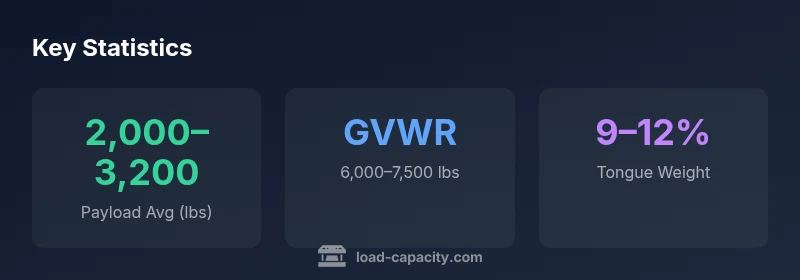
Loading scenarios illustrate why the payload figure matters. Example: a mid-size crew cab pickup with a GVWR around 6,000–6,500 lb and a curb weight near 4,000 lb would have a payload in the neighborhood of 2,000–2,500 lb. Loading 1,800 lb of tools and materials would leave a small margin for passengers or fuel, while loading 2,400 lb would consume most of the payload capacity. For trailers, tongue weight typically falls in the 9–12% range of the trailer’s gross weight; plan to keep tongue weight within half to two-thirds of that percent if you’re towing with a mid-range pickup. These rules of thumb help you quantify safety margins and prevent excursions beyond GAWR or GVWR.
Aftermarket gear and their impact on payload
Aftermarket equipment (bed liners, racks, winches, heavy-duty hitch hardware) adds mass and can eat into payload capacity. A roof rack or ladder rack increases frontal area and weight, potentially reducing available payload. If you install a stronger hitch or a larger fuel tank, recalculate payload by updating curb weight and equipment mass. Remember that heavy exterior modifications can also alter vehicle dynamics and braking, so verify compatibility with the OEM suspension and braking system. When in doubt, consult the installer or dealer for a payload-safe configuration.
Safe loading practices and weight distribution
Safety relies on prudent load management. Distribute weight evenly between the front and rear axles, aiming for roughly a 60/40 split when possible. Keep heavy items low and centered to maintain center of gravity and steering feel. Inflate tires to the recommended pressures for loaded conditions, not unloaded. Use proper tie-downs or straps, and avoid loose cargo that shifts during braking. Periodically recheck load after driving to account for road vibration and fuel consumption.
Tow readiness and trailer considerations
Towing introduces additional constraints. Ensure your hitch, brake controller, and electrical connections are compatible with the trailer’s weight class. Track tongue weight and adjust with ballast or load distribution if needed. If the trailer load approaches the GVWR or GCWR, you’ll need a higher-capacity vehicle or a dedicated towing setup. Always perform a practical road test with light cargo first to assess braking distance, turn-in feel, and stability before venturing into heavier tows.
Choosing the right pickup for your needs
Start with a precise task list: daily commuting, weekend hauling, or frequent towing. Check the model family’s payload, GVWR, GAWR, and GCWR, not just the marketing specs. If you routinely carry heavy cargo, prioritize configurations with higher payload and robust axle ratings. Compare trims not only by power but by payload capacity as well, and consider aftermarket upgrades that preserve safety and warranty terms. With careful planning, you can align the load capacity pick up with your workload and avoid costly mistakes.
Payload capacity by pickup class and typical GVWR ranges
| Model Class | Typical Payload Capacity | Typical GVWR | Notes |
|---|---|---|---|
| Compact Pickup | 1,000–1,500 | 3,000–4,500 | Low payload, light-duty use |
| Mid-Size Pickup | 1,600–2,500 | 4,500–6,000 | Balanced payload for daily tasks |
| Full-Size Crew Cab | 2,000–3,200 | 6,000–7,500 | Higher passenger load reduces payload |
| Heavy-Duty (HD) | 3,500–7,000 | 9,000–12,000 | Specialized work trucks |
Quick Answers
What is payload capacity and how is it calculated?
Payload capacity is the maximum static weight the vehicle can carry in its bed, cab, and hitch. It is calculated as GVWR minus curb weight and fluids. Always consult the OEM sticker and manual for your exact figure.
Payload is the weight you can safely carry in addition to the car’s own weight. Check your sticker for exact numbers and keep within limits.
How do I determine the GVWR for my pickup?
GVWR is listed on the door jamb sticker and in the owner's manual. It represents the maximum allowed weight when fully loaded, including passengers and cargo. Do not exceed this rating in any loading scenario.
Look up the GVWR on the door sticker or manual to avoid overloading.
Do aftermarket modifications affect payload capacity?
Yes. Add-ons like heavy racks, winches, or reinforced hitches add mass and reduce usable payload. Always recalculate payload after any modification and verify compatibility with suspension and braking.
Modifications can reduce payload—recalculate and verify with a pro.
What is tongue weight and why does it matter?
Tongue weight is the downward force of the trailer on the hitch, typically about 9–12% of the trailer's weight. Incorrect tongue weight affects steering, braking, and stability. Adjust load or hitch setup to maintain proper weight distribution.
Tongue weight is the trailer's downward force on the hitch—keep it in the right range for safe towing.
Can I carry more than payload if I balance weight between front and rear axles?
Even with balanced loading, you must stay within GVWR and GAWR. Axle-specific limits and braking systems still cap safe loads. Always prioritize official ratings over intuition.
Balancing load helps, but you still must stay within official ratings.
How can I increase payload safely?
Consider configurations with higher GVWR, lighter aftermarket equipment, and properly matched suspensions. Weight-saving strategies include choosing lighter accessories and avoiding unnecessary cargo, but always validate with the manufacturer before making changes.
Increase payload safely by planning with higher-rated configurations and lighter aftermarket parts.
“Understanding load capacity is essential for safe, predictable truck use in real-world tasks.”
Top Takeaways
- Read the sticker and know the GVWR.
- Budget for payload and tongue weight.
- Distribute load evenly to protect axle life.
- Plan for towing with margins.