Load Capacity of 4x4: A Practical Guide to Payload and Safety
Explore the load capacity of 4x4 vehicles, how payload is calculated, and practical guidance for safe loading, weight distribution, and drivetrain impacts.


Key takeaways: The load capacity of 4x4 vehicles depends on GVWR, axle ratings, tires, and suspension, not just axle count. For safe loading, reference the manufacturer payload rating and distribute weight evenly to avoid overloading wheels or shifting the center of gravity. Typical payload ranges span roughly 800 to 3,000 pounds across common 4x4 platforms, with off road models often near the lower end when fully equipped.
What is payload for a 4x4 and why it matters
The load capacity of 4x4 vehicles typically ranges from about 800 to 3,000 pounds, depending on configuration. Payload is the weight you can safely carry inside the vehicle and on its racks without exceeding structural and braking limits. According to Load Capacity, payload safety depends on GVWR and the distribution of weight, not merely the number of axles. When you load a 4x4, you affect braking performance, steering response, tire wear, and suspension life. For daily driving, respecting payload preserves ride quality and reduces the risk of handling surprises in corners or on uneven surfaces. For owners who use their 4x4 for camping, overlanding, or light towing, the payload constraint often governs what equipment you can reasonably carry without compromising safety. Understanding these factors helps you plan trips, select the right gear, and maintain the vehicle's intended balance and performance.
How payload is defined: GVWR GAWR and payload rating
Payload definitions come from three related concepts: GVWR, GAWR, and the payload rating. GVWR is the maximum allowed weight of the vehicle including passengers, cargo, and fuel. GAWR refers to the load on each axle—overloading a single axle can lead to uneven wear and handling issues. The payload rating is the practical limit for cargo that you can carry while staying within GVWR and GAWR. The payload rating is typically calculated by subtracting curb weight from GVWR and then accounting for fuel, passengers, and cargo. Manufacturers publish these figures on the vehicle placard and in the owner's manual. The important takeaway is that the usable payload is not unlimited; it depends on the base weight and how the vehicle is equipped and loaded.
How to calculate your 4x4 payload
Start by locating the GVWR and curb weight from the door placard or owner's manual. The basic formula is payload equals GVWR minus curb weight. If you have passengers and cargo, you add their weight to the curb weight and compare to GVWR. For example, if a 4x4 has a GVWR of 6,000 pounds and a curb weight of 4,000 pounds, the nominal payload is 2,000 pounds. Remember that options such as a heavy winch, steel bumper, roof rack, or a lifted suspension add to curb weight and reduce payload. Always include fuel, fluids, and a spare tire in your estimates. Use a precise scale or professional vehicle weighing services for the most accurate numbers, especially for critical loads.
Weight distribution and center of gravity considerations
Payload loading changes the center of gravity. A forward or rearward CG shift can alter steering feel, braking distance, and rollover risk, especially on uneven terrain. To maintain predictable handling, aim for balanced front to rear load distribution and keep heavier items low and centered. Inadequate weight distribution can cause nose dive when braking or decreased stability on slopes. This is particularly relevant for off road or overland setups where accessory gear adds weight high above ground. By planning load positions from the outset and rechecking after changes, you keep the CG within safe margins and maintain controllable dynamics.
The impact of tires suspension and drivetrain on payload
Tires are a critical payload limiter because the load rating must accommodate the total weight. If you use tires with insufficient load rating, the tires can overheat or fail before you reach the system's designed payload. Suspension complexity matters too; heavy loads compress springs and reduce travel, affecting handling and traction. The drivetrain and transfer case may also have torque limits that interact with payload, especially when engaging part time 4x4 or low range in off road conditions. If you upgrade components like a winch or roof rack, recalculate payload to avoid exceeding GVWR and ensure braking performance remains within safe margins. Understanding these relationships helps you decide whether a particular accessory is compatible with your 4x4's load capacity.
Practical loading strategies for daily use and off road
For everyday use, keep the bulk of payload within the rear floor area to avoid nose heavy configurations and maintain steering precision. Use bins and tie downs to secure gear and prevent shifting during braking. When venturing off road, pack essentials first and keep essential tools lightweight. Distribute weight of passengers and cargo evenly and include a small margin for fuel and water in your planning. If you routinely tow, set aside payload for the expected trailer weight and check hitch weights. Periodically re weigh the vehicle to account for changes such as new equipment or worn tires. These practices help you maintain safe handling and avoid surprises on challenging terrain.
Case studies: generic examples of payload planning
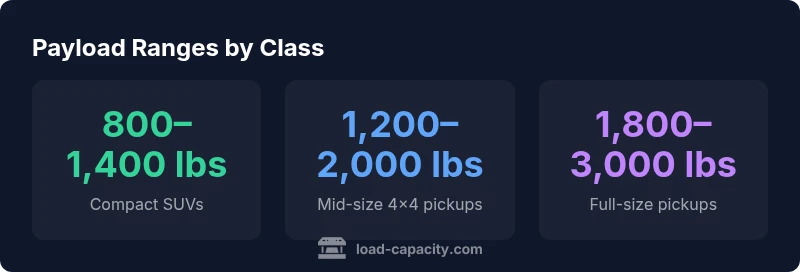
Example A: a compact 4x4 SUV used for camping carries two adults, gear, and a small cooler. The combined weight remains within the 800–1,400 pound payload typical for this class, ensuring stable braking and predictable steering. Example B: a mid size 4x4 pickup daily driver with a ladder and tools weighs around 1,400–2,000 pounds of payload, which leaves room for weekend gear and some extra fuel. Example C: a full size 4x4 pickup used for light towing and work equipment may approach 1,800–3,000 pounds allowed, so drivers plan trips with a lighter load on long highway drives.
How to verify and track payload over time
Keep payload estimates current by rerunning the calculation whenever you change equipment, add passengers, or refuel. Use the factory payload rating as the ceiling and monitor real world performance. For critical loads, consider professional weighing by a certified service to verify the ratio of payload to GVWR. Additionally, use load distribution tools such as scales or garage weigh pads to check individual axle weights. Many owners find it useful to log payload in vehicle maintenance records to simplify future planning and support resale value by demonstrating responsible loading practices.
Safety margins and best practices
Always stay within the published payload rating and avoid overloading in any driving condition. Implement load management practices such as secure tie downs, using rated racks, and avoiding high CG loads on uneven terrain. Maintain tire pressure within the recommended range for loaded conditions and perform regular inspections of tires and suspension. When in doubt, reduce load, reweight numbers, and re plan your trip. Responsible loading reduces wear and tear and improves braking, cornering, and stability on all surfaces.
Payload capacity ranges across common 4x4 vehicle classes
| Vehicle Class | Typical GVWR range | Estimated payload range | Notes |
|---|---|---|---|
| Compact 4x4 SUV | 4500–5700 pounds | 800–1400 pounds | Light-duty use in urban settings |
| Mid-size 4x4 pickup | 5500–7500 pounds | 1200–2000 pounds | Balanced for daily tasks |
| Full-size 4x4 pickup | 6500–8500 pounds | 1800–3000 pounds | Towing and heavy loads |
Quick Answers
What is payload vs GVWR, and why does it matter for a 4x4?
Payload is the weight you can safely carry; GVWR is the maximum vehicle weight including cargo, passengers, and fuel. Staying within these limits protects brakes, steering, and suspension and reduces rollover risk.
Payload is the weight you carry; GVWR is the total allowed weight. Staying within both limits keeps brakes, steering, and suspension predictable.
How do I check my vehicle's payload rating?
Look at the door placard or owner manual for GVWR and curb weight. Subtract curb weight from GVWR to estimate payload, then account for passengers and cargo.
Check the placard on the door jam or in the manual; subtract curb weight from GVWR to estimate payload.
Do aftermarket accessories affect payload?
Yes. Add-ons increase curb weight and may reduce payload. Recalculate payload after installing accessories to avoid exceeding GVWR.
Aftermarket stuff adds weight and can cut payload, so recalc after changes.
Can I tow with a 4x4 without reducing payload?
Towing typically reduces available payload because the trailer weight counts toward GVWR. Plan loads accordingly and use hitch weight data from manufacturer.
Towing uses weight that counts toward GVWR, so plan payload carefully.
What are common signs of overload?
Excessive swaying, reduced braking effectiveness, tire wear, and poor steering response can indicate overload. Stop and reweight if in doubt.
Overload shows as swaying, poor brakes, and awkward handling. Stop and recheck.
How do tires influence payload?
Tire load rating caps payload; using tires with insufficient load rating can void payload safety margins.
Tires set the limit; use rated tires to maintain safe payload.
“Accurate load capacity is the foundation of safe 4x4 operation; payloads must align with GVWR and distribution guidelines to preserve handling and braking.”
Top Takeaways
- Check GVWR before loading 4x4
- Distribute weight to avoid CG shift
- Never exceed documented payload rating
- Use correctly rated tires and suspension
- Verify payload periodically as you add accessories