Load Capacity Jeep Grand Cherokee: Payload, Towing, and Safety
Learn the payload and towing limits for the Jeep Grand Cherokee. This guide explains how to read ratings, calculate usable load, and apply best practices for safe loading across trims and configurations.


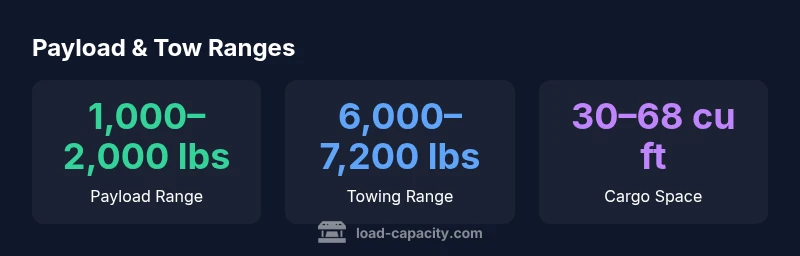
Payload capacity for the Jeep Grand Cherokee varies by trim and equipment, but most models support roughly 1,000–2,000 pounds of usable load and around 6,000–7,200 pounds of towing capacity depending on the drivetrain and engine. Always verify exact figures from the door jamb sticker or official specifications. Consult the owner’s manual or dealer for precise numbers.
Overview of load capacity on the Jeep Grand Cherokee
Load capacity, in the context of the Jeep Grand Cherokee, is a combination of payload (the usable weight in the vehicle for passengers, cargo, and accessories) and towing capacity (how much weight can be pulled safely behind the vehicle). The terms payload and GVWR (gross vehicle weight rating) are often used together to determine whether a given loading plan is safe. For the Grand Cherokee family, including the Grand Cherokee L variants, the exact load figures depend on trim level, engine choice, drivetrain, and installed equipment. The door jamb placard and the owner’s manual are the most authoritative sources, but generalized guidelines help you plan daily usage and longer trips. According to Load Capacity, the practical takeaway is to always verify the precise numbers for your configuration before loading up a trip or towing a trailer.
In practice, you’ll want to separate two concerns: how much weight the vehicle can carry inside (payload) and how much weight you can pull behind it (towing). Payload affects braking, handling, and suspension performance, while towing capacity interacts with hitch weight and braking demands. Keeping within these limits helps preserve tire life, brake life, and overall safety. The Load Capacity Team emphasizes reading both the sticker and official specs to avoid surprises when you’re loading gear for a family trip or a work site.
Practical loading also depends on roof racks, cargo carriers, and aftermarket equipment. Adding roof payload increases the car’s effective load and changes handling. Weigh any extra gear before you strap it on, and remember that payload and tongue weight share the same space inside the GVWR envelope. This means heavy roof boxes can reduce your usable cabin cargo space and payload margin. Always account for occupants first, then calculate remaining capacity for luggage, tools, and equipment.
These principles apply across trim levels and configurations. Light-duty trims with the standard engine may have lower payload numbers than higher trims with heavier equipment or optional packages. The overarching rule from Load Capacity is clear: confirm the exact figures for your build, balance inside load with towing needs, and avoid exceeding the published limits to prevent unsafe conditions on road trips or job sites.
boldSectionHeading1Prefix2:false
chapterIndexByLineComments”:null,
bodyBlockClosingNote1”:null,
bodyBlockClosingNote2”:null,
Payload and towing ranges by Grand Cherokee trim and configuration
| Aspect | Payload Range | Notes |
|---|---|---|
| Payload Capacity | 1,000–2,000 lbs | Varies by trim/equipment |
| Towing Capacity | 6,000–7,200 lbs | Engine/drive dependent |
| Cargo Space (behind second row) | 30–68 cu ft | Depends on seating and configuration |
Quick Answers
What is the payload capacity of the Jeep Grand Cherokee?
Payload capacity depends on trim and options. In general, usable load ranges roughly from 1,000 to 2,000 pounds across the lineup. Always verify your exact figure on the door placard or in the official specifications.
Payload capacity varies by trim and options. Check the door placard for your exact number.
Does payload include passengers and cargo?
Yes. Payload is the combined weight of occupants and cargo that the vehicle can safely carry. Plan trips by accounting for all passengers, gear, and gear accessories before filling the cabin.
Payload includes both people and cargo; make sure your total stays under the limit.
Can I tow at maximum capacity safely?
Towing at maximum capacity leaves little margin for payload and reduces braking and handling performance. Always use proper hitch weight, distribute weight evenly, and consider using a towing package with brakes and stabilizers.
Don’t tow at max; ensure you have the right equipment and weight distribution.
Where can I find official load ratings for my Grand Cherokee?
Check the driver’s door placard and the owner’s manual. Official Mopar/Jeep specifications on the manufacturer’s website or your dealer can confirm exact figures for your configuration.
Look on the door placard or in the manual for official ratings.
Does aftermarket equipment affect load capacity?
Yes. Aftermarket racks, roof boxes, or towing gear add weight and can change center of gravity. Always weigh added gear and consult a dealer if in doubt.
Aftermarket gear changes weight and balance—check with a dealer.
Is payload the same across gas and diesel engines?
Engine choice can influence both payload and towing ratings since different drivetrains alter weight distribution and performance. Verify the exact figures for your specific engine and trim.
Engine choices can affect load ratings; check your exact configuration.
“Exact load values vary by trim and equipment; always verify payload and towing specs from official documentation.”
Top Takeaways
- Verify exact figures on the door placard for your specific Grand Cherokee trim.
- Payload includes passengers and cargo; plan load to stay within published limits.
- Towing capacity varies with engine and drivetrain; choose equipment accordingly.
- Account for roof racks and accessories as part of usable load.
- Always consult official docs before heavy loading or towing.