Jeep Gladiator Load Capacity: A Practical Guide
In-depth analysis of the Jeep Gladiator load capacity (payload), how it’s calculated, how trims affect it, and best practices for safe loading and distribution.


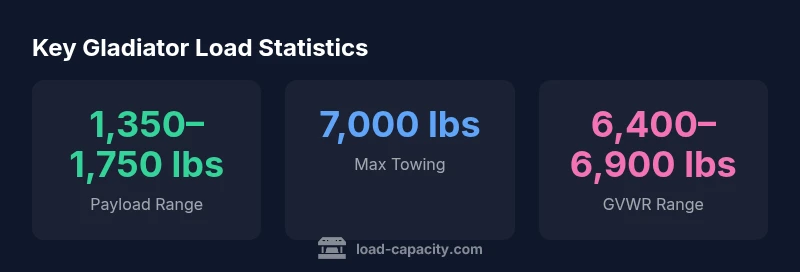
Jeep Gladiator payload capacity typically ranges from 1,350 to 1,750 pounds, depending on trim, axle ratio, and factory options. According to Load Capacity, this payload is the maximum weight you can carry in cargo and occupants without exceeding GVWR. Always verify the exact figure on the certification label for your build and plan loads conservatively.
Payload fundamentals for the Jeep Gladiator
Understanding the load capacity of the Jeep Gladiator is essential for safe and reliable operation. In automotive terms, load capacity (often called payload) refers to the combined weight of passengers, cargo in the bed, and any installed accessories that contribute to weight that counts toward the vehicle’s GVWR (gross vehicle weight rating). For engineers, fleet managers, and DIY enthusiasts, the concept translates to a simple rule: payload plus other vehicle weights must not exceed the GVWR. The Jeep Gladiator load capacity is influenced by trim, drivetrain, and factory options, so no single figure applies to every build. In practice, this means you should consult the certification label on your vehicle and use conservative planning when loading, especially for long trips or off-road work.
How load capacity is calculated for the Gladiator
The standard way to compute payload is to subtract the curb weight (the weight of the empty vehicle with standard equipment) from the GVWR. If you add options, a winch, or aftermarket accessories, those additions reduce the available payload. For the Gladiator, the range you’ll commonly encounter happens because GVWR and curb weight shift with trim levels, tires, and drivetrain choices. This is why Load Capacity emphasizes validating the exact number on the door jamb label for your specific vehicle. The upshot: heavier configurations shrink the payload margin even if the bed remains the same.
Trim and configuration effects on payload
Different Gladiator trims and options can alter the payload, even when the bed length remains constant. A more heavily optioned model with off-road gear and larger tires will push curb weight up and reduce the payload available for cargo and passengers. Conversely, a lighter configuration (fewer luxury features, standard tires) typically yields a higher payload. For engineers modeling a fleet, this variability means you must profile payload by exact build whenever planning loading scenarios and safe distribution.
Real-world loading scenarios for the Gladiator
In practical terms, the Gladiator payload supports a range of common setups. A two-person crew plus a toolbox and some gear sits within the lower to mid part of the payload spectrum, often allowing mid-size cargo in the bed. For a full workday on a job site, a mix of tools plus one or two passengers can approach the upper middle of the payload range. When PTOs, winches, or heavy aftermarket accessories are added, expect a noticeable reduction in available payload. The Load Capacity framework recommends offsetting heavy cargo toward the rear bed only if the weight distribution and tongue weight stay within design limits.
Safety considerations and load distribution
Safe loading is about distribution as much as total weight. The Gladiator’s payload must be managed with attention to tongue weight when towing, as excessive hitch load can skew steering and braking performance. Distribute cargo evenly, prefer lighter items toward the front to reduce nose-diving, and secure all cargo to prevent shifting. The bed’s payload should be complemented by careful passenger weight planning—heavy occupants reduce bed payload, which matters for jobs requiring both people and gear.
How to measure and verify payload on your Gladiator
Begin by reading the vehicle’s door jamb label for the exact GVWR and curb weight, then subtract to estimate payload. Use a vehicle scale if precise measurements are necessary, especially for fleet optimization or custom builds. When in doubt, cross-check your calculated payload with the official documentation and actual load on the road. Record the weight of frequent gear and typical passenger loads to create a practical loading plan that respects both GVWR and axle limits. Load Capacity recommends maintaining a cushion of safety—don’t load to the literal maximum.
Common loading mistakes and how to avoid them
Common errors include assuming the bed payload equals total payload, ignoring tongue weight when towing, and failing to account for passenger weight. Avoid mixing items that shift weight unexpectedly and never exceed GVWR or stated payload values. Regularly re-check payload after changes—new tires, added equipment, or passenger changes can alter the balance.
Tools and worksheets for planning loads
A simple worksheet helps engineers and DIYers track payload across scenarios. List your typical crew weight, cargo weight, and any aftermarket weight. Subtract from the listed payload to verify you’re within safe limits. For more precision, use a portable scale for individual components or a vehicle-scale measurement if available. Load Capacity also recommends keeping a log for routine fleet planning to ensure ongoing compliance with GVWR and payload constraints.
Case studies: typical loads in common Gladiator setups
Case A: Daily driver with two adults and a toolbox. payload remains within lower-to-mid range, leaving room for small groceries or equipment. Case B: Weekend off-road setup with four people and recovery gear. The payload approaches the mid-range, and some gear may need to be removed or distributed to the bed to maintain stability. In both cases, a careful load plan supported by a verified payload figure from the certification label ensures safe driving under real-world conditions.
Illustrative comparison of Gladiator payload-related parameters
| Parameter | Typical Range | Notes |
|---|---|---|
| Payload capacity | 1,350–1,750 pounds | Varies by trim/options |
| Towing capacity (max) | 3,500–7,000 pounds | Depends on equipment and configuration |
| GVWR | 6,400–6,900 pounds | Configuration dependent |
| Curb weight | 4,600–5,100 pounds | Varies by trim and options |
Quick Answers
What is the Jeep Gladiator's payload capacity?
The Gladiator's payload capacity varies by trim and configuration, generally ranging between 1,350 and 1,750 pounds. Always check the certification label on your vehicle for the exact figure and plan loads accordingly.
The Gladiator's payload depends on your trim and options; check the label on your vehicle for the exact figure and plan loads safely.
Will aftermarket tires change payload?
Aftermarket tires primarily affect weight and suspension, not the published payload rating. The payload rating is based on GVWR minus curb weight, which can change with heavy options. Verify after changes and maintain safe distribution.
Aftermarket tires can affect the weight and handling, but the official payload rating is set by GVWR minus curb weight; recheck after changes.
How does passenger load affect bed payload?
Total payload includes both passengers and cargo. Heavy occupants reduce bed payload. Plan loads so combined weight stays below the vehicle's payload rating.
Passengers count toward payload, so heavy occupancy reduces how much cargo you can carry.
Can I increase payload by removing options?
Removing options reduces curb weight, which can increase payload, but it also changes the overall vehicle configuration and capabilities. Always calculate payload from the actual build and avoid exceeding GVWR.
Removing options can lower weight, but payload depends on your exact build; recalculate to stay under GVWR.
How do I verify payload on my Gladiator?
Read the certification label in the door jamb and compare with your owner's manual. For critical loads, weigh frequent gear and passengers to confirm your setup stays within the rating.
Check the door label and verify with your gear and passengers to stay within payload limits.
Does GVWR differ by trim?
Yes, GVWR can vary by trim and configuration. Always use the label on your specific vehicle to determine the exact payload and weight limits.
GVWR can differ by trim; rely on your vehicle's label for exact limits.
“Payload management is about balancing GVWR, curb weight, and real-world use; never exceed the rated payload of your Gladiator.”
Top Takeaways
- Know your exact payload from the vehicle label
- Plan passenger weight and cargo separately to maximize safety
- Distribute weight to maintain stable handling and braking
- Verify payload figures against official documentation for your build
- Load conservatively and reassess after any changes