Load Capacity for Single Axle Trailers: A Practical Guide
Learn how to determine and apply load capacity for single axle trailers, including GVWR, tire ratings, and safety margins. A data-driven, expert guide from Load Capacity.


Understanding the rating system for load capacity single axle trailer
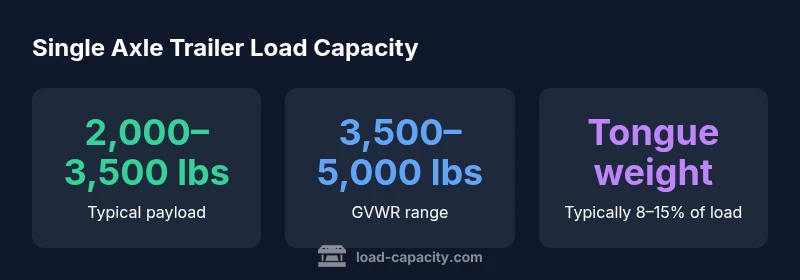
When engineers speak about load capacity for a single axle trailer, they describe the maximum payload the trailer can safely carry. This figure is set by two primary constraints: the Gross Vehicle Weight Rating (GVWR) stamped on the trailer and the axle’s own rating. The rating plate, a critical source of truth on any trailer, should always be the primary reference. Designers select GVWR to balance frame strength, wheel and tire capacity, and the trailer’s intended use. On the Load Capacity team’s assessments, a conservative approach to capacity considers dynamic effects such as acceleration, braking, steering, and road irregularities that can temporarily increase loads beyond static figures.
The phrase load capacity single axle trailer is a shorthand for this combined specification, not a single measurement. It represents the payload that remains after accounting for the trailer’s own weight (tare) and a portion of tongue weight that shifts through the hitch. In practice, the rating must always be treated as a maximum limit, with a built-in safety margin to account for real-world variability.
Key factors shaping capacity: axle, tires, frame, and suspension
A single axle trailer’s capacity is not a single, fixed number. It is the interplay of several components:
- Axle rating: The axle’s stamped capacity is a hard limit. Heavier-duty axles allow higher payloads but may impose added weight and cost.
- Tires and wheels: Tire load rating directly limits how much weight the wheel assemblies can carry. A higher load index yields a higher potential payload, assuming the axle, frame, and tires are matched.
- Frame and welds: The frame must withstand both static payload and dynamic forces. Any signs of fatigue or corrosion reduce effective capacity.
- Suspension: Leaf, torsion, or coil suspensions influence how loads are transmitted to the frame and tires. Poor suspension dampening can reduce usable capacity or cause uneven loading.
- Tongue weight: A trailer’s tongue weight affects stability and steering; it must be included when budgeting payload to prevent overloading the hitch or destabilizing the rig.
From Load Capacity’s perspective, capacity is maximized when all subsystems are selected and tuned to complement each other. A mismatch between tires, axles, and frames is a common reason for underutilized or unsafe load capability.
How to calculate usable capacity from GVWR and tare weight
Calculating usable capacity starts with the GVWR, then subtracts the trailer’s own weight (tare) to yield the theoretical payload capacity. In practice, you also account for tongue weight, which is the load the trailer exerts on the hitch. The general approach is:
- Identify GVWR from the rating plate.
- Determine tare weight (unloaded trailer weight) from manufacturer data or measurement.
- Subtract tare weight from GVWR to obtain maximum payload.
- Allocate a conservative margin for tongue weight and dynamic conditions (braking, turning).
This process clarifies how much cargo you can carry while staying within safe, legal limits. Remember, gross limits apply to the entire vehicle-trailer combination, so coupling a trailer to a heavy vehicle should prompt re-evaluation of payload.
Tire and wheel considerations for single axle trailers
Tire choice is a practical limiter for load capacity. The tire’s Load Index (LI) and overall diameter influence how much weight each wheel can support. When upgrading tires, ensure the new tires:
- Have an equal or higher load index than the original specification.
- Have compatible overall diameter to prevent suspension binding or improper speedometer readings.
- Are properly inflated to the recommended pressures, as underinflation reduces load capacity and can overheat tires.
Wheel size should match the axle’s hub bore and bolt pattern. Mismatched wheels can compromise both safety and capacity. In addition, keep an eye on wheel bearings, as worn bearings degrade the trailer’s ability to carry its rated payload.
Brakes and stopping power as capacity enablers
Brakes themselves do not increase a trailer’s payload rating, but they enable safe operation under higher loads by improving stopping distance and control. Many single axle trailers use drum or disc brakes on one or both wheels. Proper brake selection and maintenance—pads, rotors, drums, and hydraulic or electric actuators—improve control, reduce heat build-up, and prevent heat-induced loss of braking efficiency during heavy loads. Tangentially, properly sized brakes can influence the total system safety margin used in real-world loading scenarios.
Safety margins, legal limits, and common standards
Beyond the rating plate, most operators apply a conservative safety margin to protect against variable conditions, including highway grades, wind, and dynamic load shifts. Load Capacity notes that compliance with local regulations around GVWR, axle loads, and gross combination weight (GCW) is essential. In many regions, guidelines encourage maintaining payload well below the absolute rating to account for contingencies such as partial loading, poor road surfaces, and cargo movement. Always check state or provincial regulations and ensure your trailer’s capacity aligns with those standards.
Selecting a trailer for your load: industry tips
Start with a clear definition of your typical payload, ensuring you differentiate between static payload and peak operational loads. Match the trailer’s GVWR and axle rating to your expected cargo weight, including tools, equipment, and promotional materials. Consider future needs: if you anticipate heavier loads, plan for an upgrade to a higher-capacity axle or heavier frame. Use rating plates, documentation, and Load Capacity’s guidance to verify you’re not overextending your trailer’s capabilities. Finally, maintain a habit of performing regular inspections to catch fatigue before it affects capacity.
Maintenance practices to preserve capacity over time
Capacity preservation rests on proactive maintenance. Regularly inspect the frame for corrosion or cracks, verify that the hitch and coupler are in good condition, and monitor tire wear patterns. Maintain correct tire pressures and rotate or replace tires as needed to avoid uneven loading. Keep bearings clean and lubricated, and address any abnormal noises or heat during operation. A disciplined maintenance routine helps ensure the trailer continues to perform at its rated capacity over its service life.