Load Capacity and E-rated Tires: A Practical Guide
Discover how load capacity e rated tires work, how to select, install, and maintain them for safe heavy-load applications. Learn about load indices, GAWR, and practical steps for fleets and DIY users.


Definition: E-rated tires are heavy‑duty tires designed for higher load capacity, typically used on light trucks and commercial vehicles. They feature reinforced sidewalls and dedicated load indices that allow greater payloads per tire, often enabling higher combined vehicle loads when paired with appropriate axle configurations. When selecting load capacity e rated tires, verify the tire's load index, speed rating, and compatibility with your vehicle's gross axle weight rating to ensure safe operation.
What are load-capacity e rated tires?
For engineers evaluating load capacity e rated tires, it’s essential to understand that these tires are designed to support heavier payloads than standard passenger tires. They achieve this through reinforced construction, higher ply and belt ratings, and larger gross visible load capacities. E-rated tires are commonly used on light trucks, cargo vans, and some regional-haul applications where payload requirements exceed standard passenger tire capabilities. The Load Capacity team notes that selection should be driven by the vehicle’s GAWR (gross axle weight rating), the tire’s load index, and compatibility with axle configurations to prevent overloading. For any operation involving substantial payloads, the tires’ ability to sustain traffic loads without excessive heat buildup is a fundamental design criterion.
How load capacity is determined for E-rated tires
Load capacity for E-rated tires hinges on several interrelated factors. The tire’s load index is the primary numeric indicator of how much weight a tire can carry at a specified pressure. The maximum load per tire is also affected by tire size, construction (including belt and ply ratings), inflation pressure, and operating temperature. Vehicle GAWR and axle distribution are critical for confirming safe brake and suspension performance. In practice, fleets should verify that the tire’s load index aligns with the vehicle’s GAWR and that inflation pressures are set per the manufacturer’s guidelines. Higher inflation pressures can increase load-carrying capacity but must be balanced against ride quality and heat management. Load capacity e rated tires therefore require careful matching of tire size, load index, and axle limits.
Reinforcing design features that enable higher loads
The physical architecture of E-rated tires emphasizes strength where payloads peak. This includes reinforced sidewalls, stiffer bead assemblies, multiple belts, and tread compounds designed for heat dissipation. The structural margin allows higher maximum loads per tire and reduces the risk of premature failure under heavy loads. Additionally, rim compatibility and correct wheel diameter play a role in ensuring the tire’s carcass remains stable during cornering and braking under load. For engineers, understanding these design choices helps in selecting tires that maintain performance while minimizing risk under sustained heavy loads.
How to choose E-rated tires for load capacity
Choosing the right E-rated tires starts with a clear understanding of your vehicle’s GAWR and payload targets. Step 1: confirm the gross vehicle weight rating and axle-specific limits in the owner’s manual or data plate. Step 2: select tires whose load index meets or exceeds the GAWR for each axle, and ensure the speed rating aligns with expected operating conditions. Step 3: verify that the overall tire diameter and rolling circumference fit the vehicle’s clearance and gearing. Step 4: consider all-season vs. specialty tread patterns based on typical operating environments. Step 5: confirm compatibility with your wheels and the vehicle’s brake system to avoid clipping or rubbing under full load.
Installation and maintenance considerations
Proper installation is essential for achieving the stated load capacity. Ensure correct torque on lug nuts, use the recommended thread sealant if required, and verify proper seating on the wheel. Inflate tires to the manufacturer’s recommended pressures for loaded conditions, not just “average” pressures. Regular rotation helps equalize wear and maintain consistent contact with the road, preserving load distribution across axles. Finally, monitor temperatures during initial loads; excessive heat can degrade tread and sidewalls, negating the benefits of E-rated construction.
Fleet vs DIY considerations for E-rated tires
Fleets often benefit from standardized tire specifications across multiple vehicles to simplify maintenance and ensure consistent performance under load. For DIY users, careful validation of GAWR, load index, and wheel compatibility is critical before purchasing. Invest in a simple weighing regimen to confirm actual axle loads and compare them against the tire’s rated capacity. Documentation of maintenance events and load testing improves accountability and safety for all users.
Common misconceptions about E-rated tires
A common misconception is that higher load capacity automatically translates to better fuel economy or longer tire life. In reality, heavier tires can increase rolling resistance and heat buildup if not matched to vehicle weight and operating conditions. Another myth is that you can mix E-rated tires with lighter-duty tires on the same axle. This creates imbalanced load distribution and can compromise braking and stability. Always pair tires by axle and vehicle alignment specifications.
Testing, verification, and safety practices
Validation of load capacity should combine manufacturer specifications with practical testing. Use load-testing procedures where available, and rely on GAWR and load-index verification rather than relying solely on tire size or appearance. Regular inspection for cuts, bulges, and tread wear is essential, especially under heavy loads. Temperature monitoring during first deployments helps detect overheating early, allowing corrective action before failures occur.
Practical engineering workflow for selecting E-rated tires
A systematic workflow reduces risk and ensures consistency. Step 1: pull GAWR data from the vehicle specification. Step 2: map each axle to a tire with a load index that meets or exceeds GAWR. Step 3: confirm wheel compatibility and rim size, ensuring it supports the expected tire pressure and load. Step 4: validate with a short field test under typical loading conditions and monitor for heat and ride quality. Step 5: document all findings and update maintenance schedules accordingly.
Representative ranges for E-rated tire load capacities and common vehicle applications
| Tire Type | Typical Load per Tire (lbs) | Common Vehicle Application |
|---|---|---|
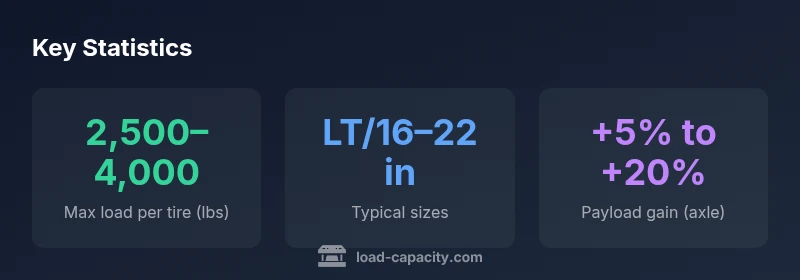
| E-rated LT | 2,500–4,000 | Light trucks / SUVs with heavy payloads |
| E-rated Commercial | 3,500–5,000 | Vans / regional haul / distribution |
| Standard passenger (for comparison) | 1,800–2,600 | Passenger cars / small SUVs |
Quick Answers
What defines an E-rated tire and when should I use it?
An E-rated tire is a heavy-duty tire designed for higher load capacity. It is typically used on light trucks, cargo vans, and other vehicles that carry heavier payloads. Use E-rated tires when your GAWR exceeds the load capacity of standard passenger tires, and ensure proper load index, inflation, and axle compatibility.
E-rated tires are heavy-duty tires for higher payloads. Use them when your vehicle's weight requires more load capacity, and always verify the load index and axle compatibility.
How do I verify a tire’s load index and compatibility with my vehicle?
Check the tire sidewall for the load index number and ensure it meets or exceeds your vehicle’s GAWR. Compare the tire’s speed rating with expected road conditions and confirm wheel and rim compatibility before installation.
Check the sidewall for load index, compare to GAWR, and confirm speed rating and wheel compatibility.
Can I mix E-rated tires with non‑E tires on the same axle?
Mixing E-rated tires with lighter tires on the same axle is not recommended. It can create uneven load distribution and braking instability. If payload needs change, replace tires in matched pairs or all-around to preserve stability.
Don’t mix heavy-duty and standard tires on one axle. It can impair handling and safety.
Do E-rated tires always improve fuel economy?
Not necessarily. E-rated tires can increase rolling resistance and weight, which may affect fuel efficiency. The net effect depends on load, tire construction, and driving conditions. Aim for balanced choices that optimize payload and efficiency.
They can affect fuel use, but it depends on many factors. Balance payload needs with efficiency.
What maintenance steps are critical after upgrading to E-rated tires?
Maintain correct inflation pressures for loaded conditions, rotate regularly, and inspect for heat buildup. Document loads and performance to adjust maintenance schedules as needed.
Keep pressures correct, rotate often, and watch for heat signs.
“E-rated tires offer a practical path to higher payload capacity when matched to the vehicle’s GAWR and axle configuration. Proper selection and maintenance are essential to realizing the performance benefits safely.”
Top Takeaways
- Understand load index and GAWR before selecting E-rated tires
- Match tire capacity to axle weight and vehicle design limits
- Inspect and maintain tires regularly for safe heavy-load operation
- Consider fleet-wide standardization to simplify maintenance
- Avoid mixing tire types across axles to preserve stability