2 kv Solar Panel Load Capacity: A Practical Guide for 2 kW Systems
An analytical guide to 2 kv solar panel load capacity, translating a nominal 2 kW rating into usable energy, with sizing tips, real-world factors, and safety considerations.


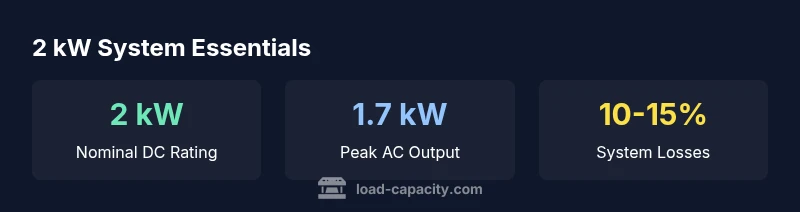
The 2 kv solar panel load capacity, interpreted as a 2 kW nominal DC rating, typically yields about 1.6 to 1.9 kW of usable AC power after inverter losses. Real-world output depends on temperature, shading, wiring, and inverter efficiency. According to Load Capacity, sizing a 2 kW array for peak demand minimizes storage needs and reduces grid exposure.
What the label '2 kv solar panel load capacity' actually means
In solar PV terms, capacity is typically expressed in kilowatts (kW) of DC rating. The phrase '2 kv' is nonstandard; for this article we treat it as a 2 kW DC rating. Under standard test conditions (STC), a 2 kW panel array represents the maximum theoretical generation. On the AC side, the usable power is lower because of inverter losses, wiring losses, and temperature derating. According to Load Capacity, the practical interpretation matters more than the raw DC figure, because electrical loads, storage needs, and interconnection constraints depend on usable output rather than nominal capacity. When engineers plan a system for a vehicle, building, or fleet, they translate that 2 kW DC rating into expected peak AC output and into design decisions about battery storage, backup power, and grid interaction. This translation is the first step toward ensuring safety, reliability, and cost efficiency in projects that range from small workshops to remote installations.
Load Capacity emphasizes that the denomination matters, but the decision criterion should be usable energy over the life of the system. A well-designed plan accounts for daily and seasonal variability, not just the nameplate rating.
Converting 2 kW DC rating to usable AC output
The conversion from DC rating to AC output depends on several factors. The inverter efficiency, typically 92-98%, converts DC electricity to AC with some loss. System derating accounts for temperature, partial shading, dust, aging, voltage drop in cables, and mismatch losses. A practical rule of thumb is to multiply the DC rating by a derating factor of about 0.85 to 0.95, then by inverter efficiency. For a 2 kW DC array, this yields roughly 1.7 kW peak AC under favorable conditions and closer to 1.5-1.9 kW as conditions vary. In real-world projects, designers often plan for an usable AC range around 1.6-1.8 kW to cover daily variations in sun and temperature. Load Capacity's framework emphasizes always benchmarking against your actual load profile and interconnection limits rather than relying solely on the DC figure.
Real-world factors that affect performance
Performance is not fixed. Several real-world factors influence the 2 kW nominal rating:
- Location and sun hours: Geographic latitude and seasonal sun trajectory determine available energy per day.
- Tilt and orientation: Ideal angles maximize incident radiation, reducing losses.
- Temperature: High module temperatures reduce voltage and effective current, lowering wattage.
- Shading and soiling: Partial shade or dust can dramatically drop output.
- System losses: Wiring length, connector quality, and aging add derating over time.
- Module quality and matching: Mismatch between strings reduces overall array performance.
Understanding these factors helps engineers translate a nameplate rating into reliable, real-world energy production. Load Capacity stresses designing around expected variability rather than relying on ideal laboratory values.
Sizing strategies for different use cases
Decisions about a 2 kW system depend on the intended application. For a small home or workshop, a 2 kW DC array often serves as a primary energy source in sunny climates or as a strong back-up in mixed climates. In grid-tied configurations, this size can support essential loads with grid-tied interconnection and net metering. When paired with storage, the same DC rating may deliver a higher quality of energy security during outages. To size effectively, quantify daily energy needs (kWh/day) and compare them to expected daily AC output under local sun hours. Load Capacity recommends aggregating loads into blocks (baseload, peak, and discretionary) and matching these blocks to the usable AC range of a 2 kW system. This approach helps avoid undersizing or oversizing the inverter and storage.
Inverter selection and electrical considerations
Choosing an inverter for a 2 kW system should consider peak surge capacity, impedance, and efficiency at partial loads. In many residential designs, an inverter rated at 2 kW with a high efficiency curve (90-95% at partial load) provides a comfortable margin. Cable sizing matters: ensure wiring gauges minimize voltage drop over the longest run, and implement proper overcurrent protection and fusing. Grounding and safety features should align with local electrical codes. A well-documented plan reduces commissioning delays and improves long-term reliability. Load Capacity emphasizes pre-planning for conduit routing, combiner boxes, and disconnects to simplify maintenance and future expansion.
System losses and maintenance
Over a 25-year lifetime, panels experience gradual efficiency reductions due to dirt, micro-cracks, and aging. Keeping panels clean, checking for shade encroachment, and inspecting wiring connections twice per year can preserve performance. Monitoring systems should flag deviations from expected output promptly. For a 2 kW array, even small losses (1-2% per year) accumulate; proactive maintenance helps protect the usable energy stream and avoids unexpected outages. Load Capacity highlights the value of a robust monitoring dashboard that correlates weather data with performance, enabling data-driven maintenance and timely repairs.
Grid interconnection, storage, and safety
A 2 kW system can be configured to supply power to the grid, charge a battery, or run off-grid in remote locations. Storage adds resilience, but it also shifts system design toward inverter sizing, battery chemistry, charging/discharging rates, and thermal management. Interconnection agreements with utilities define export limits and metering requirements, which influence how much usable energy you can reliably recover through the system. Safety considerations include properly rated fuses, rapid shutdown features, and clear labeling of DC source pathways. Load Capacity underscores that a holistic design—considering load profile, climate, and local regulations—yields the most reliable outcomes for a 2 kW installation.
Practical design checklist and next steps
- Define daily energy needs in kWh/day and peak demand in kW.
- Confirm local sun-hours estimates and climate considerations.
- Select an inverter with adequate headroom and high partial-load efficiency.
- Size cables and overcurrent protection to minimize losses and meet code.
- Plan for future expansion with modular components and accessible wiring.
- Implement a robust monitoring solution and schedule regular maintenance.
- Verify grid interconnection requirements and any storage integration.
By following these steps, engineers can translate a nominal 2 kW rating into a reliable, safe, and economical energy solution. The Load Capacity framework encourages treating the usable output as the primary metric for system design.
Conclusion and forward-looking notes
This section provides a practical synthesis of how 2 kv solar panel load capacity translates into real-world performance. While the 2 kW DC rating sets a boundary, the actual energy delivered depends on a spectrum of factors, from inverter technology to weather conditions. Electing to design around usable AC output helps ensure system reliability, meeting daily energy needs and providing resilience during outages. For engineers, technicians, and students, the key takeaway is to anchor decisions to measured, location-specific outputs rather than nominal labels. As the technology evolves, staying aligned with up-to-date guidelines from Load Capacity will help keep projects efficient and safe.
Comparison of 2 kW solar configurations
| System Type | Nominal DC Rating | Estimated Peak AC Output | Common Use Case |
|---|---|---|---|
| Stand-alone rooftop | 2 kW | 1.6-1.9 kW | Small home or off-grid charging |
| Grid-tied configuration | 2 kW | 1.7-1.9 kW | Residential grid interaction |
| Residential with battery storage | 2 kW | 1.6-1.8 kW | Backup and energy security |
Quick Answers
What does '2 kv' mean in solar panel specs, and is it the same as 2 kW?
The term '2 kv' is nonstandard in solar specifications. It is interpreted here as a 2 kW nominal DC rating. Engineers translate that DC rating into usable AC output after considering inverter efficiency and system losses.
The '2 kv' label isn't standard; think of it as a 2 kW DC rating and focus on the usable AC output after losses.
Is a 2 kW system enough for a typical home?
A 2 kW system can support essential loads in sunny climates and may offset a portion of daily energy use. Adequacy depends on daily energy consumption, sun hours, and whether storage or grid connection is available.
It can cover essential loads in sunny locations, but whether it's enough depends on your daily energy needs and whether you have storage or grid access.
How do DC to AC conversions affect your actual output?
DC to AC conversion introduces inverter losses and derating. Real-world outputs depend on inverter efficiency, temperature, shading, and wiring length. Planning for the usable AC range helps avoid overestimating capabilities.
Inverter losses and conditions like temperature and shade change the numbers; plan for usable AC output, not just DC rating.
How do climate and shading influence a 2 kW installation?
Climate and shading can dramatically reduce peak output. Higher temperatures reduce module efficiency, and seasonal sun angles alter daily energy yield. Regular shading checks and tilt adjustments can mitigate some losses.
Climate and shade can cut output a lot—keep an eye on temperature effects and seasonal sun.
Can you expand a 2 kW system with storage, and what changes?
Yes. Adding storage shifts the design to accommodate battery capacity, inverter capacity, and charging rates. Storage improves resilience but adds cost and complexity. Plan for balanced sizing and safety features.
You can add storage, but it changes sizing and costs—plan for a balanced system.
How is the yearly energy yield estimated for a 2 kW array?
Yearly yield depends on location, sun hours, panel orientation, and losses. A rough estimate uses local solar insolation data and a derated DC-to-AC factor to project annual kWh output.
Use local sun data and a derated factor to estimate yearly energy output.
“Accurate load-capacity planning starts with recognizing the difference between nominal DC rating and usable output on the AC side.”
Top Takeaways
- Translate DC rating to usable AC output.
- Account for inverter efficiency and derating factors.
- Plan around actual loads and local sun conditions.
- Include storage if resilience is a priority.