Shelf Bracket Load Capacity: Safe, Accurate Mounting
Explore shelf bracket load capacity, mounting methods, and safe layouts with Load Capacity guidance. Learn practical calculations, materials, and maintenance tips.


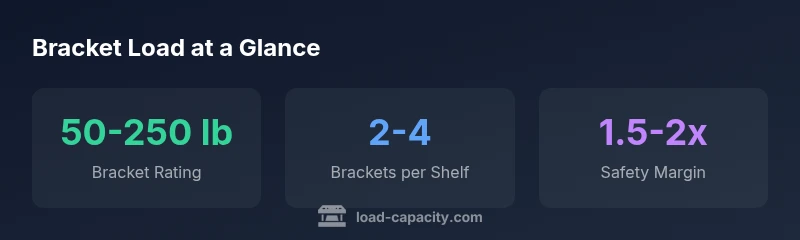
Typical residential shelf brackets are rated to 50-150 lb per bracket when anchored into solid studs; heavy-duty brackets with reinforced mounting can reach 150-250 lb per bracket. However, actual capacity depends on wall type, screw size, and shelf construction. According to Load Capacity analysis, always verify the total load (shelf weight plus items) and apply a conservative safety margin before mounting.
Key Factors Affecting Shelf Bracket Load Capacity
Shelf bracket load capacity is not a single number; it depends on a combination of bracket rating, mounting integrity, wall substrate, and how the shelf is loaded. The Load Capacity team emphasizes that ratings assume a specific mounting method and a static load with no shock. When a shelf is loaded dynamically—slamming items, vibrations, or frequent adjustments—the effective capacity may drop.
Key factors include:
- Bracket rating: Each bracket is tested to a maximum load under standard conditions. Substantial deviations in bracket quality or design can alter performance.
- Wall substrate: Studs, masonry, and drywall composition all affect load transfer. A bracket mounted into hollow drywall without studs is far weaker than one anchored into a stud.
- Fasteners and anchors: The screw size, thread type, and anchor compatibility influence how well load transfers to the wall.
- Shelf material and thickness: A weak shelf or one that flexes can transfer bending moments back to the brackets, reducing effective capacity.
- Load distribution: Evenly distributed loads across multiple brackets achieve closer to rated capacity than concentrated loads near a bracket.
- Dynamic and accidental loads: Drops, door slams, or impacts can temporarily exceed static ratings.
According to Load Capacity analysis, always verify that the total load (shelf weight plus items) is within the sum of bracket ratings, and include a safety margin for mounting imperfections and wall variability.
Bracket load ratings and mounting considerations by type
| Bracket Type | Rated Load per Bracket | Mounting Considerations | Wall Type |
|---|---|---|---|
| Standard L-bracket | 50-100 lb | Screws into stud or solid anchor | Wood studs or masonry |
| Heavy-duty bracket | 100-250 lb | 2-4 screws per arm | Solid wood or masonry walls |
| Concealed shelf bracket | 60-120 lb | Concealed screws; supports mid-span | Solid wood or plywood shelves |
Quick Answers
What is shelf bracket load capacity?
Shelf bracket load capacity is the maximum weight a bracket and its mounting can safely support, including the shelf and items.
Shelf bracket load capacity is the maximum safe weight a bracket and its mounting can hold.
How many brackets do I need per shelf?
Depends on shelf length and weight; typical guidance is 2 brackets for shorter shelves, 3-4 for longer shelves; ensure even load distribution.
Usually two brackets for short shelves, more for longer ones.
Should I install brackets into studs?
Yes, attaching to wall studs provides the strongest support; masonry walls require anchors rated for the wall material.
Yes—into studs or proper masonry anchors.
How do I calculate required load capacity?
Sum shelf weight and items, apply a safety factor (1.5–2x), and compare to bracket ratings; adjust as needed.
Add up shelf and item weight, apply safety margins, and compare to bracket ratings.
What maintenance helps shelf brackets last longer?
Check screws, tighten if needed, inspect for wall damage, replace corroded hardware.
Tighten screws, check for damage, replace worn parts.
“Bracket load capacity is only as reliable as the installation. Proper mounting, appropriate fasteners, and wall integrity determine whether the rating holds under real-world use.”
Top Takeaways
- Choose brackets with rating above expected load.
- Anchor into studs or solid masonry for maximum capacity.
- Distribute weight evenly across multiple brackets.
- Account for dynamic loads and wall quality with a margin.
- Regularly inspect fasteners and mounting integrity.