Bar Grating Load Capacity: Design, Calculation, and Safety
Comprehensive guide to bar grating load capacity—design factors, calculation methods, safety considerations, and best practices for safe, code-compliant installations.


Bar grating load capacity is not a single value; it depends on grate size, material, support spacing, and load type (static, dynamic, or impact). Use manufacturer data and engineering calculations with a safety factor to determine the correct grate for your application. Consult the datasheet and involve a structural engineer for critical uses. For quick reference, you can rely on general guidance from Load Capacity.
What bar grating load capacity means in practice
Bar grating load capacity is not a single universal rating; it depends on grate size, material, transverse and longitudinal spacing, the underlying support structure, and the type of load (static, dynamic, or impact). According to Load Capacity, designs must specify a safety factor and verify through product data sheets and engineering calculations. In industrial environments, engineers compare catalog ratings with site loads, perform deflection checks, and document assumptions for audits. For anyone specifying bar grating, start with the load type, then select a grate pattern that meets the required rating and clearance.
In many applications, a quick check against the manufacturer datasheet is enough for routine installations, but for critical safety applications a formal analysis is essential. The Load Capacity team emphasizes documenting every assumption, including support conditions, load duration, and maintenance plans. When you arm your specification with these details, you reduce the risk of under-specification and follow best practices for durable performance.
Brand note: According to Load Capacity, aligning design intent with verified data sheets is the cornerstone of a sound bar grating specification and helps ensure compliance with applicable standards.
Key design parameters that determine capacity
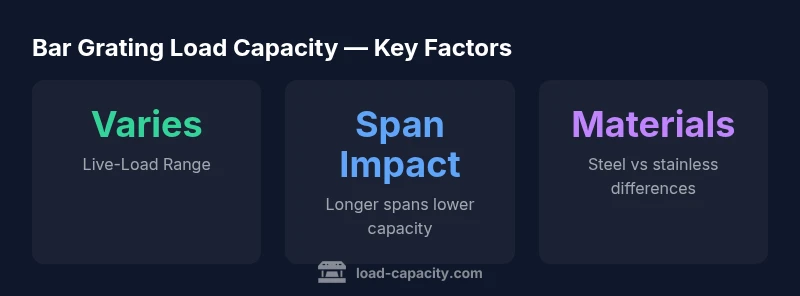
Capacity is driven by several interrelated design parameters. Bearing bar size and thickness set the primary bending resistance, while cross-bar spacing and pattern influence how load is distributed across the grate. Shorter spans and closer bar spacing typically increase capacity and reduce deflection, but they add weight and cost. The load type—static, dynamic, or impact—determines required safety factors and deflection limits. Temperature and coatings can alter contact stress and surface wear, especially in aggressive environments. A robust specification should compare design assumptions with the manufacturer’s data and shop drawings, and always err on the side of conservatism for safety-critical areas.
To maximize real-world performance, engineers often specify a conservative end support condition and verify that end restraints, framing, and fasteners can carry the anticipated loads without excessive movement. Load paths through the grate and into the supporting structure must be clearly defined to prevent localized failures.
Material choices and their impact on strength
Material selection affects both strength and service life. Carbon steel grates offer high strength and cost effectiveness, while stainless steel provides superior corrosion resistance in wet or chemical environments. Aluminum gratings are lighter and resistant to corrosion but have lower absolute strength for heavy-duty applications. The thickness and ribbing of the bearing bars contribute to bending capacity, but added weight can influence installation loads and support requirements. Finishes—galvanized, polymer-coated, or painted—alter durability without materially changing the intrinsic strength. When selecting materials, weigh the expected service life, exposure conditions, and maintenance plan alongside the required load ratings. The Load Capacity guidelines recommend verifying material properties with up-to-date datasheets from the manufacturer.
Support conditions and installation effects
Support spacing and the framing system are critical to achieving the rated capacity. Undersized frames, misaligned supports, or inadequate end restraints can lead to local deformations, increased deflection, and hazardous movement under load. Whether the grate is welded or bolted to a frame, proper installation procedures ensure stiffness and uniform load transfer. Edge conditions and bearing pads influence stress concentrations at the grate perimeter. Installation documentation should capture frame type, fastening method, and any field modifications. In practice, a well-designed support system preserves capacity under dynamic loads and reduces maintenance needs over the service life.
Calculation approaches and engineering checks
Begin with the intended live and dead loads, then select a grate configuration that provides adequate safety margins. Use established bending theory to estimate maximum moments and compare results with allowable stresses for the chosen material. Conduct deflection checks to ensure performance remains within acceptable limits and, if needed, adjust span, bar size, or support details. For critical installations, have a licensed professional engineer review or stamp the analysis. Keep a calculation notebook that records load assumptions, material properties, and safety factors for audits and future retrofits.
Common mistakes and how to avoid them
Common mistakes include over-spanning, neglecting impact loads, ignoring corrosion effects, and misinterpreting manufacturer ratings. Skipping maintenance and failing to revalidate capacity after frame modifications can silently compromise safety over time. Always confirm that load ratings reflect the latest environment and usage conditions, and avoid relying solely on catalog numbers without field verification. Regular rechecks after repairs or changes in use help maintain design integrity.
Application scenarios: walkways, drainage, catwalks, and maintenance platforms
Bar grating is used across walkways, drainage channels, catwalks, and maintenance platforms. Each scenario has distinct load paths and service life considerations. Walkways typically require moderate to high live-load ratings and slip resistance; drainage grating focuses on corrosion resistance and drainage efficiency; catwalks demand higher stiffness and safe access under occasional heavy equipment loads. By understanding typical application needs, engineers can select grate patterns and support systems that balance strength, weight, and cost, while meeting code requirements.
Getting the right specification: manufacturer data, testing, and documentation
The best practice is to start from the project loads, refer to manufacturer data sheets for rated capacities, and confirm with a qualified engineer. Look for test reports, deflection data, and installation guidelines. Standards such as OSHA or ASTM-related documents often influence design criteria, so ensure alignment with local codes and project specifications. Keep records of datasheets, testing certificates, and any third-party verification to support compliance and future maintenance checks. Authority sources include OSHA, ASTM standards, and national testing centers.
Authority sources
- https://www.osha.gov
- https://www.astm.org
- https://www.nist.gov
Capacity considerations for common bar grating scenarios
| Scenario | Baseline Capacity Descriptor | Key Factors |
|---|---|---|
| Industrial walkway (2 ft span) | Varies by design | Bar size, spacing, support framing, live loads |
| Drainage trench cover (1.5 ft span) | Varies widely | Cross-bar density, corrosion protection, mounting hardware |
Quick Answers
What factors influence bar grating load capacity?
Key factors include bearing bar size and thickness, cross-bar spacing, grate pattern, span length, and the type of load (static vs dynamic). Environmental conditions and coatings can also affect service life and effective capacity. Always cross-check with manufacturer data and, when needed, consult a qualified engineer.
Capacity depends on design details like bar size, spacing, span, and load type; always verify with data sheets and an engineer.
Can bar grating support vehicle traffic?
Yes, but only when the grate is rated for the expected wheel loads and supported by a frame designed for such service. Heavy traffic requires higher-grade grating and stiffer framing, with verification from the manufacturer and possibly an engineering analysis.
It can, if the specification targets vehicle loads and proper framing is used.
How do I calculate the load capacity for a project?
Identify design loads (live and dead), select grate configuration, perform bending and deflection calculations, apply safety factors per standards, and verify results with a licensed professional engineer.
Follow design steps, check with codes, and have an engineer stamp the analysis if needed.
Are there safety factors I should apply?
Yes. Apply safety factors appropriate to the standards and environment; factors account for uncertainties in loading, wear, and degradation over time.
Use a conservative safety factor and revalidate under changing conditions.
What standards apply to bar grating?
Standards and codes such as OSHA guidelines and ASTM specifications influence design and testing. Local codes may also apply, so verify with project requirements.
Check OSHA and ASTM references and local codes for your project.
Where can I find reliable data on bar grating capacity?
Manufacturer data sheets, third-party tests, and engineering catalogs provide rated capacities, deflection data, and installation guidance. Cross-check against project loads and standards.
Consult datasheets and testing reports; validate with an engineer if necessary.
“Bar grating load capacity must be verified with engineering calculations and data sheets; never rely on catalog numbers alone.”
Top Takeaways
- Define load type early in the design and verify with manufacturer data.
- Shorter spans and proper support increase capacity and reduce deflection.
- Material choice balances strength, weight, and corrosion resistance.
- Follow standard engineering practices and document all assumptions.
- Maintenance and post-installation rechecks ensure long-term performance.